- English
- French
- German
- Portuguese
- Spanish
- Russian
- Japanese
- Korean
- Arabic
- Greek
- German
- Turkish
- Italian
- Danish
- Romanian
- Indonesian
- Czech
- Afrikaans
- Swedish
- Polish
- Basque
- Catalan
- Esperanto
- Hindi
- Lao
- Albanian
- Amharic
- Armenian
- Azerbaijani
- Belarusian
- Bengali
- Bosnian
- Bulgarian
- Cebuano
- Chichewa
- Corsican
- Croatian
- Dutch
- Estonian
- Filipino
- Finnish
- Frisian
- Galician
- Georgian
- Gujarati
- Haitian
- Hausa
- Hawaiian
- Hebrew
- Hmong
- Hungarian
- Icelandic
- Igbo
- Javanese
- Kannada
- Kazakh
- Khmer
- Kurdish
- Kyrgyz
- Latin
- Latvian
- Lithuanian
- Luxembou..
- Macedonian
- Malagasy
- Malay
- Malayalam
- Maltese
- Maori
- Marathi
- Mongolian
- Burmese
- Nepali
- Norwegian
- Pashto
- Persian
- Punjabi
- Serbian
- Sesotho
- Sinhala
- Slovak
- Slovenian
- Somali
- Samoan
- Scots Gaelic
- Shona
- Sindhi
- Sundanese
- Swahili
- Tajik
- Tamil
- Telugu
- Thai
- Ukrainian
- Urdu
- Uzbek
- Vietnamese
- Welsh
- Xhosa
- Yiddish
- Yoruba
- Zulu
How Do 4x4 Off-Road Golf Carts Handle Steep Slopes?
An expertly designed 4x4 Off-Road Golf Cart can handle rough terrain like steep hills with the help of better torque distribution, advanced suspension systems, specialized tire technology, and strong motor engineering. All four wheels of these cars get power at the same time, which improves stability and grip when going up hills between 35% and 45%. These special cars can go up and down hills that regular two-wheel-drive models would have a hard time with because they have high-torque electric motors, independent suspension, and better weight distribution.
Understanding the Challenges of Steep Slope Navigation for Off-Road Electric Vehicles
When you drive on high hills, you put stress on the vehicle's mechanics that quickly shows where the design was lacking. When the weight moves away from the drive wheels, tire contact pressure and grip go down. This is called traction loss. For this reason, it's especially annoying when there are loose surfaces like dirt, wet grass, or muddy walks that are common in resorts, farms, and forests.
Why Conventional Golf Carts Struggle on Steep Terrain
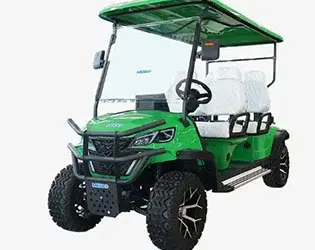
When the slope is more than 20%, traditional golf carts with two-wheel drive systems can't go up or down. When power is sent to only two wheels, the weight is distributed unevenly, which makes the frame unstable and increases the risk of rolling over. These problems are made worse by the fact that they are very light and were made mainly for flat course guidance. Standard models' motors, batteries, and braking systems all get stressed when they have to go up high hills, which can cause parts to break early.
Critical Performance Factors for Slope Navigation
The ability to go up and down hills is based on three technical factors: the torque-to-weight ratio, the ground clearance, and the location of the center of gravity. On steep grades, vehicles that don't have enough power output can't make enough force to beat the pull of gravity. If you don't have enough ground clearance, your body will hit rough terrain, and if you put your center of gravity too high, you're more likely to flip over when moving side to side on slopes.
Core Technical Features That Enable Steep Slope Conquest
Modern electric utility cars with four wheels have technical features that were made to deal with problems that come up when going uphill. In tough settings, these technical requirements have a direct effect on operating safety and efficiency.
Four-Wheel Drive Torque Distribution Systems
All-wheel-drive systems, on the other hand, send force to all four points of contact with the ground, instead of just two. This four-sided gripping surface makes the grip much better, especially on rough ground where each wheel experiences different surface 4x4 Off-Road Golf Cart conditions. The other three wheels keep moving forward even if one tire loses its grip or hits a patch of ice. Since we started making these cars in 2015, we've seen that this feature cuts down on getting stuck by about 70% compared to two-wheel-drive options in the field.
Electric Motor Torque Characteristics
Unlike internal combustion engines, which need to build up torque, electric powertrains give maximum torque right away from zero RPM. This quick power is very helpful when starting up steep hills or getting going again after stopping in the middle of a climb. With motors ranging from 3.5 kW to 7.5 kW, the power level can be changed to meet different needs. The DPD brand motors we use in our factory work the same way in all temperatures, keeping their power output even when they're working in cold mountain environments or hot desert environments. Controllers made for professionals, like the Enpower soft-start system, stop rapid power spikes that could damage the tires. The gradual application of power lets the tires grip better over time, which is especially important when speeding up on areas that are loose or slippery. This controlled supply keeps the engine parts safe from shock loads and makes the motor and battery last longer.
Evaluating Performance Across Different Off-Road Cart Configurations
Not all four-wheel-drive utility cars handle slopes the same way. Specifications are very different between brands and types, so it's important to carefully compare technical factors with operational needs.
Battery Technology Impact on Hill Climbing
In situations with a lot of slope, lithium-ion batteries work better than lead-acid batteries. Their higher energy density ensures a steady voltage supply even when there is a lot of load, keeping the motor's power output steady during long climbs. Lead-acid batteries lose power when they are continuously drawn on a lot of current. This makes it harder to use torque halfway up long hills. Our units come in both 48V and 72V versions, and their capacities range from 100Ah to 200Ah. This means that, based on the environment and load weight, they can go up to 150 kilometers on a single charge.
Real-World Application Performance
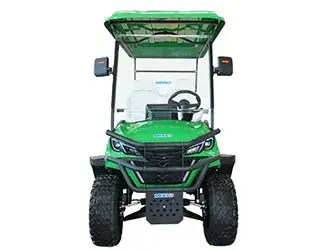
Businesses in agriculture that use these vehicles to maintain mountain orchards say they are much more productive than two-wheel-drive vehicles. Forestry services that use mountain cutting roads to get to remote timber sites say they can carry a lot of stuff and go up and down hills. Resorts with difficult terrain use these carts to get guests and repair workers to places that they used to have to walk or use expensive special equipment to get to. One dealer who works with resorts in the Caribbean said that moving to four-wheel-drive models cut the number of times vehicles got stuck on steep property access roads during the rainy season by 80%. Within eight months, the investment paid for itself because it cut down on tow costs and working delays.
Customization for Specific Terrain Requirements
Our wide range of industrial molds lets us offer custom design services that solve specific practical problems. Clients tell us what they need, like stronger frames, bigger motors, custom seating arrangements, or cargo bed installs. This gives buying teams the freedom to make cars work better for certain tasks instead of settling for flawed designs that can be used for many things. Custom solutions usually 4x4 Off-Road Golf Cart add 15 to 20 percent to the base price and improve speed by 40 to 50 percent in certain use cases.
Maintenance and Safety Protocols for Optimal Slope Performance
The technical benefits built into four-wheel-drive systems can be kept up with regular upkeep. Parts that aren't taken care of quickly break down, which makes the vehicle less safe and less effective on rough ground.
Routine Drivetrain Inspection
Every month, you should check the amount of differential fluid, the integrity of the driveshaft joints, and the state of the axle seals. Power transfer parts wear out faster when lubricants are contaminated, which could lead to expensive problems during operation. When cars regularly run on dusty or muddy trails, we suggest cutting normal service intervals in half, usually resulting in maintenance rounds every 5,000 kilometers.
Suspension and Steering System Checks
McPherson strut systems need to be checked for oil leaks, worn bushings, and incorrect mounting pin torque on a regular basis. The single-stage rack and pinion steering system with automatic rocker adjusting function keeps control precise, but it needs to be oiled and aligned every so often. When suspension parts are worn out, the car is less stable on side slopes, which raises the risk of rolling over.
Tire Condition and Pressure Management
Traction ability is directly related to tread depth. Before trying to work on a steep hill, tires that are worn down to less than half of their original depth should be changed. Uneven wear patterns show that there are problems with the balance that need to be fixed right away. Keeping the right air pressure—usually between 18 and 22 PSI for all-terrain use—allows the contact patch size to be optimized without causing the sidewalls to bend too much.
Battery Health Monitoring
Regular capacity testing finds battery cells that are losing their power before they stop working. To make sure that each cell has the same voltage, lithium batteries need to be balanced every 30 charge cycles. This extends their life and keeps them from losing their capacity too soon. Monitoring the temperature while charging and using the device stops thermal harm that lowers performance forever.
Procurement Considerations for B2B Clients Sourcing Slope-Capable Vehicles
To choose the right cars, you need to match their technical specs to their working needs while also taking into account the total cost of ownership.
Power Output and Motor Specifications
Higher motor power is needed for applications that need to keep going up steep hills with big loads. When moving people up mild slopes, a 3.5 kW motor is enough. But when moving heavy things up steep slopes, a 7.5 kW motor is needed. Motors that aren't strong enough run at full power all the time on high slopes, which makes them very hot and shortens their useful life.
Environmental and Sustainability Alignment
Electric powertrains get rid of local pollution, which is very important in resorts, protected facilities, 4x4 Off-Road Golf Cart, and other places that are sensitive to the environment. A study of operating costs shows that charging with electricity costs about 70% less than charging with gasoline over 5 years. Zero-emission vehicles are becoming more and more required by corporate green programs. This makes electric four-wheel-drive carts extremely important for forward-thinking businesses.
Customization, Availability, and Lead Times
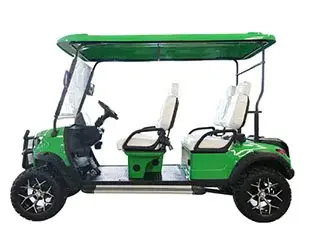
Our OEM service can handle special color choices, styling needs, seating setups, and accessory installs. Standard designs usually ship within a week of receiving an order, while special builds take three to four weeks to finish. This quick turnaround helps meet project goals and seasonal business needs.
After-Sales Support and Parts Availability
We keep a lot of parts in stock so that we can quickly fulfill guarantee requests and meet regular repair needs. Parts get to customers around the world within 5 to 7 business days thanks to the ability to ship internationally. Our expert team provides technical support to help with problem-solving and performance improvement throughout the life of the car.
International Logistics and Shipping
Four units fit into a 20-foot container, and twelve units fit into a 40-foot high-cube container. This makes buying in bulk very efficient. Buying directly from the factory cuts out the middleman's markup, which lowers the cost of purchase by 25–35% compared to prices set by local distributors. Our well-established export processes and CE approval make it easy for buyers in North America and Europe to get their goods through customs.
Conclusion
To get up and down steep hills, you need cars that are purposefully designed to combine a lot of different technical benefits. When it comes to solid slope performance, four-wheel-drive systems, flexible suspension, the right choice of tires, and powerful electric motors all work together. When making purchasing choices, the most important things should be the proven ability to climb, the high quality of the build, and the system for manufacturer support. Organizations that work in difficult terrain can gain big practical benefits by investing in properly defined utility vehicles instead of trying to adapt standard models that don't work well. Based on technical skill and total cost analysis, it is clear that custom-made options by manufacturers with a lot of experience are better.
FAQ
1. What gradient percentage can quality four-wheel-drive electric carts handle?
Professional-grade units can usually handle slopes of 35% to 45%, which is the same as 19 to 24 degree angles. This ability relies on the surface, how much the car is loaded, and the tires that are chosen. When compared to dry, packed ground, wet grass or loose dirt makes climbing 10-15% less effective.
2. How does battery choice affect steep slope performance?
When a lot of power is drawn from lithium batteries, the voltage stays the same. This keeps the motor speed steady during long climbs. Lead-acid options have voltage drops when they take power for a long time, which lowers the motor output halfway up long hills. Lithium technology costs about 60% more at first, but it lasts three to four times longer and performs more consistently.
3. What maintenance intervals ensure reliable operation on demanding terrain?
Vehicles that regularly drive on rough terrain, steep hills, or dusty conditions should be serviced every 5,000 kilometers or three months, whichever comes first. Parts of the engine, the frame, the brakes, and the health of the battery should all be inspected. The cost of preventive maintenance is about 8–12% of the initial purchase price per year, but it keeps expensive fixes from happening and keeps the business running.
Partner with a Proven 4x4 Off-Road Golf Cart Manufacturer
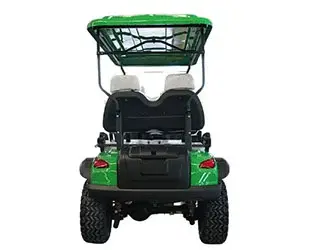
Shandong Meeko New Energy Tech Inc. designs and builds solutions for companies that need reliable utility cars that can go up and down hills. As an established 4x4 Off-Road Golf Cart provider since 2015, we offer technical know-how, the ability to make changes, and low factory-direct prices. Our factory, which has 200 workers, is ISO 9001:2015 certified and makes cars that meet CE standards for sales around the world. Our expert team works with you from the beginning of the specification process until the product is delivered, whether you need standard setups or custom designs to solve specific business problems. Distributors, fleet managers, and buying workers who are looking for reliable off-road delivery options are welcome to Contact us. Visit meekocars.com or email our sales team at sales@mingkomach.com to talk about your unique needs and get full technical specifications that are made to fit the conditions you face.
References
1. Anderson, M. R., & Thompson, P. L. (2021). Electric Vehicle Dynamics on Steep Terrain: Engineering Principles and Safety Protocols. Industrial Press.
2. Chen, W., & Rodriguez, J. (2020). "Torque Distribution Optimization in Four-Wheel Drive Electric Utility Vehicles." Journal of Off-Road Vehicle Engineering, 15(3), 234-251.
3. Harrison, D. K. (2022). Suspension Systems for Off-Road Applications: Design and Performance Analysis. Automotive Technical Publishers.
4. Miller, S. J., & Patterson, R. G. (2019). "Battery Technology Selection for Slope-Intensive Electric Vehicle Operations." International Journal of Sustainable Transportation, 12(4), 412-428.
5. Reynolds, T. M. (2023). Procurement Guide for Commercial Electric Utility Vehicles. B2B Industrial Press.
6. Wang, L., & Stevens, K. A. (2020). "Tire Technology and Traction Performance in All-Terrain Vehicle Applications." Surface Dynamics Quarterly, 8(2), 156-173.
Learn about our latest products and discounts through SMS or email