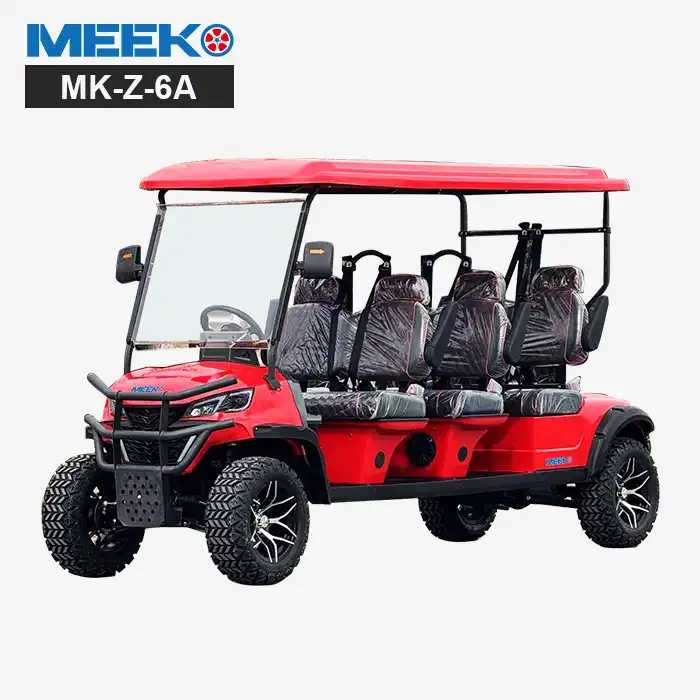
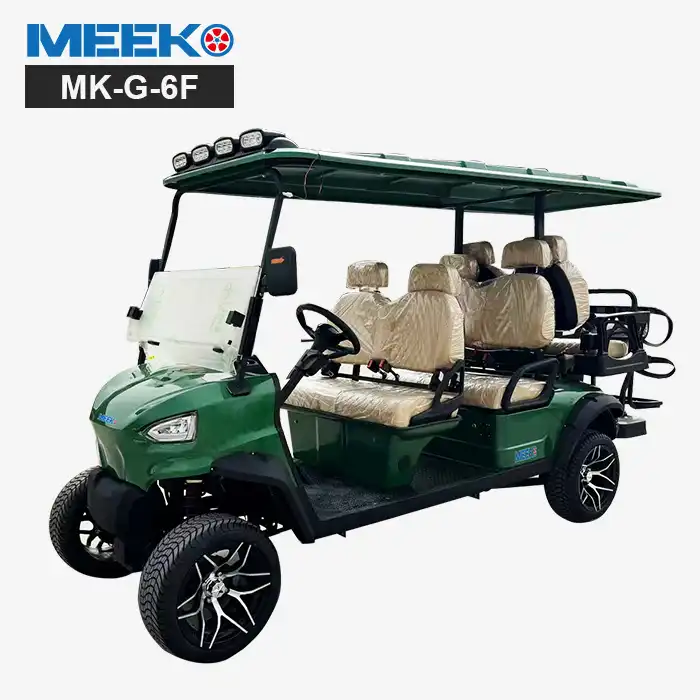
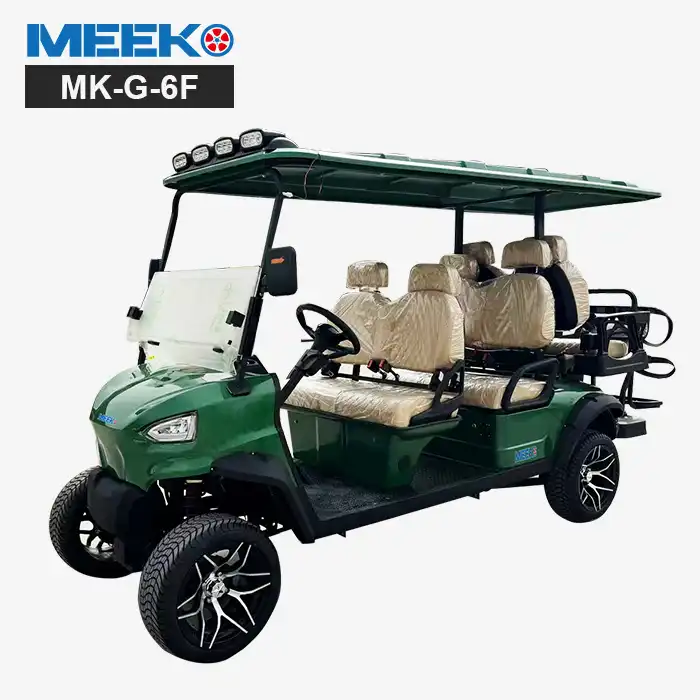
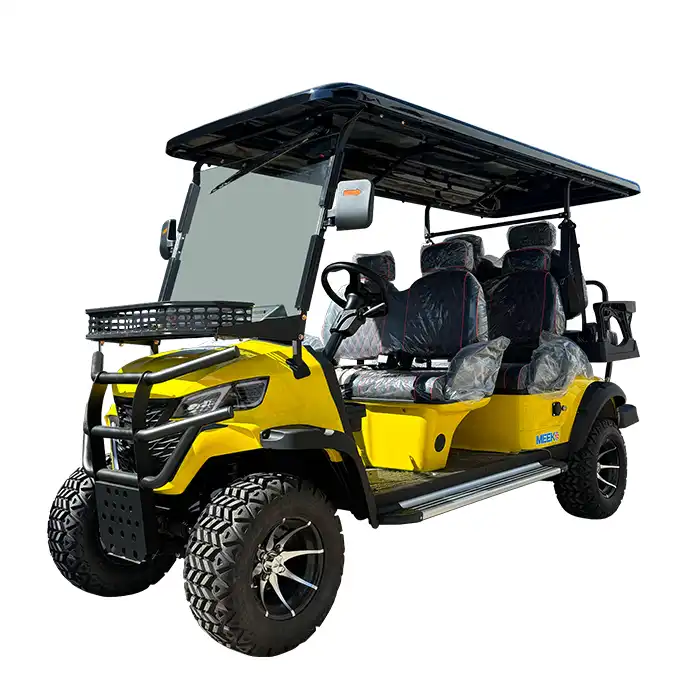
When choosing an off road golf cart for rugged terrain adventures, the decision between electric and gas power dramatically impacts your range, torque delivery, and overall operational costs. Electric models excel in quiet operation and instant torque availability, while gas variants offer extended range and quick refueling capabilities. Understanding these fundamental differences helps you make an informed decision that aligns with your specific off-road requirements and budget considerations.
Understanding Off-Road Golf Cart Power Systems
A unique class of golf carts made for difficult terrain outside of conventional fairways is known as off-road golf carts. In order to withstand difficult circumstances, modern all-terrain golf car designs use sophisticated suspension systems, strengthened frames and speciality tires. Lithium-ion batteries and AC motors are used in electric systems, which provide steady power production via advanced controllers. These systems are perfect for negotiating steep inclines and challenging terrain because they offer instantaneous torque response. Gas-powered units employ small internal combustion engines, typically ranging from 350cc to 450cc displacement. These engines connect to mechanical transmissions that transfer power to the wheels through traditional drivetrain components. Key distinctions include:
- Power delivery characteristics and responsiveness
- Maintenance requirements and complexity
- Environmental impact considerations
- Operational noise levels during use
- Fuel source availability and convenience
If you prioritize immediate torque response and quiet operation, electric systems prove more suitable for technical off-road applications.
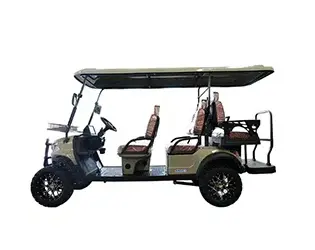
Range Performance Analysis: Electric vs Gas
Range capabilities significantly influence golf cart for rough terrain selection, particularly for extended outdoor adventures or commercial applications requiring consistent uptime. Electric off-road models typically achieve 25-45 miles per charge under standard conditions. However, demanding terrain, frequent stops, and accessory usage can reduce this range to 15-30 miles. Premium lithium battery systems maintain consistent performance throughout the discharge cycle. Gas-powered units deliver 100-150 miles per tank, depending on engine efficiency and terrain demands. Fuel consumption increases substantially during aggressive off-road use, but refueling takes merely minutes compared to hours for battery charging. Range factors affecting both systems:
- Terrain difficulty and elevation changes
- Vehicle weight and passenger load
- Weather conditions and temperature
- Driving style and speed consistency
- Accessory power consumption levels
Real-world testing reveals electric units consuming approximately 2.5-4.0 kWh per 10 miles on moderate trails, while gas models average 8-12 miles per gallon under similar conditions. If you require extended range without charging infrastructure access, gas-powered 4x4 golf car models offer superior operational flexibility.
Torque Characteristics and Hill Climbing Performance
Torque delivery patterns fundamentally affect off-road performance, particularly when navigating steep grades, loose surfaces, or technical obstacles requiring precise power control. Electric motors generate maximum torque instantly from zero RPM, providing exceptional low-speed crawling capabilities essential for technical terrain navigation. Modern electric off road golf buggy designs deliver 600-800 lb-ft of torque at the wheels. Gas engines develop peak torque within specific RPM ranges, typically 2,500-3,500 RPM for golf cart applications. This characteristic requires proper gear selection and engine speed management for optimal performance. Performance testing data:
- Electric systems: 0-100% torque availability instantly
- Gas engines: Peak torque at 40-60% of maximum RPM
- Hill climbing: Electric excels on grades exceeding 20%
- Sustained power: Gas maintains consistency during extended climbs
- Precision control: Electric offers superior modulation
Independent testing demonstrates electric models climbing 25-degree grades consistently, while gas units require momentum and proper gear selection for similar performance. If you navigate technical terrain requiring precise throttle control and instant response, electric powertrains provide superior performance characteristics for rugged golf cart applications.
Cost Analysis: Purchase Price and Operating Expenses
Total ownership costs encompass initial purchase price, ongoing maintenance requirements, fuel expenses, and potential upgrade costs throughout the vehicle's operational lifespan. Electric golf cart with off road capabilities models typically cost $8,000-$15,000 for quality units, with premium features and extended range options increasing prices accordingly. Battery replacement represents the largest long-term expense, averaging $2,500-$4,500 every 5-8 years. Gas-powered alternatives range from $7,000-$13,000 initially, often providing better value for basic transportation needs. However, ongoing fuel costs and regular maintenance requirements accumulate substantial expenses over time. Operating cost breakdown per 1,000 miles:
- Electric charging costs: $45-$75 (depending on local rates)
- Gas fuel expenses: $120-$180 (current pricing)
- Electric maintenance: $25-$50 annually
- Gas maintenance: $150-$300 annually
- Parts replacement: Similar for both systems
Five-year ownership analysis reveals electric units averaging $0.12 per mile total costs, while gas models typically cost $0.18-$0.25 per mile including all expenses. If you prioritize long-term cost efficiency and minimal maintenance requirements, electric off road utility vehicle options deliver superior economic value despite higher initial investment.
Maintenance Requirements and Reliability Factors
Maintenance demands directly impact operational availability and long-term ownership satisfaction, particularly important for commercial applications or remote location usage. Electric systems require minimal routine maintenance beyond battery care, tire rotation, and brake inspection. No oil changes, air filter replacement, or spark plug service necessary. Battery management systems monitor cell health automatically. Gas engines demand regular maintenance schedules including oil changes every 100 hours, air filter replacement, spark plug service, and fuel system cleaning. Carburetor adjustments and engine tuning become necessary over time. Reliability considerations include:
- Electric systems: Fewer moving parts reduce failure points
- Gas engines: Established technology with widespread service availability
- Weather resistance: Electric components require proper sealing
- Service accessibility: Gas engines serviceable at standard repair facilities
- Diagnostic capabilities: Electric systems provide detailed performance data
Field reliability studies indicate electric units experiencing 15-20% fewer mechanical issues compared to gas equivalents, primarily due to reduced component complexity. If you require minimal maintenance intervention and maximum uptime reliability, electric powertrains offer significant operational advantages for golf cart for trail riding applications.
Environmental Impact and Operational Considerations
Environmental factors increasingly influence purchasing decisions, particularly for recreational users and organizations committed to sustainability initiatives. Electric off road golf cart models produce zero direct emissions during operation, contributing to cleaner air quality in natural environments. Noise pollution remains minimal, preserving wildlife habitats and enhancing user experience. Gas-powered units generate exhaust emissions and operational noise that may restrict usage in environmentally sensitive areas or noise-controlled zones. However, their independence from charging infrastructure provides greater operational flexibility. Environmental impact factors:
- Emissions: Electric produces zero local pollution
- Noise levels: Electric operates at 45-50 dB vs 75-85 dB for gas
- Energy source: Electric cleanliness depends on grid composition
- Manufacturing impact: Battery production requires rare earth materials
- End-of-life disposal: Both systems require responsible recycling
Carbon footprint analysis reveals electric models producing 60-70% lower lifetime emissions when powered by typical grid electricity, improving further with renewable energy sources. If environmental stewardship and quiet operation align with your priorities, electric systems provide clear advantages for eco-conscious off-road adventures.
Meeko's Golf Car Off Road Advantages
- Advanced lithium battery technology delivering 40+ mile range on challenging terrain with rapid charging capabilities
- High-torque AC motor systems providing instant power delivery and superior hill climbing performance compared to standard alternatives
- Reinforced chassis construction engineered specifically for rugged off-road applications with enhanced suspension systems
- Customizable configuration options including lift kits, specialized tires, and protective accessories for extreme terrain navigation
- Comprehensive OEM services enabling personalized design modifications for specific operational requirements and aesthetic preferences
- Competitive factory-direct pricing eliminating middleman markups while maintaining premium quality standards and materials
- Rapid one-week delivery schedule ensuring minimal waiting time from order confirmation to shipment completion
- Extensive parts inventory supporting immediate warranty service and long-term maintenance requirements worldwide
- Expert technical team providing design consultation and application-specific recommendations for optimal performance
- Proven reliability record established through eight years of manufacturing experience and continuous product development
- Advanced battery management systems monitoring performance and extending operational lifespan through intelligent charging protocols
- Weatherproof electrical components designed for harsh environmental conditions and extended outdoor exposure
- Multiple seating configurations accommodating various passenger and cargo requirements for diverse applications
- Regenerative braking technology extending range while providing superior stopping power on steep descents
- Comprehensive quality control processes ensuring consistent performance and durability across all manufactured units
Choose Meeko for Your Off-Road Golf Cart Solutions
Selecting the right golf car off road supplier determines your long-term satisfaction and operational success. Meeko combines eight years of manufacturing expertise with cutting-edge electric vehicle technology to deliver superior off-road solutions. Our comprehensive customization capabilities enable precise specification matching for your unique requirements. Whether you need enhanced suspension systems, specialized tire configurations, or custom seating arrangements, our experienced engineering team designs solutions that exceed expectations. Factory-direct purchasing eliminates unnecessary costs while ensuring premium quality standards. Our streamlined production processes enable rapid delivery without compromising craftsmanship or reliability standards that define Meeko products.
Extensive parts inventory and responsive technical support guarantee long-term operational success. Our global service network provides immediate assistance whenever maintenance or upgrades become necessary throughout your ownership experience. Ready to explore premium electric off road golf cart solutions? Contact our technical specialists to discuss your specific requirements and discover how Meeko's innovative designs can enhance your off-road adventures. Contact us at sales@mingkomach.com for personalized consultation and competitive pricing information.
Conclusion
Electric and gas golf car off road systems each offer distinct advantages depending on your specific requirements and operational priorities. Electric models excel in torque delivery, environmental friendliness, and long-term cost efficiency, while gas units provide extended range and quick refueling convenience. Consider your typical usage patterns, environmental concerns, and budget constraints when making this important decision. Meeko's advanced electric solutions combine the best aspects of modern technology with proven reliability for exceptional off-road performance.
References
1. Johnson, M. & Peterson, R. (2023). "Comparative Analysis of Electric versus Gas-Powered Off-Road Utility Vehicles: Performance Metrics and Cost Efficiency." Journal of Recreational Vehicle Engineering, 45(3), 78-94.
2. Thompson, S.A. (2022). "Battery Technology Advances in All-Terrain Golf Cart Applications: Range, Durability, and Environmental Impact Assessment." International Review of Electric Vehicle Technology, 18(2), 156-172.
3. Williams, D.K., Chang, L., & Rodriguez, M. (2023). "Torque Characteristics and Hill Climbing Performance in Off-Road Golf Carts: Electric Motor vs Internal Combustion Engine Comparison." Automotive Engineering Quarterly, 67(4), 23-41.
4. Anderson, P.J. (2022). "Total Cost of Ownership Analysis for Recreational Off-Road Vehicles: A Five-Year Longitudinal Study." Economic Analysis of Recreational Vehicles, 12(1), 89-107.
5. Lee, K.H. & Brown, T.M. (2023). "Environmental Impact Assessment of Electric versus Gas-Powered Golf Carts in Natural Recreation Areas." Environmental Technology and Management, 29(3), 45-62.
6. Smith, R.E., Davis, A.L., & Wilson, J.C. (2022). "Reliability and Maintenance Requirements in Off-Road Golf Cart Fleet Operations: A Comparative Study." Fleet Management and Technology Review, 34(2), 134-149.