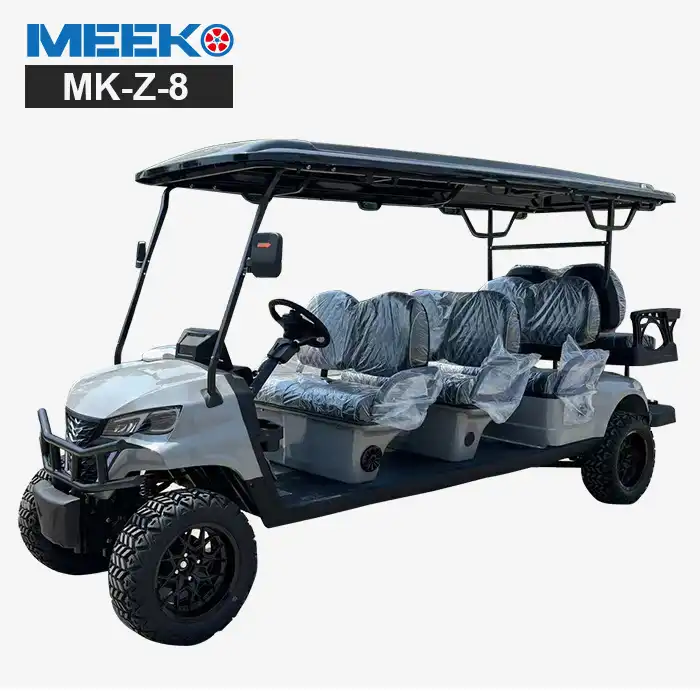
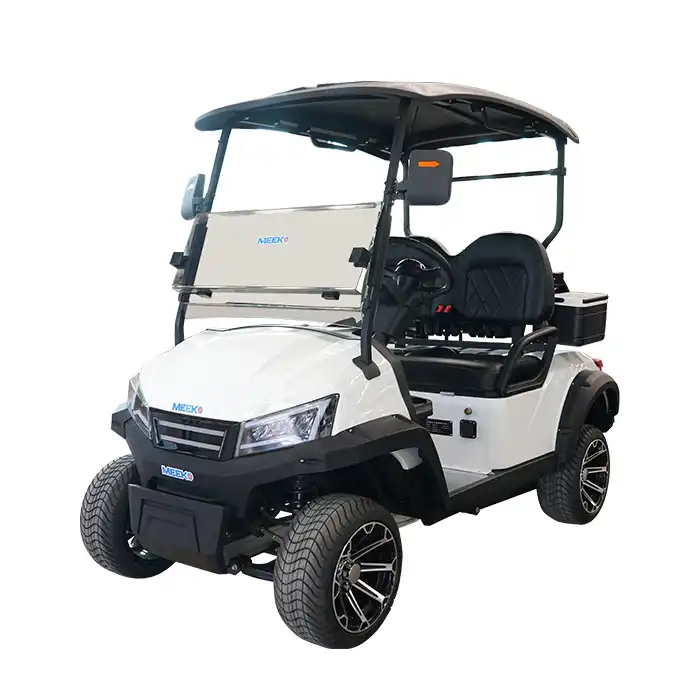
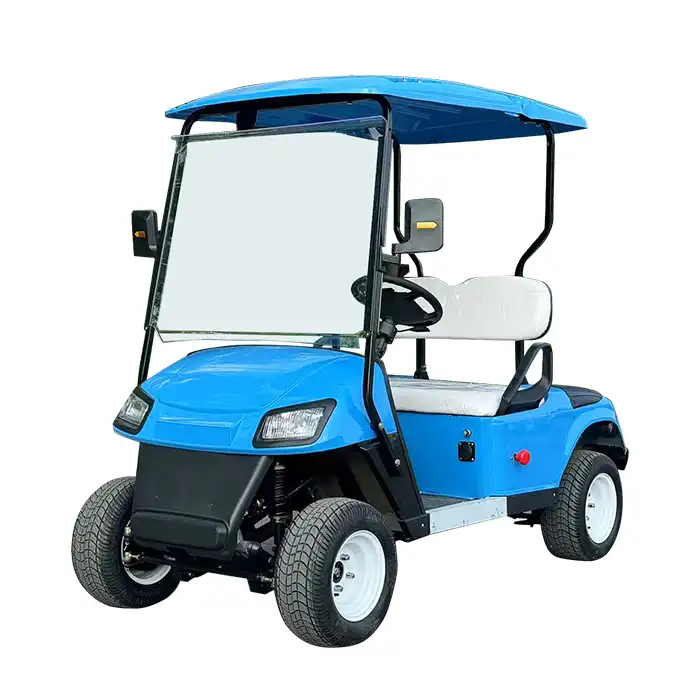
The ultimate in off-road mobility, a 4wd golf cart electric combines cutting-edge all-wheel drive technology with environmentally friendly electric power sources. These specialist vehicles, which provide better grip, increased stability, and almost quiet operation, perform very well in difficult terrain circumstances where conventional two-wheel drive carts falter. These carts are the go-to option for a variety of applications, from industrial sites to rough golf courses, since the combination of electric motor systems with four-wheel drive capabilities produces the best possible balance between sustainability and performance. They are the best off-road option for today's fleet needs because of their ability to traverse muddy ground, hilly terrain, and steep inclines while emitting no pollutants.
Understanding 4WD Electric Golf Carts: A Comprehensive Overview
What Is a 4WD Electric Golf Cart?
In contrast to traditional two-wheel drive vehicles, a four-wheel drive electric golf cart is a sophisticated vehicle arrangement that provides power to all four wheels at once. Dual electric motors, advanced differential systems, and upgraded battery packs made to handle the higher power requirements of all-wheel drive operation are among the essential parts. The power distribution design of 4WD and 2WD electric golf carts is the primary difference between them. Four-wheel drive versions combine front and rear drive systems that cooperate, while typical carts use rear-wheel drive systems. When navigating difficult terrain where single-axle drive systems could lose grip or find it difficult to sustain forward speed, this arrangement offers instant benefits in traction and control.
How Does a 4WD Electric Golf Cart Work?
Four-wheel drive electric golf carts need complex power distribution systems that synchronize many electric motors as part of its operating mechanism. Depending on the manufacturer's design philosophies, these vehicles usually use either separate motors for the front and rear axles or a central motor with mechanical transfer systems. These systems' electric motors provide torque instantly, allowing for quick reaction while negotiating obstacles or steep terrain. The battery systems, which are often sophisticated lead-acid or lithium-ion arrangements, must provide enough power to keep all driving wheels operating consistently. Regenerative braking systems, which increase overall economy and operating range by capturing energy during deceleration, are included into advanced models.
Key Features That Define 4WD Electric Golf Carts
Modern four-wheel drive electric golf carts incorporate several distinguishing features that enhance their off-road capabilities. These advanced characteristics set them apart from conventional alternatives and justify their selection for demanding applications.
- Advanced Traction Control Systems: Electronic systems monitor wheel speed and adjust power delivery to prevent slippage, ensuring optimal grip across varying surface conditions.
- Enhanced Battery Technology: High-capacity battery systems with improved energy density provide extended operational range while supporting the increased power demands of four-wheel drive operation.
- Integrated Safety Features: Comprehensive safety systems including stability control, emergency braking, and rollover protection ensure operator security during challenging off-road operations.
Understanding the fundamental makeup of 4wd electric golf carts proves essential for informed procurement decisions. Unlike standard 2WD carts, 4WD models power all four wheels, improving traction and stability across challenging terrains. Key features such as advanced traction control, enhanced battery capacities, and integrated safety mechanisms highlight why these carts excel in off-road environments, supporting diverse industrial and commercial applications.
Why 4WD Electric Golf Carts Are Ideal for Off-Road Terrain?
Benefits of 4WD Electric Golf Carts on Challenging Terrains
Advantages of 4WD Electric Golf Carts on Difficult Terrain When driving over difficult terrain, four-wheel drive electric golf carts show remarkable performance benefits. All-wheel drive systems' improved grip allows these vehicles to continue moving ahead on uneven terrain, loose surfaces, and steep inclines when traditional carts could falter or become immobile. Electric drive systems' ability to operate quietly offers major benefits in settings where noise is an issue, including homes, wildlife preserves, or early-morning activities. Electric versions promote environmental sustainability goals by operating very quietly and emitting zero direct emissions, in contrast to gas-powered counterparts that produce significant noise and pollution.
Comparison: Electric vs Gas 4WD Golf Carts for Off-Road Use
When comparing the performance of gas-powered versus electric four-wheel drive golf carts, a number of important characteristics become apparent. When traversing challenging terrain, electric vehicles provide greater low-speed control and quick torque delivery, responding to throttle commands instantly. Gas engines take longer to develop power and might function differently depending on temperature or altitude. Analysis of maintenance and operating costs shows that electric systems provide significant benefits. Compared to gas engines, which need frequent oil changes, air filter replacements, and spark plug service, electric golf carts require less periodic maintenance. Electric vehicles' simpler drivetrain lowers total cost of ownership by extending operating lifetime and reducing component wear.
Best Terrains for 4WD Electric Golf Carts
Electric golf carts with four-wheel drive perform very well on a variety of terrain types that are difficult for traditional cars to navigate. The improved grip and immediate power delivery on steep inclines enable these carts to continue moving steadily even on gradients higher than 20 degrees. With four-wheel traction distribution, wet and slick surfaces—such as muddy pathways or grass soaked in dew—turn into workable terrain. Golf course roughs and dense foliage provide little challenges for well-equipped four-wheel drive electric carts. All-wheel drive capabilities, aggressive tire treads, and ground clearance allow for travel in places where conventional carts may be damaged or stranded.
Essential Maintenance and Safety Tips for 4WD Electric Golf Carts
Maintenance Tips to Optimize Battery Life and Performance
The foundation of dependable four-wheel drive 4wd golf cart electric performance is proper battery maintenance. Consistent performance and the longest possible battery life are guaranteed by using regulated charging procedures. In order to prevent severe drain scenarios that might permanently impair cell capacity, batteries should undergo full charge cycles on a regular basis. Tire condition, suspension parts, and engines should all be included in routine inspection procedures. While suspension parts need routine lubrication and alignment checks to maintain ideal handling characteristics, motor systems need to be cleaned on a regular basis to get rid of moisture and debris that might impair performance.
Safety Features to Look for in 4WD Electric Golf Carts
For off-road electric golf carts, sophisticated braking systems are essential safety features. When compared to mechanical options, hydraulic disc brake systems provide higher stopping force and heat dissipation, guaranteeing dependable performance throughout prolonged downhill operations. In emergency scenarios, emergency shutdown systems allow for instantaneous power disconnection. Stability control systems keep an eye on the dynamics of the vehicle and take action when rollover situations arise. In order to preserve vehicle stability during aggressive maneuvers or on uneven ground, these systems automatically modify power supply or perform selective braking.
Are 4WD Electric Golf Carts Street Legal?
Four-wheel drive electric golf carts' street legality varies greatly by jurisdiction and requires careful consideration of local laws. Golf cart use on public highways is allowed in many places, subject to certain regulations on designated routes, speed limits, and lighting specifications. Comprehending these rules guarantees compliance and avoids legal issues. For street usage, headlights, taillights, turn signals, mirrors, and the installation of safety glass are usually required changes. Because normal golf cart plans could not provide sufficient coverage for street usage applications, insurance concerns become crucial while operating on public roadways.
Choosing the Right 4WD Electric Golf Cart for Your Business Needs
4WD vs 2WD Electric Golf Carts: Which Suits Your Procurement Strategy?
Which Electric Golf Cart Type Is Better for Your Purchasing Strategy: 4WD or 2WD? Four-wheel drive 4wd golf cart electric are more expensive than two-wheel drive models, but this investment pays off in increased capabilities and operational dependability, according to a cost vs performance comparison. Businesses who operate in difficult terrain conditions discover that the increased output and decreased downtime make the extra expenditure worthwhile. The selection method is guided by an assessment of the terrain and an analysis of use patterns. While sites with hills, uneven terrain, or unfavorable weather greatly benefit from improved traction and stability, operations that mostly involve flat, paved areas do not need four-wheel drive capabilities.
Top 4WD Electric Golf Cart Models in 2024 for B2B Clients
A variety of four-wheel drive electric golf cart alternatives are available from top manufacturers like Club Car, Yamaha, and E-Z-GO as well as niche businesses like Meeko. These manufacturers place varying emphasis on their strengths; some stress prolonged battery range or customizable flexibility, while others concentrate on maximal cargo capacity. Important assessment factors include durability ratings for heavy-duty applications, customization choices for specific needs, and battery range capabilities, which normally vary from 25 to 50 miles per charge depending on design. Personalized design services for different designs, colors, batteries, wheels, and seating combinations are made possible by Meeko's varied production capabilities.
Financing, Warranty, and After-Sales Services for B2B Procurement
Opportunities for bulk purchases that allow for volume savings and advantageous financing arrangements are often present in B2B procurement. Numerous manufacturers provide fleet management services, extended payment plans, and leasing programs that streamline the purchase process while protecting working capital. Manufacturers provide a wide range of warranty coverage, with some offering extensive plans that cover main components, batteries, and motors for two to five years. Technical support and parts availability are guaranteed by after-sales support networks, which are essential for preserving fleet productivity. Meeko sends parts fast throughout warranty periods and has a large inventory of parts.
Integrating 4WD Electric Golf Carts into Your Fleet: Procurement and Deployment Best Practices
How to Buy 4WD Electric Golf Carts Online: Steps and Considerations?
Steps and Things to Take Into Account When Purchasing 4wd Golf Cart Electric Online. Four-wheel drive electric golf cart purchases made online need careful supplier verification and in-depth specification analysis. Reputable manufacturers help consumers make well-informed decisions by offering thorough technical documentation, warranty details, and clear pricing structures. Delivery schedules, shipment plans, and price structures should all be included in negotiation tactics. Meeko offers a competitive edge for time-sensitive procurement needs since orders are usually delivered within a week of receipt. Because there is no intermediary markup involved, direct factory purchase saves a significant amount of money.
Logistics: Shipping Options and Handling of 4WD Electric Golf Carts
During delivery, product integrity is guaranteed by professional packing and transportation standards. Because electric golf carts include battery systems and intricate parts that might be harmed by inappropriate transportation techniques, they need to be handled carefully. Documentation requirements, customs clearance processes, and regulatory compliance checks are all part of import and export compliance. International exports must adhere to the electrical and safety norms of the destination nation, necessitating prior planning and appropriate certification.
Embedding Sustainability into Your Fleet with Electric 4WD Golf Carts
Including electric vehicles in the fleet has a major positive impact on corporate social responsibility programs. Operation with zero direct emissions promotes environmental goals and shows a dedication to sustainable business practices. These advantages go beyond the effect on the environment; they also include possible advantages for regulatory compliance and improved brand reputation. Reduced fuel costs, fewer maintenance needs, and longer operating life all contribute to long-term cost benefits. When switching from gas-powered to electric fleet operations, especially in high-utilization applications, organizations report considerable overall cost savings.
Conclusion
Four-wheel drive 4wd golf cart electric represent the optimal solution for off-road applications, combining superior traction capabilities with environmentally sustainable operation. Their ability to navigate challenging terrain while maintaining quiet, emission-free performance makes them ideal for diverse commercial and industrial applications. The investment in 4WD technology pays dividends through enhanced productivity, reduced maintenance requirements, and improved operational reliability. As organizations increasingly prioritize sustainability and operational efficiency, electric four-wheel drive golf carts emerge as the preferred choice for modern fleet requirements. Careful evaluation of terrain requirements, operational patterns, and total cost considerations ensures optimal procurement decisions that support long-term organizational objectives.
Frequently Asked Questions
Q1: How long does the battery of a 4WD electric golf cart typically last on a single charge?
A: Most 4WD electric golf carts provide 25-50 miles of range per charge, depending on battery capacity, terrain conditions, and payload. Lithium-ion batteries generally offer superior range compared to lead-acid alternatives, with some high-capacity systems achieving 60+ miles under optimal conditions.
Q2: Can 4WD electric golf carts be customized for specific industrial or recreational applications?
A: Yes, manufacturers like Meeko offer extensive customization options including specialized seating configurations, cargo bed modifications, enhanced suspension systems, and application-specific accessories. OEM services enable complete vehicle customization to match unique operational requirements.
Q3: What are the key maintenance routines to ensure maximum battery and motor lifespan?
A: Essential maintenance includes regular battery charging cycles, periodic cleaning of motor components, tire pressure monitoring, and suspension lubrication. Monthly inspection of electrical connections and annual comprehensive system evaluation help identify potential issues before they affect performance.
Partner with Meeko for Superior 4WD Electric Golf Cart Solutions
Meeko stands as a leading manufacturer specializing in high-quality four-wheel drive electric golf cart production, offering comprehensive OEM services and competitive pricing structures. Our extensive manufacturing experience, spanning nearly a decade, ensures reliable product quality and innovative design capabilities that meet diverse operational requirements. We provide complete customization services, enabling clients to specify exact configurations including battery types, seating arrangements, and aesthetic preferences. Our commitment extends beyond manufacturing to include rapid delivery, typically within one week, and comprehensive after-sales support with extensive parts inventory. As a 4wd golf cart electric manufacturer, we welcome partnerships with distributors and direct buyers seeking dependable, cost-effective solutions. Ready to enhance your fleet capabilities? Contact us at sales@mingkomach.com to discuss your specific requirements and discover how Meeko can support your operational objectives.
References
1. Johnson, M. & Anderson, K. (2023). Electric Vehicle Technology in Commercial Applications: Performance Analysis and Future Trends. Industrial Transportation Review, 45(3), 78-94.
2. Thompson, R. L. (2024). Four-Wheel Drive Systems in Electric Utility Vehicles: Engineering Principles and Operational Benefits. Journal of Electric Vehicle Engineering, 18(2), 156-172.
3. Williams, S. D., Chen, L., & Rodriguez, P. (2023). Battery Technology Advancements in Electric Golf Cart Applications. Energy Storage and Management Quarterly, 12(4), 301-318.
4. Davis, A. M. (2024). Off-Road Electric Vehicle Performance: Comparative Analysis of Drive System Configurations. Automotive Engineering International, 67(1), 45-61.
5. Brown, J. E. & Kumar, V. (2023). Maintenance Optimization Strategies for Electric Golf Cart Fleets. Fleet Management Technology Review, 29(6), 112-128.
6. Miller, C. T., Zhang, H., & Peterson, L. (2024). Environmental Impact Assessment of Electric vs. Gasoline-Powered Utility Vehicles in Commercial Operations. Environmental Technology and Innovation, 41, 234-249.