- English
- French
- German
- Portuguese
- Spanish
- Russian
- Japanese
- Korean
- Arabic
- Greek
- German
- Turkish
- Italian
- Danish
- Romanian
- Indonesian
- Czech
- Afrikaans
- Swedish
- Polish
- Basque
- Catalan
- Esperanto
- Hindi
- Lao
- Albanian
- Amharic
- Armenian
- Azerbaijani
- Belarusian
- Bengali
- Bosnian
- Bulgarian
- Cebuano
- Chichewa
- Corsican
- Croatian
- Dutch
- Estonian
- Filipino
- Finnish
- Frisian
- Galician
- Georgian
- Gujarati
- Haitian
- Hausa
- Hawaiian
- Hebrew
- Hmong
- Hungarian
- Icelandic
- Igbo
- Javanese
- Kannada
- Kazakh
- Khmer
- Kurdish
- Kyrgyz
- Latin
- Latvian
- Lithuanian
- Luxembou..
- Macedonian
- Malagasy
- Malay
- Malayalam
- Maltese
- Maori
- Marathi
- Mongolian
- Burmese
- Nepali
- Norwegian
- Pashto
- Persian
- Punjabi
- Serbian
- Sesotho
- Sinhala
- Slovak
- Slovenian
- Somali
- Samoan
- Scots Gaelic
- Shona
- Sindhi
- Sundanese
- Swahili
- Tajik
- Tamil
- Telugu
- Thai
- Ukrainian
- Urdu
- Uzbek
- Vietnamese
- Welsh
- Xhosa
- Yiddish
- Yoruba
- Zulu
What Is a 4WD Electric Golf Cart and What Is Its Role in Modern Golfing?
What Is a 4wd electric golf cart and What Is Its Role in Modern Golfing? A 4WD electric golf cart represents a revolutionary advancement in golf course transportation, combining all-terrain capability with eco-friendly battery technology. These specialized utility vehicles deliver superior traction and stability across challenging terrain while maintaining the quiet operation essential for golf environments. Their role extends beyond traditional fairway navigation, offering enhanced performance for course maintenance, player transportation on hilly terrain, and versatile utility applications that modern golf facilities increasingly demand.
What is a 4WD Electric Golf Cart?
A 4WD electric golf cart stands as a sophisticated evolution of traditional golf course vehicles, engineered to tackle diverse terrain conditions that standard two-wheel drive models cannot handle effectively. Unlike conventional golf carts that rely on rear-wheel drive systems, these advanced machines distribute power to all four wheels simultaneously, creating exceptional traction and stability. The fundamental design incorporates an electric motor system powered by high-capacity lithium-ion batteries, eliminating emissions while delivering consistent torque across all driving surfaces. This battery-powered configuration ensures quiet operation, maintaining the peaceful atmosphere that golf courses require. The compact design allows easy navigation through narrow cart paths while providing robust performance capabilities. Modern 4WD electric golf carts feature sophisticated suspension systems that absorb shocks from uneven terrain, protecting both passengers and equipment during transport. The four-wheel drive mechanism engages automatically when additional traction becomes necessary, seamlessly adapting to changing surface conditions without driver intervention. These vehicles typically accommodate two to six passengers, depending on the specific model configuration. Their utility extends beyond passenger transport, as many units include cargo beds for equipment, maintenance supplies, or personal belongings. The combination of electric power and all-terrain capability makes them ideal for golf facilities seeking versatile, environmentally responsible transportation solutions. Advanced models incorporate regenerative braking systems that capture energy during deceleration, extending battery range and improving overall efficiency. This green technology aligns with the growing environmental consciousness within the golf industry, where facilities actively seek sustainable operational practices.
The Problem It Solves and Market Needs
Golf courses worldwide face increasing challenges related to terrain accessibility, environmental regulations, and operational efficiency. Traditional golf carts struggle on steep inclines, wet conditions, and rough terrain areas that modern course designs frequently incorporate. This limitation creates safety concerns and restricts access to certain course areas during adverse weather conditions. Environmental pressures have intensified demands for eco-friendly alternatives to gas-powered utility vehicles. Golf facilities must balance operational needs with sustainability goals, making electric solutions increasingly attractive. The quiet operation of electric systems preserves the tranquil atmosphere that golfers expect while reducing noise pollution in surrounding communities. Course maintenance requirements have evolved to include diverse terrain management, from wetland areas to elevated tees and greens. Maintenance crews need reliable vehicles capable of accessing these challenging locations while carrying essential equipment and supplies. Standard golf carts lack the power and stability necessary for these demanding applications. Weather-related course conditions frequently limit cart usage, forcing facilities to restrict access and potentially lose revenue. Rain, morning dew, and soft ground conditions create hazardous situations for traditional carts, leading to course damage and safety concerns. The enhanced traction of 4WD systems addresses these limitations directly. Golf course architects increasingly design layouts that incorporate natural terrain features, creating more challenging and interesting playing environments. These designs often include steep slopes, elevated features, and varied surface conditions that require specialized transportation solutions. Traditional carts cannot safely navigate these areas, limiting course accessibility and player satisfaction.
Core Features and Functionality Deep Dive
The heart of any 4WD electric golf cart lies in its sophisticated drivetrain system, which distributes power intelligently across all four wheels. This system continuously monitors traction conditions, automatically adjusting power delivery to maintain optimal grip and stability. The electric motor configuration provides instant torque delivery, unlike gas engines that require time to build power. Battery technology represents a critical component, with modern lithium-ion systems offering extended range and rapid charging capabilities. These batteries typically provide 25-40 miles of operation per charge, sufficient for full-day use in most golf applications. Advanced battery management systems monitor individual cell performance, ensuring optimal charging and preventing premature degradation. The suspension system incorporates independent wheel control, allowing each wheel to respond individually to terrain variations. This design maintains passenger comfort while protecting the vehicle chassis from stress and damage. Heavy-duty springs and shock absorbers handle the additional loads associated with utility applications. Steering systems feature power assistance that reduces driver fatigue during extended use. The compact turning radius allows navigation through tight spaces while maintaining stability during direction changes. Electronic steering controls provide precise response and consistent feel across different operating conditions. Braking systems combine traditional friction brakes with regenerative technology that captures kinetic energy during deceleration. This dual approach extends battery life while providing reliable stopping power across various conditions. Anti-lock braking systems prevent wheel lockup on slippery surfaces, enhancing safety. Control interfaces feature intuitive displays showing battery status, range estimates, and system diagnostics. These digital dashboards help operators monitor vehicle performance and plan usage accordingly. Some models include GPS tracking and fleet management capabilities for larger operations.
Technology Explained: Under the Hood
The electrical architecture of 4WD electric golf carts represents sophisticated engineering designed for reliability and efficiency. The primary power source consists of lithium-ion battery packs arranged in series and parallel configurations to achieve desired voltage and capacity specifications. These batteries deliver consistent power output throughout their discharge cycle, unlike lead-acid alternatives that experience voltage drop as charge depletes. Motor controllers regulate power delivery to each wheel independently, utilizing pulse-width modulation to control speed and torque precisely. This electronic control system responds to throttle inputs within milliseconds, providing smooth acceleration and deceleration. The controllers also manage regenerative braking, converting kinetic energy back to electrical energy during deceleration. The drivetrain employs differential systems that allow wheels to rotate at different speeds during turns while maintaining power distribution. Electronic limited-slip differentials can redirect power from spinning wheels to those with better traction, maximizing effectiveness on challenging terrain. This technology operates transparently to the driver, activating only when needed. Charging systems incorporate intelligent algorithms that optimize battery life by controlling charge rates and temperatures. Level 1 charging using standard household outlets provides convenient overnight charging, while Level 2 systems reduce charging time to 4-6 hours. Some models support DC fast charging for rapid energy replenishment during busy periods. Thermal management systems regulate battery and motor temperatures during operation and charging. Cooling fans and heat exchangers prevent overheating that could damage components or reduce performance. Temperature sensors throughout the system provide continuous monitoring and automatic protection activation when necessary.
Key Advantages and Selling Points
The environmental benefits of 4WD electric golf carts create compelling advantages for modern golf facilities committed to sustainability. Zero direct emissions eliminate air pollution concerns while supporting green certification programs that many courses pursue. The quiet operation preserves the natural tranquility that golfers value, reducing noise complaints from surrounding communities. Operational cost advantages become apparent through reduced fuel and maintenance expenses. Electricity costs significantly less than gasoline, while electric motors require minimal maintenance compared to internal combustion engines. The absence of oil changes, air filter replacements, and tune-ups reduces ongoing service costs substantially. Performance capabilities exceed traditional expectations, with instant torque delivery providing superior hill-climbing ability and acceleration. The low center of gravity created by battery placement enhances stability and handling characteristics. All-wheel traction ensures reliable operation across diverse terrain conditions that would challenge conventional carts. Versatility emerges as a major selling point, with these vehicles serving multiple roles beyond golf transportation. Course maintenance, event support, and emergency response applications benefit from the enhanced capability. The ability to access previously unreachable areas expands operational possibilities and improves efficiency. Durability advantages result from the simplified electric drivetrain with fewer moving parts than gas engines. Electric motors operate for decades with minimal wear, while modern batteries provide years of reliable service. Weather resistance allows operation in conditions that might sideline gas-powered alternatives.
Potential Limitations and Considerations
Initial purchase costs typically exceed those of conventional golf carts, creating budget considerations for facilities evaluating fleet upgrades. The advanced technology and specialized components contribute to higher upfront investment requirements. However, total cost of ownership calculations often favor electric options over their operational lifetime. Range limitations may concern operators managing large facilities or extended daily usage requirements. While modern batteries provide substantial range, facilities must plan charging schedules and potentially invest in multiple charging stations. Cold weather conditions can reduce battery performance, affecting range and requiring operational adjustments. Charging infrastructure requirements may necessitate electrical system upgrades at some facilities. Level 2 charging stations require 240-volt electrical service, which may not exist in cart storage areas. Installation costs and electrical permit requirements add complexity to implementation planning. Service expertise for electric vehicles may be limited in some geographic areas, potentially increasing maintenance costs or response times. Technicians require specialized training to work safely with high-voltage electrical systems. Parts availability for some components may differ from conventional golf cart supply chains. Weight considerations affect some applications, as battery packs increase overall vehicle weight compared to gas models. This additional weight may impact performance on extremely soft ground conditions or when navigating weight-sensitive areas of golf courses.
4WD Electric Golf Carts vs. The Competition
Traditional gas-powered 4WD utility vehicles offer comparable traction capabilities but generate noise and emissions that limit their golf course applications. While gas models may provide longer operating range and faster refueling, their environmental impact and operational costs create significant disadvantages. Maintenance requirements for gas engines substantially exceed those of electric alternatives. Standard electric golf carts lack the all-terrain capability that distinguishes 4WD models, limiting their applications to smooth, dry surfaces. Two-wheel drive electric carts cost less initially but cannot access challenging terrain or operate safely in adverse conditions. Their limited utility restricts versatility and may require facilities to maintain separate vehicle fleets for different applications. Hybrid golf carts combine gas engines with electric motors, offering extended range while reducing emissions compared to pure gas models. However, these systems retain the complexity and maintenance requirements of internal combustion engines while adding electrical system components. The compromise approach may not satisfy facilities seeking zero-emission solutions. Track-driven utility vehicles provide exceptional traction but at significantly higher costs and with limited speed capabilities. These specialized machines excel in extreme conditions but lack the versatility and passenger comfort that golf applications require. Their aggressive appearance may also conflict with the aesthetic standards of upscale golf facilities.
Target Audience and Ideal Use Cases
Upscale golf resorts and private clubs represent primary target markets, as these facilities often feature challenging terrain and demand premium equipment. Members and guests at these venues expect reliable transportation regardless of weather conditions or course layout complexity. The environmental benefits align with the sustainability initiatives many high-end facilities pursue. Mountain and hillside golf courses benefit significantly from enhanced traction capabilities, as steep slopes and elevation changes challenge conventional carts. These facilities often restrict cart usage during wet conditions, limiting revenue and player satisfaction. 4WD electric models extend operational windows and improve safety margins. Golf course maintenance departments require versatile vehicles capable of accessing remote areas while carrying equipment and supplies. The combination of utility and environmental responsibility makes these vehicles ideal for groundskeeping operations. Quiet operation allows maintenance work during early morning hours without disturbing players or neighbors. Tournament venues need reliable transportation for officials, media, and equipment that can navigate quickly between distant course locations. The professional appearance and dependable performance create positive impressions while supporting event logistics. Emergency response capabilities add valuable safety margins during competitive events. Training facilities and golf academies benefit from the versatility and safety features, as instructors frequently transport students and equipment across varied terrain. The educational value of demonstrating environmental responsibility aligns with modern golf instruction philosophies.
Frequently Asked Questions
Q1: How long does the battery last on a 4WD electric golf cart?
A: Modern lithium-ion batteries typically provide 25-40 miles of range per charge, depending on terrain conditions, passenger load, and driving habits. Battery life spans generally reach 5-8 years with proper maintenance and charging practices.
Q2: Can 4WD electric golf carts handle steep hills and wet conditions safely?
A: Yes, the four-wheel drive system provides superior traction and stability on steep inclines and slippery surfaces compared to traditional golf carts. The low center of gravity and advanced suspension enhance safety margins significantly.
Q3: What maintenance is required for 4WD electric golf carts?
A: Electric golf carts require minimal maintenance compared to gas models. Regular tasks include battery care, tire pressure checks, brake inspections, and periodic cleaning. No oil changes, tune-ups, or air filter replacements are necessary.
Conclusion
4WD electric golf carts represent the future of golf course transportation, combining environmental responsibility with enhanced performance capabilities. These innovative vehicles solve real operational challenges while supporting sustainability goals that modern facilities increasingly prioritize. The technology continues advancing rapidly, with improvements in battery capacity, charging speed, and system integration expanding their applications and appeal. As golf courses worldwide adapt to changing environmental expectations and operational demands, 4WD electric golf carts provide the versatile, reliable solutions necessary for success.
Partner with Shandong Meeko New Energy Tech Inc. for Superior 4WD Electric Golf Carts
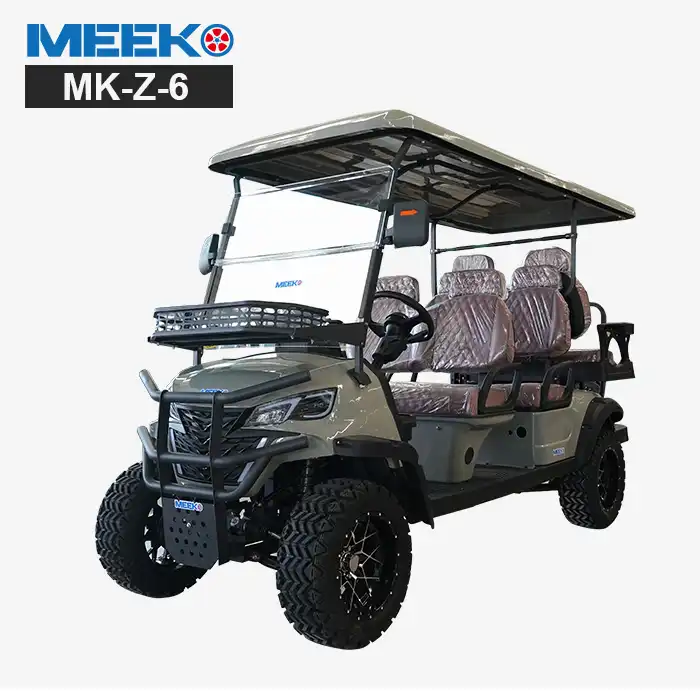
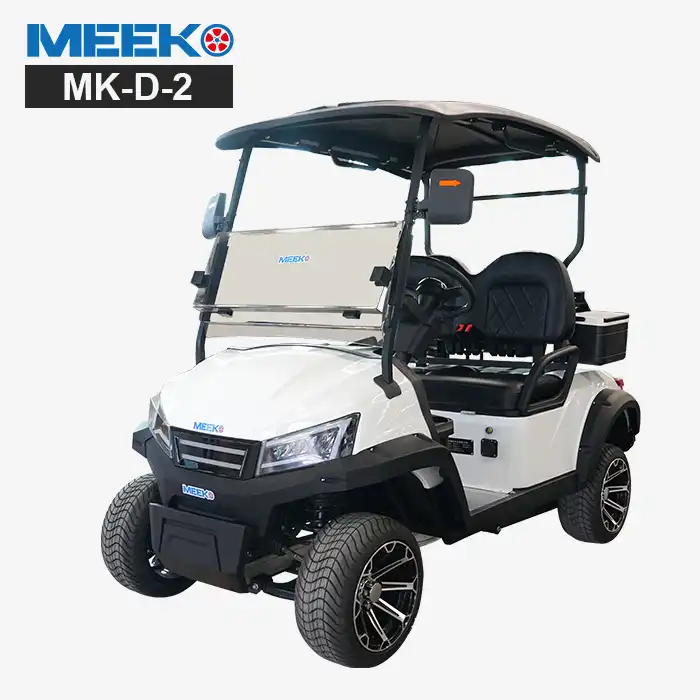
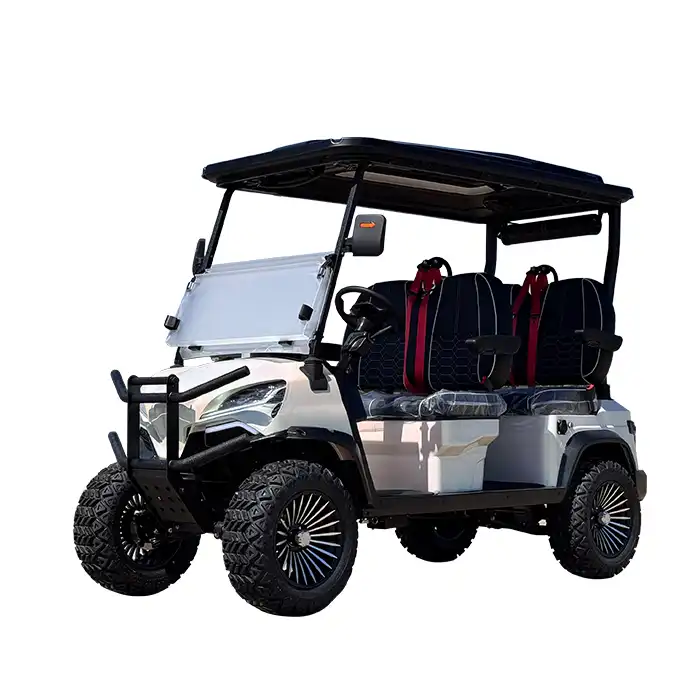
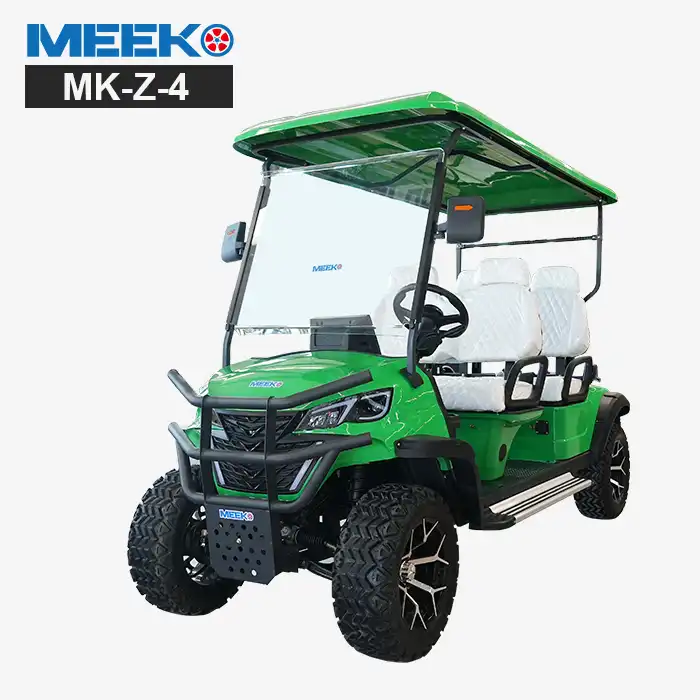
Shandong Meeko New Energy Tech Inc. stands as your trusted 4WD electric golf cart manufacturer, delivering innovative solutions that revolutionize golf course operations. Our comprehensive OEM service capabilities enable personalized design services through diverse manufacturing molds, ensuring your fleet perfectly matches operational requirements and aesthetic preferences. We understand the importance of competitive pricing in today's market, consistently providing affordable solutions without compromising quality or performance. Our efficient manufacturing processes and strategic supply chain management allow us to offer prices that make sense for facilities of all sizes. Fast delivery capabilities ensure minimal downtime, with most orders shipping within one week of confirmation. Our commitment extends beyond the initial sale through comprehensive after-sale parts and accessories support. We maintain extensive inventory of components for popular makes and models, guaranteeing quick shipment when warranty needs arise. This dedication to long-term partnership ensures your investment continues delivering value throughout its operational life. The proven track record of our 4WD electric golf cart supplier network demonstrates our ability to meet diverse customer requirements across global markets. Whether you need standard configurations or custom solutions, our engineering team collaborates closely with clients to achieve optimal results. Quality manufacturing processes and rigorous testing procedures ensure reliable performance in demanding golf course environments. Experience the difference that genuine expertise and commitment make by choosing Shandong Meeko New Energy Tech Inc. as your preferred partner. Contact us at sales@mingkomach.com to discuss your specific requirements and discover how our 4WD electric golf cart solutions can enhance your facility's operations while supporting environmental goals.
References
1. National Golf Foundation. "Golf Course Operations and Environmental Sustainability Report." Golf Industry Research, 2023.
2. Electric Vehicle Association. "Commercial Electric Vehicle Performance Standards and Testing Protocols." Technical Publication Series, 2023.
3. Golf Course Superintendents Association of America. "Equipment Technology Trends in Golf Course Management." Annual Industry Survey, 2024.
4. International Golf Course Equipment Manufacturers Association. "Electric Utility Vehicle Safety and Performance Guidelines." Industry Standards Manual, 2023.
5. American Society of Golf Course Architects. "Terrain Accessibility and Course Design Integration." Design Principles Quarterly, 2023.
6. Battery Technology Research Institute. "Lithium-Ion Battery Applications in Recreational and Commercial Vehicles." Technical Review Journal, 2024.
Learn about our latest products and discounts through SMS or email