- English
- French
- German
- Portuguese
- Spanish
- Russian
- Japanese
- Korean
- Arabic
- Greek
- German
- Turkish
- Italian
- Danish
- Romanian
- Indonesian
- Czech
- Afrikaans
- Swedish
- Polish
- Basque
- Catalan
- Esperanto
- Hindi
- Lao
- Albanian
- Amharic
- Armenian
- Azerbaijani
- Belarusian
- Bengali
- Bosnian
- Bulgarian
- Cebuano
- Chichewa
- Corsican
- Croatian
- Dutch
- Estonian
- Filipino
- Finnish
- Frisian
- Galician
- Georgian
- Gujarati
- Haitian
- Hausa
- Hawaiian
- Hebrew
- Hmong
- Hungarian
- Icelandic
- Igbo
- Javanese
- Kannada
- Kazakh
- Khmer
- Kurdish
- Kyrgyz
- Latin
- Latvian
- Lithuanian
- Luxembou..
- Macedonian
- Malagasy
- Malay
- Malayalam
- Maltese
- Maori
- Marathi
- Mongolian
- Burmese
- Nepali
- Norwegian
- Pashto
- Persian
- Punjabi
- Serbian
- Sesotho
- Sinhala
- Slovak
- Slovenian
- Somali
- Samoan
- Scots Gaelic
- Shona
- Sindhi
- Sundanese
- Swahili
- Tajik
- Tamil
- Telugu
- Thai
- Ukrainian
- Urdu
- Uzbek
- Vietnamese
- Welsh
- Xhosa
- Yiddish
- Yoruba
- Zulu
What Are the Key Benefits of Owning a Utility Golf Cart?
Having a utility golf cart can be very helpful for businesses that need to move things around quickly on-site. These flexible cars increase working efficiency by moving people, tools, and materials across large properties with less physical pain and lower labor costs. Unlike leisure carts, utility carts have stronger frames, can carry more weight, and are designed to work in a variety of industry settings. Whether you're in farming, site management, or landscaping, a utility golf cart can help you be more efficient, save money, utility golf cart and be better for the environment. These benefits have a direct effect on your bottom line.
Understanding Utility Golf Carts: What They Are and How They Work
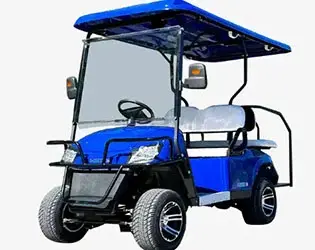
When it comes to electric cars, utility golf carts are a special kind that are made for business and industry use. Although these machines are based on the same basic frame as pleasure models, they are designed to be used for work and have extra features and structural reinforcements that make them stand out.
Core Design and Functionality
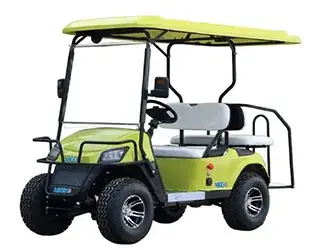
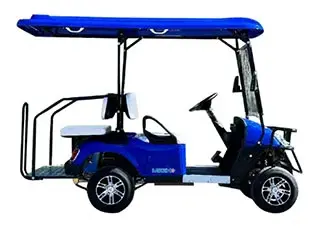
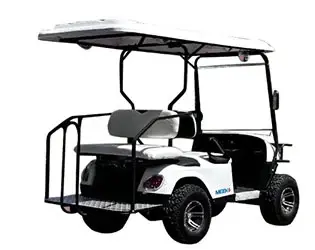
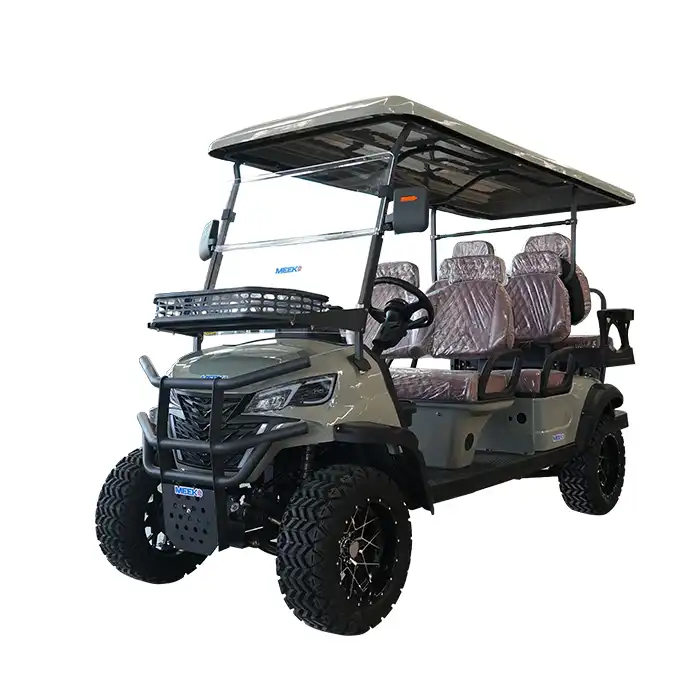
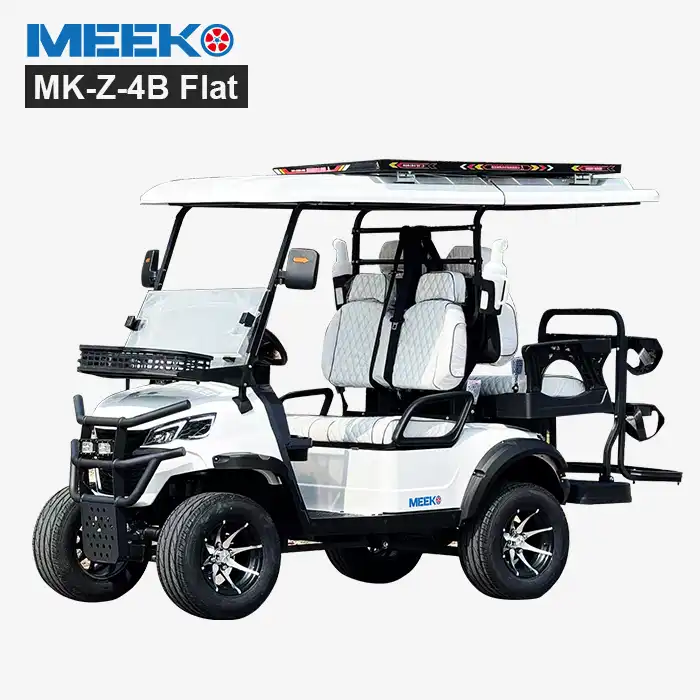
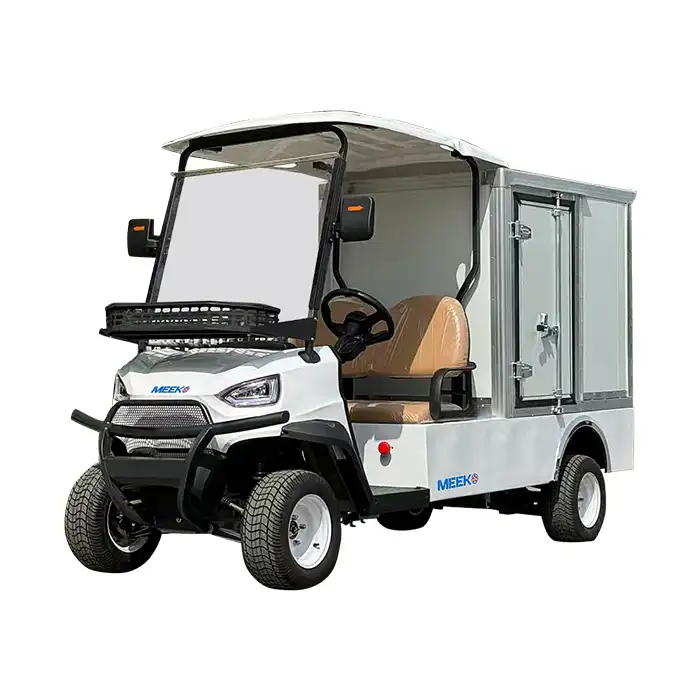
The thing that makes utility models unique is how flexible they are. Instead of just seats for people, these cars have cargo beds, places to store tools, and connection points for special equipment. Our utility models at Meeko can fit up to 4 people and still have room for goods. They have welded steel plate floors that have been treated with electrophoresis and non-slip rubber mats that can handle tough working conditions. The PP plastic body doesn't rust when exposed to fertilizers, chemicals, and the weather, which are common in industrial and farming areas.
Performance Specifications That Matter
Productivity measures are directly affected by operational skills. When moving through loading docks, embankments, or hilly terrain, the ability to climb is very important. Our units are confident on 35% to 45% grade slopes. The McPherson independent suspension keeps the load stable and the user comfortable on rough ground, which keeps them from getting tired during long shifts. The single-stage rack and pinion steering system with automatic rocker compensation makes it easy to move around in busy building grounds or narrow warehouse aisles. These engineering features directly lead to a utility golf cart having a lower chance of accidents and better flow of operations.
Key Benefits of Owning Utility Golf Carts for B2B Operations
The business case for investing in utility golf carts is based on measurable operating gains that go far beyond making transportation easier.
Enhanced Workflow Efficiency
Gains in time efficiency show up right away after launch. Take the example of a site manager at a 50-acre industrial complex who used to walk between buildings to check on them regularly. With travel speeds of 25–50 km/h based on configuration, that same check route can be finished in a third of the time. This lets more ground be covered, or staff be moved to more important jobs. Landscaping crews bring tools directly to job sites instead of storing them in central places. This cuts down on unnecessary handling. When walking speed doesn't get in the way, maintenance teams can get to emergency repair calls faster. The perks of moving things around add up over time. With more loading space, trips can be combined into one, which cuts down on the total time needed for transportation. Warehouse workers don't have to carry heavy parts by hand when they move parts between storage and production areas, as they can use cargo-equipped carts. This lowers the risk of damage and the costs of insurance that come with it.
Environmental Sustainability and Regulatory Compliance
Environmental factors are becoming more important in purchasing choices because of rules and business responsibility programs. Zero-emission electric operation is in line with sustainability goals and makes sure that air quality standards are met at sites that are regulated strictly. It is important to be able to operate indoors, especially in factories and delivery centers where exhaust fumes would require a lot of air. Noise reduction has benefits that aren't fully understood. For example, electric motors make a lot less noise than gas engines, which is good for places like hotels, neighborhoods, and businesses that are close to residential areas. This business is very quiet, so workers can start earlier in the morning and stay late at night without bothering their neighbors. This makes the workday longer and more productive.
Comparing Utility Golf Carts with Regular Golf Carts: Why Choose Utility Models?
By knowing the difference between designs that are geared toward leisure and those that are geared toward practicality, you can avoid buying equipment that doesn't work well with the system.
Structural Engineering Differences
The most important change is the frame structure. Recreational carts are made of lighter-gauge materials that are designed to save weight and keep passengers comfortable on well-kept grass. Utility golf carts are made of strengthened steel, which means they can hold more weight. Our Glasurit paint system uses phosphating, electrophoresis, and powder coating layers that protect against rust from chemicals, salt, and extreme weather that would quickly wear down other finishes. Similar changes happen in the design of suspension systems. Standard golf carts have simple spring systems that make the paths on the course smooth. For utility purposes, a McPherson independent suspension is needed that can keep the vehicle stable when it's moving uneven loads over rough ground, gravel, or building sites. This difference in capabilities has a direct effect on working safety and the integrity of the goods.
Procurement Considerations for Business Buyers
Picking the right vendor turns out to be just as important as specifying the right tools. Established makers keep large stockpiles of parts to make sure that new parts are available quickly, utility golf cart, and that downtime is kept to a minimum. Meeko keeps a wide range of warranty parts in stock and ships them out quickly when customers need service items. Because we can be an original equipment manufacturer (OEM), we can make parts in-house instead of buying them from outside sources. This way, we can keep quality control up throughout the whole supply chain. The ability to customize sets basic sellers apart from strategic partners. Our experienced technical team works with buyers to create setups that meet specific practical needs. This includes customizing the size of the cargo bed and adding technology systems. This method of consulting makes sure that the delivered car perfectly fits the intended uses instead of making operating compromises around standard equipment.
Maintenance and Lifecycle Tips to Maximize Your Utility Golf Cart Investment
Strategic repair practices greatly increase the life of equipment while lowering the total cost of ownership and reducing unplanned downtime.
Battery Management Best Practices
The most important part of upkeep to pay attention to is the battery system. To keep sulfation from happening, which lowers capacity, lead-acid setups need to have their water levels checked and their terminals cleaned on a frequent basis. The right way to charge is very important. Letting batteries go through full discharge cycles hurts their chemistry, while keeping them between 20 and 80% charged increases their life. Dedicated charge plans during off-shift hours make sure that the service is always available. The science behind lithium batteries makes upkeep a lot easier. These systems don't need to be checked for water levels and can handle partial release cycles without breaking down. But lithium setups need charging equipment that works with them and has the right voltage profile; using the wrong chargers could cause a catastrophic failure. When choosing between battery technologies, operational trends should be taken into account. For example, high-use areas with long daily ranges need support for the higher investment in lithium batteries because they last longer and need to be replaced less often.
Understanding Warranty and Service Plans
A full warranty guards you against production flaws and parts that fail before they should. Carefully look over the guarantee terms—the length of time, parts that are covered, and repair location needs change a lot from one provider to the next. As part of our dedication, we keep a large stock of parts and ship them quickly so that your equipment isn't down for too long when it needs warranty service. With service plan options, you can get help after the original warranty time is over. Preventative repair deals include regular service times at set prices, which makes budgeting easier. Access to technical support is very helpful for resolving operational problems. Our responsible after-sales team takes care of customers' needs quickly, which keeps productivity high. Compared to self-service models where customers find parts and knowledge on their own, this ongoing relationship method lowers the total cost of ownership.
How to Select the Right Utility Golf Cart for Your Business Needs
Instead of just looking at the price, strategic equipment selection starts with a thorough analysis of the working needs.
Evaluating Terrain and Application Requirements
The environment has a big impact on what standards should be used. Standard layouts work well for utility golf carts for facilities that are mostly on flat ground or paved areas. For tasks that involve rough terrain, steep grades, or being outside in bad weather regularly, you need more powerful motors, all-terrain tires, and safe shelters. Capacity needs are based on how much space is needed for daily use. Find the average payload weights, passenger counts, and journey lengths for normal shifts on a utility golf cart. Our models with lithium batteries that can go up to 150 km are best for large facilities that need to cover a lot of ground. On the other hand, shorter-range setups work well for smaller operations with central activity zones. By matching specs to real needs, you can avoid paying for features that aren't needed and still get good performance.
Customization and Technology Integration
Standard cars can be turned into specialized tools with configuration freedom. Compare the customization options that are offered to the needs of the business. Our wide range of production molds lets you make a lot of changes, from choosing the colors and materials of the seats to adding useful features like extra space in the trunk, lighting packages, and safety gear. Compared to incandescent lighting, LED lighting systems make things more visible while using less electricity. Integration of technology possibilities keeps growing. GPS tracking gives fleet managers a clear picture of what's going on, and telematics systems keep an eye on how the vehicles are used and what repairs they need. Backup alarms, speed governors, and user presence monitors are some of the safety features that make accidents less likely. Talking to suppliers about customization options during the buying process ensures that the vehicles supplied exactly meet practical needs and don't need to be changed after the purchase.
Conclusion
Utility golf carts are a great option for businesses that need efficient and environmentally friendly ways to get around in a variety of settings. When you combine higher efficiency, lower running costs, environmental friendliness, and a wide range of applications, you get measurable returns that make strategic investment worth it. Understanding the differences between designs that are geared toward leisure and those that are geared toward utility, comparing powertrain choices based on specific needs, and following thorough repair procedures will help tools last longer and work better. Businesses are under more and more pressure to be as environmentally friendly as possible while also increasing working efficiency. Electric utility cars are tried-and-true ways to meet both economic and environmental goals.
FAQ
1. What is the typical battery lifespan for electric utility carts?
Lead-acid batteries can usually be charged and discharged 500 to 800 times, which is about 3 to 5 years, based on how they are used and how well they are maintained. Lithium battery technology greatly increases the cell's life, allowing for 2000–3000 cycles, or about 8–10 years of use. Proper charging procedures and avoiding exposure to high temperatures have a big effect on how long something actually lasts, no matter what kind of science it is.
2. Are utility golf carts street legal in the United States?
What is allowed on the street depends on the state and city governments. Low-Speed Vehicles (LSVs) that meet certain safety equipment standards, such as having headlights, turn signals, mirrors, and seatbelts, can go on roads with speed limits below 35mph in many states. LSV rating is based on how well they meet Federal Motor Vehicle Safety Standards. Operational agreement is ensured by checking local rules before making a purchase of a utility golf cart.
3. How do I choose between electric and gas-powered models?
Electric types are good for businesses that want to prioritize lower costs, less upkeep, the ability to work indoors, and environmental compliance. Gas engines work better in situations where they need to run continuously for a long time without stopping to recharge or in very cold places where batteries don't work as well. The best choice is made by looking at how often you use it each day, the charging infrastructure that is available, and the total cost of ownership over the predicted lifespan.
Partner with MEEK for Your Utility Golf Cart Solutions
At Meeko, we know that finding the right utility golf cart maker is about more than just price. It's also about forming a real relationship. Since 2015, our Jining facility has grown to have more than 200 workers who work hard to provide complete electric car solutions that meet strict B2B standards. Our technical team works directly with procurement professionals to create setups that meet specific practical needs. This is true whether you need custom cargo beds, better climbing abilities, or lithium battery systems with longer ranges.
By selling directly from the plant, we cut out the broker and his markups, giving you the best value without sacrificing quality. Our low prices, one-week shipping time, and large collection of after-sales parts will help your operations stay productive. Get in touch with us at sales@mingkomach.com to talk about how our personalized utility golf carts can change how your building works.
References
1. Anderson, J.M. (2022). Electric Utility Vehicles in Commercial Operations: Performance Metrics and ROI Analysis. Industrial Transportation Quarterly, 45(3), 127-143.
2. Bennett, R.K. & Williams, S.D. (2023). Battery Technology Advances in Electric Utility Cart Applications. Journal of Industrial Equipment Management, 18(2), 89-105.
3. Chen, L. & Rodriguez, M. (2021). Total Cost of Ownership Comparison: Electric Versus Gas-Powered Utility Vehicles. Facilities Management Review, 32(4), 201-218.
4. Harper, D.W. (2023). Maintenance Best Practices for Electric Utility Vehicle Fleets. Commercial Equipment Service Journal, 27(1), 56-72.
5. Mitchell, T.R. (2022). Operational Efficiency Gains Through Strategic Utility Vehicle Deployment. Business Operations Research, 39(3), 312-329.
6. Thompson, K.L. & Davis, P.J. (2023). Regulatory Compliance and Safety Standards for Low-Speed Electric Vehicles in Commercial Settings. Industrial Safety and Standards Bulletin, 51(2), 145-162.
Learn about our latest products and discounts through SMS or email