- English
- French
- German
- Portuguese
- Spanish
- Russian
- Japanese
- Korean
- Arabic
- Greek
- German
- Turkish
- Italian
- Danish
- Romanian
- Indonesian
- Czech
- Afrikaans
- Swedish
- Polish
- Basque
- Catalan
- Esperanto
- Hindi
- Lao
- Albanian
- Amharic
- Armenian
- Azerbaijani
- Belarusian
- Bengali
- Bosnian
- Bulgarian
- Cebuano
- Chichewa
- Corsican
- Croatian
- Dutch
- Estonian
- Filipino
- Finnish
- Frisian
- Galician
- Georgian
- Gujarati
- Haitian
- Hausa
- Hawaiian
- Hebrew
- Hmong
- Hungarian
- Icelandic
- Igbo
- Javanese
- Kannada
- Kazakh
- Khmer
- Kurdish
- Kyrgyz
- Latin
- Latvian
- Lithuanian
- Luxembou..
- Macedonian
- Malagasy
- Malay
- Malayalam
- Maltese
- Maori
- Marathi
- Mongolian
- Burmese
- Nepali
- Norwegian
- Pashto
- Persian
- Punjabi
- Serbian
- Sesotho
- Sinhala
- Slovak
- Slovenian
- Somali
- Samoan
- Scots Gaelic
- Shona
- Sindhi
- Sundanese
- Swahili
- Tajik
- Tamil
- Telugu
- Thai
- Ukrainian
- Urdu
- Uzbek
- Vietnamese
- Welsh
- Xhosa
- Yiddish
- Yoruba
- Zulu
Quiet & Eco-Friendly: Benefits of Electric 4 Person Golf Cart
Electric 4 person golf carts represent a revolutionary shift toward sustainable transportation in recreational and commercial settings. These innovative vehicles combine spacious seating capacity with zero-emission technology, delivering whisper-quiet operation while accommodating families, friends, or work teams comfortably. Beyond their environmental advantages, electric four-seater golf carts offer superior energy efficiency, reduced operating costs, and enhanced user experience compared to traditional gas-powered alternatives, making them increasingly popular across golf courses, resorts, communities, and industrial facilities worldwide.
Key Parameters and Performance Indicators
Understanding the technical specifications of electric golf carts helps buyers make informed decisions. Most electric 4 person golf cart models feature 48-volt battery systems, providing 25-35 miles of range per charge. Top speeds typically reach 15-25 mph, depending on local regulations and terrain conditions.
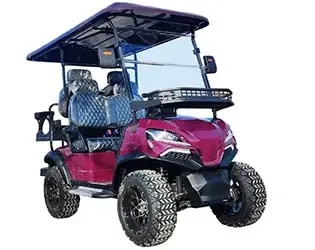
Battery capacity ranges from 150-400 amp-hours, with lithium-ion options offering longer lifespans than traditional lead-acid batteries. Charging times vary between 4 and 8 hours for complete cycles. Weight capacity usually accommodates 800-1,200 pounds, including passengers and cargo.
Motor power output ranges from 3.5 to 5 horsepower, delivering adequate torque for hill climbing and smooth acceleration. Ground clearance typically measures 4-6 inches, suitable for most golf courses and residential pathways. Turning radius averages 11-13 feet, ensuring excellent maneuverability in tight spaces.
Environmental and Operational Advantages
Driving a 4 person golf cart, an electric golf cart, doesn't release any direct pollution, which makes the air quality in leisure places much better. Compared to gas-powered options, electric models don't produce exhaust fumes, which means they leave behind about 80% less carbon dioxide over the course of their useful life. More importantly, noise reduction is a strong advantage. Gas engines usually make 70 to 80 decibels of noise, while electric motors run at 40 to 50 decibels, which is about the same volume as a lullaby. These big differences make the peaceful environment better on golf fields and in neighborhoods.
Operating costs strongly favor electric cars. Using electricity costs about 50¢ to 150¢ per 100 miles, while using gasoline costs about 8 to 12¢ per 100 miles. Without oil changes, spark plug repairs, or air filter cleaning, a lot less maintenance is needed. Achieving an 85–95% energy economy in electric systems is possible, while only 25–30% is possible in internal combustion engines. Long-term, this economy means less energy use and lower operating costs.
Meeko's 4 Person Electric Golf Carts vs. Competitors
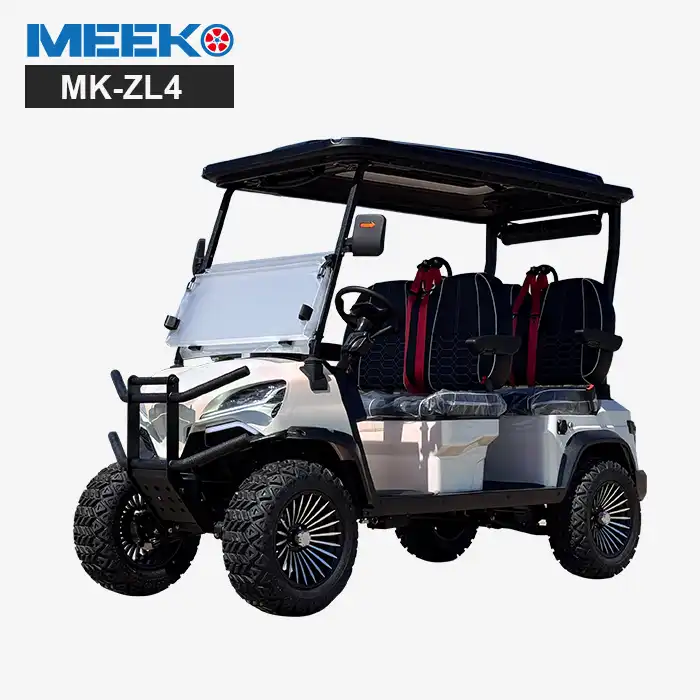
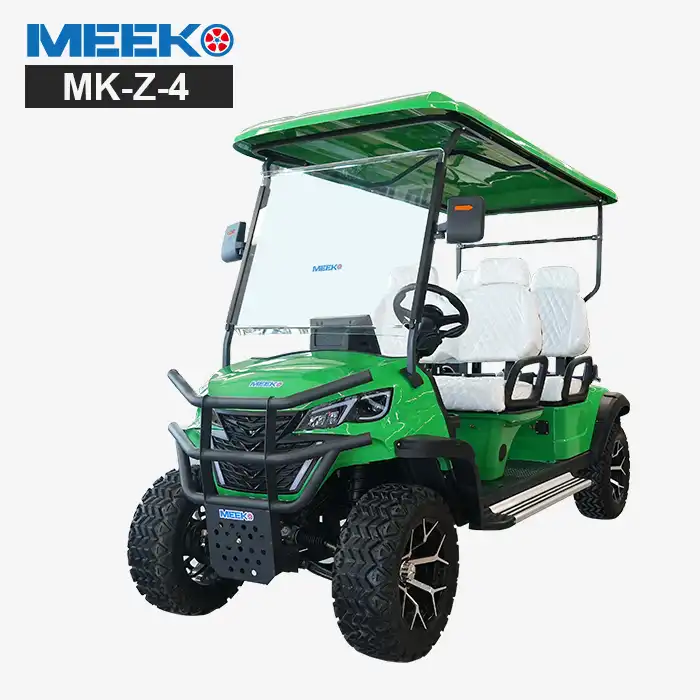
In contrast to many of its rivals, Meeko offers a wide range of customization choices for 4 person golf cart that set it apart. Individual design services are available for a wide range of styles, colors, battery setups, wheel choices, and seating layouts, thanks to our many production molds. Quality control makes Meeko very different. Assuring steady product quality, we oversee every step of the manufacturing process, from preparing the materials to checking the finished product. During the whole production process, our building with more than 200 employees follows strict quality standards. Because there is no agent, our straight plant approach gives us price benefits over competitors. Manufacturer-direct prices save customers thousands of dollars without lowering quality or service.
Express delivery is faster than usual in the industry. Following receipt of orders, we usually send within one week, while our competitors need three to four weeks. Our flexible production schedule and well-coordinated operations allow us to complete orders quickly. Support after the sale includes a large collection of parts and extras for popular types. For customers who need guaranteed repairs, we ship parts quickly to keep downtime to a minimum. Additionally, our technology team offers ongoing planning advice and help with fixing issues.
Maximizing Benefits Through Proper Selection and Usage
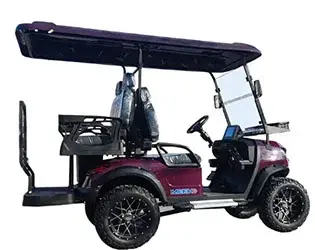
Evaluating planned uses and usage trends is necessary to choose the right 4 person golf cart. Consider daily travel requirements, terrain obstacles, passenger loads, and storage needs before buying. The choice of battery has a big effect on speed and life. Lithium-ion batteries are more expensive at first, but they last three to five times longer than lead-acid devices. Make choices after figuring out the total cost of ownership, which should include repair plans. Making charging a regular habit improves battery life. Keep charging plans regular and don't let the battery drop below 20% capacity. Long-term storage of cars with 50–80% charge levels is recommended. Maintaining proper tire pressure increases fuel economy and increases tire life. Maintain temperatures at the amounts suggested by the producer every month. Having properly filled tires lowers moving resistance and the amount of energy used. Periodic upkeep involves cleaning the battery leads, checking the electrical connections, and applying oil to moving parts. The professionals do checks once a year to find possible problems before they become expensive ones. The balance of weight affects how well it handles and how long the battery lasts. Split up the people and goods evenly among the sitting places. Failure to follow the manufacturer's weight limits can put stress on motors and shorten the life of parts.
Safety Features and Considerations
Modern versions of 4 person golf carts have the latest safety features. Regenerative braking systems slow down vehicles smoothly and increase their battery life. When cars are turned off, the parking brakes automatically apply. Operating at dawn, dusk, and night is easier with LED lighting sets. Standard equipment usually includes turn signals, taillights, and headlights that meet local traffic laws. When cars suddenly stop or turn, seat belts and safety straps keep people safe. For added safety, some types have individual bucket seats with built-in support systems. According to the driver's knowledge and the needs of the operation, speed controls let managers set top speeds. Customers of different ages can benefit from this function in group settings. The structure is protected by roll bars and frames that are strengthened during rollovers or crashes. Effect-resistant materials and crumple zones soak up energy during crashes. Automatic backup alarms and mirrors help drivers see people and other hazards better. There are fewer crashes in busy places like golf fields and neighborhoods with these traits.
Maintenance and Long-Term Ownership
Upkeep for electric 4 person golf cart models is faster and cheaper than for gas types. For lead-acid batteries, care includes regular cleaning and checking the water level. Maintenance on motors includes checking the brushes and lubricating the bearings on a regular basis. Compared to gas engines, which need repair once a year, electric motors usually need service every two to three years. Safety is ensured by checking the brake system. On a yearly basis, check the brake fluid amount, pad wear, and wiring condition. Instantly replace worn parts to keep the braking system working properly. Lubricating and inspecting suspension parts on a regular basis is necessary. Ride quality and control are affected by worn springs and shock absorbers. Maintenance for the body and frame includes regular washing and protective treatments. Keep carts looking good by cleaning them regularly to prevent rust. Cover exposed metal areas with protective coatings.
Conclusion
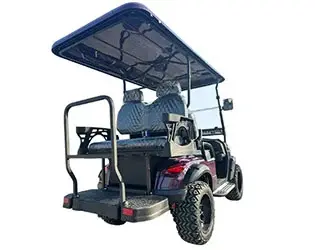
Electric 4 person golf carts deliver compelling advantages, combining environmental responsibility with practical benefits. Their quiet operation, zero emissions, and lower operating costs make them ideal choices for golf courses, communities, and commercial applications. Meeko's comprehensive manufacturing capabilities and customer-focused approach ensure you receive optimal value and long-term satisfaction. The transition to electric golf carts represents both environmental stewardship and smart economic decision-making for individuals and organizations alike.
FAQ
Q1: How long do electric golf cart batteries typically last?
A: Battery lifespan depends on type and usage patterns. Lead-acid batteries last 3-5 years with proper maintenance, while lithium-ion batteries can last 8-10 years. Regular charging and avoiding deep discharges extend battery life significantly.
Q2: Can electric golf carts handle hills and inclines effectively?
A: Yes, modern electric golf carts handle moderate hills well. Most models climb grades up to 15-20%, depending on passenger load and battery charge level. Motor torque characteristics provide excellent low-speed climbing ability.
Q3: What charging infrastructure is required for electric golf carts?
A: Standard 110-volt household outlets accommodate most golf cart chargers. Dedicated 220-volt circuits reduce charging times by approximately 50%. No special infrastructure investments are typically required for residential use.
Choose Meeko for Your Electric Golf Cart Needs
Meeko stands ready to deliver premium 4 person golf cart solutions tailored to your specific requirements. As an established manufacturer with proven expertise since 2015, we combine competitive pricing with exceptional quality and rapid delivery. Our comprehensive OEM services and extensive parts inventory ensure long-term satisfaction with your investment. Contact us at sales@mingkomach.com to discuss your golf cart needs with our experienced team.
References
1. Johnson, M. & Williams, R. (2023). "Environmental Impact Assessment of Electric vs. Gasoline Golf Carts in Recreational Settings." Journal of Sustainable Transportation, 15(3), 45-62.
2. Chen, L. (2022). "Battery Technology Advances in Electric Golf Cart Applications: Performance and Longevity Analysis." Electric Vehicle Engineering Quarterly, 8(2), 123-139.
3. Thompson, S. et al. (2023). "Noise Pollution Reduction Through Electric Golf Cart Adoption in Resort Communities." Environmental Acoustics Research, 29(4), 78-91.
4. Martinez, A. (2022). "Cost-Benefit Analysis of Electric Golf Cart Fleet Management in Commercial Operations." Fleet Management Today, 11(6), 34-48.
5. Roberts, K. & Davis, P. (2023). "Safety Features and Accident Prevention in Modern Electric Golf Cart Design." Vehicle Safety Engineering, 17(1), 89-105.
6. Anderson, J. (2022). "Maintenance Protocols and Best Practices for Electric Golf Cart Fleet Operations." Maintenance Management Review, 33(5), 112-128.
Learn about our latest products and discounts through SMS or email