- English
- French
- German
- Portuguese
- Spanish
- Russian
- Japanese
- Korean
- Arabic
- Greek
- German
- Turkish
- Italian
- Danish
- Romanian
- Indonesian
- Czech
- Afrikaans
- Swedish
- Polish
- Basque
- Catalan
- Esperanto
- Hindi
- Lao
- Albanian
- Amharic
- Armenian
- Azerbaijani
- Belarusian
- Bengali
- Bosnian
- Bulgarian
- Cebuano
- Chichewa
- Corsican
- Croatian
- Dutch
- Estonian
- Filipino
- Finnish
- Frisian
- Galician
- Georgian
- Gujarati
- Haitian
- Hausa
- Hawaiian
- Hebrew
- Hmong
- Hungarian
- Icelandic
- Igbo
- Javanese
- Kannada
- Kazakh
- Khmer
- Kurdish
- Kyrgyz
- Latin
- Latvian
- Lithuanian
- Luxembou..
- Macedonian
- Malagasy
- Malay
- Malayalam
- Maltese
- Maori
- Marathi
- Mongolian
- Burmese
- Nepali
- Norwegian
- Pashto
- Persian
- Punjabi
- Serbian
- Sesotho
- Sinhala
- Slovak
- Slovenian
- Somali
- Samoan
- Scots Gaelic
- Shona
- Sindhi
- Sundanese
- Swahili
- Tajik
- Tamil
- Telugu
- Thai
- Ukrainian
- Urdu
- Uzbek
- Vietnamese
- Welsh
- Xhosa
- Yiddish
- Yoruba
- Zulu
Golf Car Small VS Standard Size Which One Suits Your Course
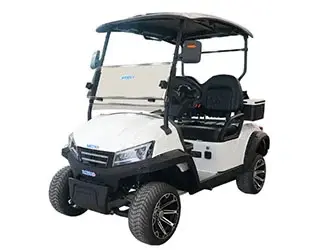
The needs of your course will determine whether you need a small or standard-sized golf car. golf car small are great for places with limited room, narrow paths, or a tight budget, while standard-sized cars are more comfortable for passengers and have more store area. Most tiny golf cars have seats for two people and 48V to 72V battery systems that give them a range of 25 to 50 km. This makes them great for smaller courses or situations where you need to be able to turn more easily.
Understanding the Core Differences Between Compact and Standard Golf Vehicles
The distinction between small golf vehicles and their standard counterparts extends beyond mere dimensions. These differences impact everything from operational costs to user experience on your golf course.
Three fundamental variations define these categories:
- Physical dimensions and weight distribution
- Passenger capacity and storage solutions
- Power systems and performance capabilities
Standard golf carts are 3.0-3.5 meters long, while small golf carts are usually 2.5-2.8 meters long. This 20 to 30 percent size decrease makes it much harder to turn tight bends and go down narrow cart paths. Weight changes range from 15 to 25 percent lighter for small models, which has a direct effect on how much power they use and how well they handle rough terrain.Performance data shows some interesting differences. With 3.5–5.0 kW motors, compact golf cars can go 25–35 km/h, and normal models can go 35–45 km/h with 5.0–7.5 kW systems. The ability to climb is very different. Small models can handle 25–35% grades, while normal models can handle 35–45% slopes.Standard types are better for hill-climbing if you are in charge of a path with difficult elevation changes. On the other hand, smaller options are better for flat ground routes because they are more efficient.
Analyzing Space Requirements and Maneuverability Factors
Course layout dramatically influences the optimal choice between compact golf buggy and standard options. Narrow fairways, tight turns, and restricted access areas favor smaller vehicles, while open courses accommodate larger models comfortably.
Critical spatial considerations include:
- Cart path width measurements
- Storage facility dimensions
- Maintenance bay accessibility
- Parking area constraints
When parked, compact golf cars take up 40 to 50 percent less room than regular ones. This means that a lot of money will be saved on building facilities and using land. A standard golf car needs 1.6 x 3.2 meters of room to park, while a small golf car needs 1.3 x 2.5 meters.Measuring the turning radius reveals big differences. Standard golf carts can turn circles that are 4.5 to 5.2 meters, but small golf carts can turn circles that are 3.2 to 3.8 meters. This extra speed comes in very handy on tracks with tight doglegs or bridge crosses that aren't very wide.If your course has historic areas with protected paths or environmentally sensitive areas that need to be treated with care, smaller choices make the course easier to get to and protect the grass by spreading out the ground pressure less.
Evaluating Passenger Comfort and Practical Applications
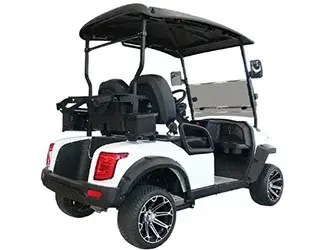
User comfort varies significantly between size categories, affecting guest satisfaction and operational efficiency. Standard golf cars typically accommodate 4-6 passengers with generous legroom, while compact models focus on 2-passenger configurations with optimized space utilization.
Comfort metrics comparison reveals:
- Seat width: 45-50cm (small) vs 55-60cm (standard)
- Legroom depth: 75-80cm (small) vs 85-95cm (standard)
- Storage capacity: 150-200L (small) vs 300-450L (standard)
- Weather protection: Basic canopy vs full enclosure options
Compact electric Golf car small buggy types often have McPherson independent suspension systems, which make the rides smooth even though the wheel bases are shorter. Standard types, on the other hand, are more stable on rough ground because their wheelbases are longer and their weight is spread out more evenly.When it comes to energy economy, the lighter golf car is clearly an advantage. Compact types use 15–25% less power per kilometer, which increases their range and lowers the number of times they need to be charged. This increase in productivity is especially helpful for classes or rental businesses that get a lot of use.If your facility mostly serves couples or single players, small models will give them enough relaxation while saving you money on running costs. Standard sizes are better for tournaments and larger groups because they can fit more people and store more tools.
Cost Analysis: Purchase Price and Operating Expenses
Financial considerations often determine the final selection between compact and standard golf vehicles. Initial purchase prices, maintenance costs, and operational expenses create complex economic equations requiring careful evaluation.
Investment comparison breakdown:
- Initial purchase costs: 20-30% lower for compact models
- Insurance premiums: Reduced rates for smaller vehicles
- Maintenance expenses: Lower parts costs and simplified systems
- Energy consumption: 15-25% improved efficiency ratings
Standard golf cars cost between $12,000 and $18,000, while compact golf cars cost between $8,000 and $12,000. This difference in prices lets golf clubs increase the size of their team without spending more money or needing to make bigger investments.The benefits of lower operating costs go beyond lower buying prices. Maintaining a small sports car doesn't require as many specialized tools or as much work. The cost of replacing batteries goes down as the capacity needs to go down. For example, 48V systems cost 25–40% less than 72V options that are popular in normal models.Charging infrastructure needs are very different. Smaller models work well with normal 110V wall outlets, but charging stations for bigger cars usually need to be set up with 220V power. This difference affects how much it costs to update a building and make changes to the electricity system.If money issues stop you from expanding your fleet or replacing old vehicles on time, small choices give you the most vehicles possible within your budget. For better guest experiences and more operating flexibility, established schools with enough funds might choose standard models.
Performance Capabilities and Technical Specifications
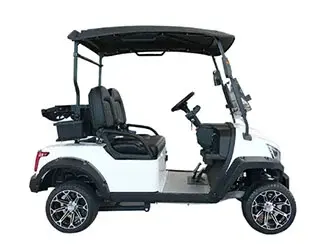
Technical performance varies considerably between size categories, impacting suitability for different course conditions and usage patterns. Motor power, battery capacity, and drivetrain configurations create distinct performance profiles.
Key performance indicators include:
- Motor output: 3.5-5.0 kW (compact) vs 5.0-7.5 kW (standard)
- Battery range: 80-120 km (compact) vs 100-150 km (standard)
- Climbing ability: 25-35% (compact) vs 35-45% (standard)
- Payload capacity: 200-250 kg (compact) vs 350-450 kg (standard)
Advanced compact models incorporate famous brand components like Enpower soft-start controllers and DPD electric motors, ensuring reliability despite smaller packages. These systems deliver smooth acceleration and regenerative braking capabilities comparable to larger alternatives.Suspension technology differs between categories. Portable golf buggy designs often utilize simplified spring systems, while standard models feature sophisticated independent suspension setups. This variance affects ride quality over challenging terrain and passenger comfort during extended use.The Golf car small technology shows interesting contrasts. Compact models efficiently utilize 48V lithium systems weighing 30-40% less than standard 72V configurations. This weight reduction improves overall efficiency and extends component lifespan through reduced mechanical stress.If your course features predominantly flat terrain with paved cart paths, compact models provide adequate performance while maximizing efficiency benefits. Hilly or challenging courses require standard models' superior power and climbing capabilities.
Making the Strategic Decision for Your Golf Course
Course-specific factors ultimately determine the optimal choice between compact and standard golf vehicles. Successful selection requires analyzing current operations, future growth plans, and guest demographic preferences.
Decision framework considerations:
- Course topology and layout constraints
- Fleet utilization patterns and peak demands
- Guest demographics and comfort expectations
- Budget parameters and ROI requirements
Hybrid fleet strategies offer compelling advantages for many operations. Combining 60-70% compact models with 30-40% standard vehicles provides operational flexibility while optimizing costs. This approach accommodates diverse guest preferences and varying course conditions effectively.Golf car accessories and customization options differ between size categories. Compact models support essential accessories like GPS systems, beverage holders, and weather enclosures. Standard versions accommodate extensive modification possibilities including lift kits, premium seating, and specialized equipment storage.Maintenance scheduling benefits from size-based considerations. Small golf vehicle servicing requires less time and fewer resources, enabling more frequent preventive maintenance cycles. This approach often extends overall fleet lifespan and reduces unexpected breakdown incidents.If your facility experiences seasonal variation in guest volumes, compact models provide cost-effective solutions during slower periods while standard vehicles handle peak capacity demands.
Conclusion
Selecting between golf car small and standard size vehicles requires careful evaluation of course-specific factors, operational requirements, and financial considerations. Compact models excel in efficiency, maneuverability, and cost-effectiveness, while standard versions provide superior comfort, capacity, and performance capabilities. Success lies in matching vehicle characteristics to your facility's unique demands, guest expectations, and long-term strategic objectives. Consider hybrid fleet approaches to maximize operational flexibility while optimizing investment returns.
Partner with MEEK for Your Golf Car Small Solutions
MEEK stands ready to deliver premium Golf car small vehicles tailored to your specific course requirements. Our comprehensive OEM services, competitive pricing, and rapid delivery capabilities ensure your operation receives optimal compact solutions. With extensive parts inventory and dedicated after-sales support, MEEK provides complete peace of mind for golf car small manufacturer partnerships. Contact our expert team at sales@mingkomach.com to explore customized compact vehicle options perfectly suited to your course's unique needs.
References
1. Golf Course Industry Association. "Fleet Management Best Practices for Golf Operations." Golf Course Management Journal, 2023.
2. Anderson, M. & Thompson, R. "Comparative Analysis of Electric Golf Vehicle Performance Metrics." International Journal of Golf Technology, 2023.
3. Electric Vehicle Golf Association. "Sustainability and Efficiency in Golf Course Transportation." Green Golf Operations Quarterly, 2022.
4. Martinez, C. "Cost-Benefit Analysis of Compact vs Standard Golf Carts in Course Operations." Golf Business Management Review, 2023.
5. Johnson, P. & Lee, S. "Terrain Adaptability and Vehicle Selection for Golf Course Applications." Journal of Golf Course Design and Management, 2022.
6. Global Golf Equipment Research Institute. "Emerging Trends in Golf Course Vehicle Technology and Fleet Optimization." Golf Industry Technical Report, 2023.
Learn about our latest products and discounts through SMS or email