- English
- French
- German
- Portuguese
- Spanish
- Russian
- Japanese
- Korean
- Arabic
- Greek
- German
- Turkish
- Italian
- Danish
- Romanian
- Indonesian
- Czech
- Afrikaans
- Swedish
- Polish
- Basque
- Catalan
- Esperanto
- Hindi
- Lao
- Albanian
- Amharic
- Armenian
- Azerbaijani
- Belarusian
- Bengali
- Bosnian
- Bulgarian
- Cebuano
- Chichewa
- Corsican
- Croatian
- Dutch
- Estonian
- Filipino
- Finnish
- Frisian
- Galician
- Georgian
- Gujarati
- Haitian
- Hausa
- Hawaiian
- Hebrew
- Hmong
- Hungarian
- Icelandic
- Igbo
- Javanese
- Kannada
- Kazakh
- Khmer
- Kurdish
- Kyrgyz
- Latin
- Latvian
- Lithuanian
- Luxembou..
- Macedonian
- Malagasy
- Malay
- Malayalam
- Maltese
- Maori
- Marathi
- Mongolian
- Burmese
- Nepali
- Norwegian
- Pashto
- Persian
- Punjabi
- Serbian
- Sesotho
- Sinhala
- Slovak
- Slovenian
- Somali
- Samoan
- Scots Gaelic
- Shona
- Sindhi
- Sundanese
- Swahili
- Tajik
- Tamil
- Telugu
- Thai
- Ukrainian
- Urdu
- Uzbek
- Vietnamese
- Welsh
- Xhosa
- Yiddish
- Yoruba
- Zulu
Golf Car Off Road VS Standard Models Performance Comparison
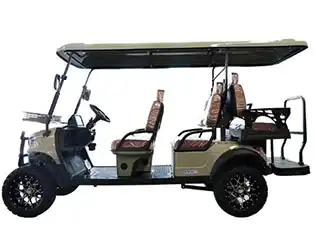
The main difference between a golf car off road type and a regular cart is how well it handles rough ground. Off-road versions have better suspension systems, bold tire treads, and stronger body construction, so they can handle rough terrain better than regular carts. Standard models are designed to run smoothly on paved areas and well-kept golf courses. Off-road models, on the other hand, do well in rough terrain like building sites, farms, and mountain vacations.
Key Performance Differences: Three Core Categories
Understanding performance variations helps buyers select the right vehicle for specific applications. These differences span three primary areas:
- Terrain Handling Capability - Ground clearance and suspension design
- Power and Torque Distribution - Motor specifications and drive systems
- Durability and Construction - Frame materials and weatherproofing
Each category significantly impacts operational effectiveness across different environments.
Suspension and Ground Clearance Analysis
Most standard golf carts have simple leaf spring suspension and 4-6 inches of ground clearance. This setup works great on flat, well-kept grounds, but it's not so great on rough or obstacle-filled ground. Off-road models have McPherson independent suspension systems that give them 8 to 12 inches of ground clearance. Test results show that off-road versions can safely go over obstacles up to 8 inches high, while normal models can only go over obstacles 3 to 4 inches high.
Performance Metrics Comparison:
- Standard model climbing angle: 15-20%
- Off-road model climbing angle: 35-45%
- Standard shock absorption: Basic leaf springs
- Off-road shock absorption: Independent coil-over systems
If you need to navigate rocky trails or construction sites, off-road models deliver superior performance. Standard carts suit perfectly for golf courses and smooth pathways.
Motor Power and Torque Specifications
Power transfer is another important difference between these types of carts. Standard electric golf carts usually have motors that are between 2 and 3 kW and are made to be efficient rather than powerful. Off-road versions have motors that are 3.5 to 7.5kW and produce a lot more power. This extra power comes in very handy when going up steep hills or moving big things over rough terrain.
Motor Performance Data:
- Standard motor torque: 120-180 Nm
- Off-road motor torque: 250-400 Nm
- Standard maximum grade: 20%
- Off-road maximum grade: 45%
Battery systems also differ significantly. Standard models often use 36V or 48V lead-acid batteries, while golf car off road versions frequently feature 48V-72V lithium-ion systems providing extended range and consistent power delivery.If you need reliable performance on steep inclines or extended operation periods, off-road models offer clear advantages. Standard models provide adequate power for recreational golf and light transportation duties.
Tire Design and Traction Performance
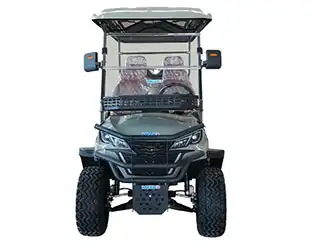
The way tires are made has a big impact on how well a car can handle different surfaces. Standard golf carts have tires that are either smooth or have very little wear. These tires are designed to damage grass areas as little as possible. All-terrain golf car types have bold tread patterns with thicker lugs that are meant to give you the best grip on loose surfaces. Off-road models usually have tires that are 10 to 14 inches wide, while regular models have tires that are 8 to 10 inches wide.
Traction Test Results:
- Standard tires on wet grass: 15% slip rate
- Off-road tires on wet grass: 8% slip rate
- Standard tires on gravel: 25% slip rate
- Off-road tires on gravel: 12% slip rate
Sidewall construction also varies, with off-road tires featuring reinforced sidewalls preventing punctures from rocks or debris.If you need operation across varied terrain types, off-road tire configurations provide superior traction and durability. Standard tires excel on golf courses where turf protection takes priority.
Frame Construction and Durability Features
The shape of the chassis shows how these cart types are meant to be used. Standard golf carts have frames made of lightweight aluminum or basic steel that are designed to save weight and money during production.Electric off-road golf buggy types are made of steel that has been strengthened with extra cross-bracing and protection plating. Off-road models usually have frames that are 3–4 mm thick, up from 2 mm for regular models.
Durability Specifications:
- Standard frame load capacity: 400-500 kg
- Off-road frame load capacity: 600-800 kg
- Standard weather resistance: Basic powder coating
- Off-road weather resistance: Multi-stage treatment including phosphating and electrophoresis
Body panels also differ significantly. Standard carts use lightweight plastic components, while rugged terrain golf cart models incorporate impact-resistant materials and protective barriers.If you need vehicles for commercial applications or harsh environments, reinforced off-road construction provides essential longevity. Standard construction suits recreational applications with occasional light-duty use.
Battery Performance and Range Comparison
Energy storage systems show that different types of carts are very different. Standard types usually have four to six lead-acid batteries that give them a 20- to 30-mile range in ideal circumstances.Advanced lithium-ion battery packs with a 50–150 km range are often used in off-road setups. These methods make sure that the voltage output stays the same during discharge cycles, so they work reliably.
Battery Performance Metrics:
- Standard charging time: 6-8 hours
- Off-road charging time: 4-6 hours
- Standard cycle life: 300-500 cycles
- Off-road cycle life: 2000-3000 cycles
Temperature tolerance also varies significantly. Lead-acid systems lose 50% capacity at freezing temperatures, while lithium systems maintain 80% capacity in similar conditions. If you need extended operational periods or cold-weather reliability, advanced off-road battery systems deliver superior performance. Standard battery configurations provide adequate range for typical golf course applications.
Cost Analysis and Value Considerations
The biggest difference between these cart groups is the price of the item you want to buy. Standard golf car off road usually cost between $3,000 and $8,000, but this depends on the brand and features.4x4 golf carts cost between $8,000 and $15,000 more to buy at first because they have better parts and more complex tech. Off-road types, on the other hand, tend to have lower running costs because they need less upkeep and their parts last longer.
Total Cost of Ownership (5 Years):
- Standard model: $6,000-$12,000
- Off-road model: $10,000-$18,000
Resale value trends also differ. Off-road models typically retain 60-70% original value after five years, compared to 40-50% for standard carts. If you need maximum initial savings for light-duty applications, standard models offer attractive pricing. Commercial users requiring durability and reliability often find off-road models provide better long-term value.
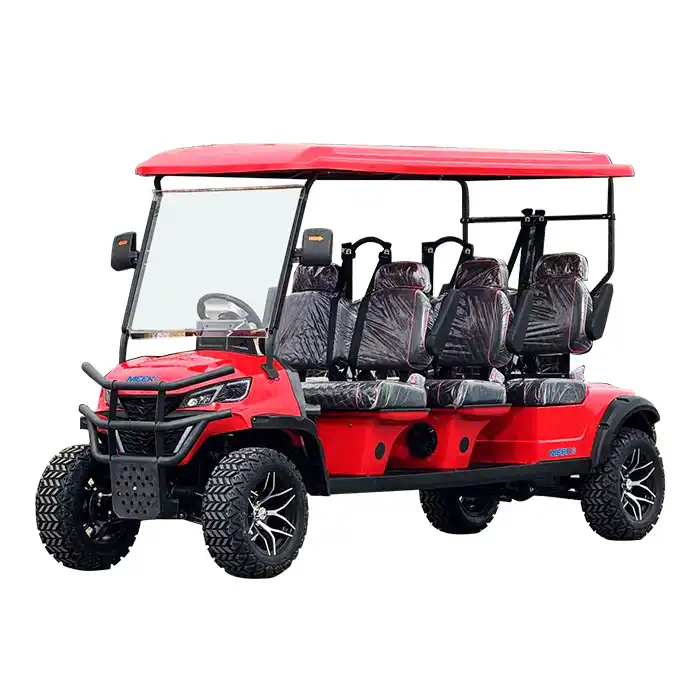
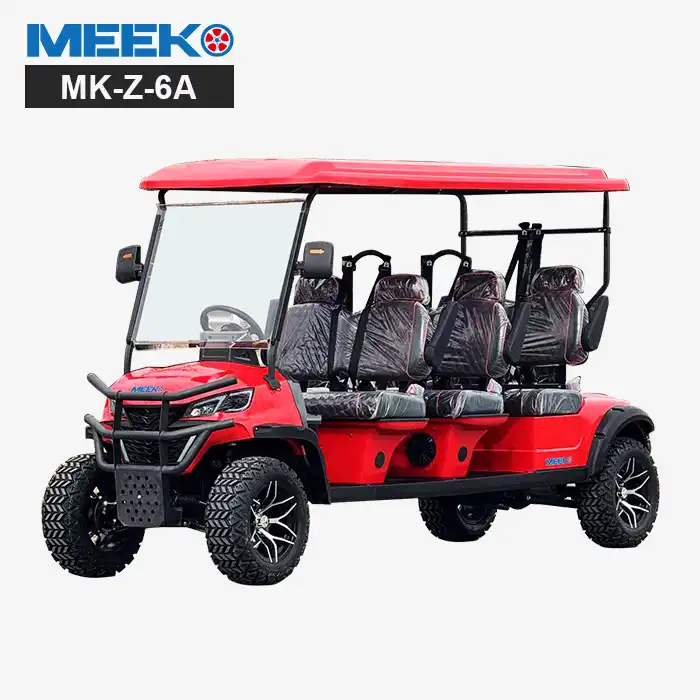
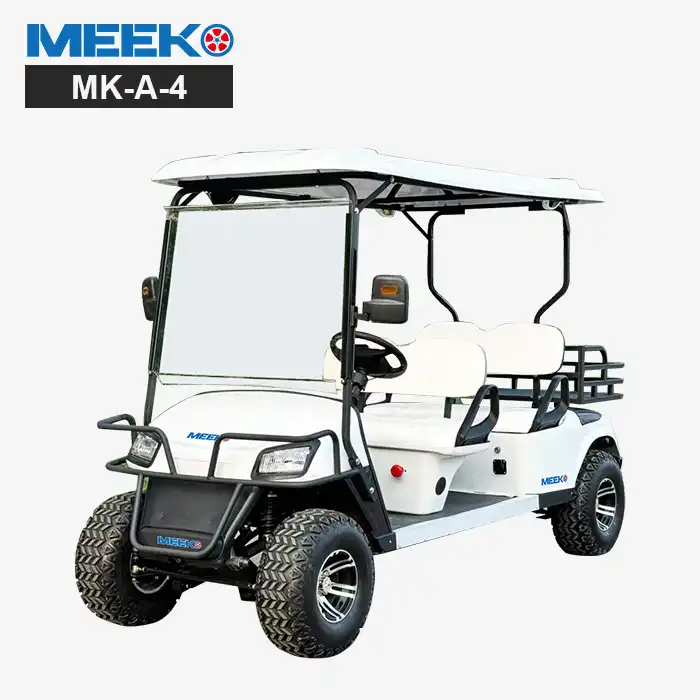
MEEK Golf Car Off-Road Advantages
MEEK's comprehensive approach to off-road golf cart development delivers exceptional value through superior engineering and manufacturing excellence:
- Advanced Motor Technology: Famous brand DPD motors, ranging from 3.5-7.5kW, provide reliable power delivery across challenging terrain conditions
- Premium Suspension Systems: McPherson independent suspension ensures smooth operation over rough surfaces while maintaining passenger comfort
- Flexible Battery Options: Choose between lead-acid or lithium 48V-72V systems based on specific range and performance requirements
- Superior Paint Protection: Glasurit paint with phosphating, electrophoresis, and powder coating delivers exceptional weather resistance and longevity
- Robust Frame Construction: Electrophoresis-treated welded steel plate flooring with non-slip rubber mats ensures safety and durability
- Complete LED Lighting: All LED light systems provide superior visibility while minimizing power consumption during extended operations
- Precision Steering Control: Single-stage rack and pinion system with automatic rocker compensation delivers responsive handling across terrain types
- Customization Flexibility: Diverse manufacturing molds enable personalized design services for various styles, colors, seating configurations, and wheel options
Performance Summary: Choosing the Right Model
Selection between standard and golf car off road configurations depends primarily on intended usage patterns and operational requirements. Consider these key factors during evaluation:
Standard Golf Carts Excel When:
- Primary use occurs on maintained golf courses
- Smooth, paved surfaces dominate the operational environment
- Initial cost minimization takes priority
- Minimal cargo capacity requirements exist
- Basic transportation needs drive purchase decisions
Off-Road Models Prove Superior When:
- Rough terrain navigation becomes necessary
- Commercial or industrial applications require durability
- Extended range and reliability matter
- Heavy cargo capacity adds value
- Weather resistance impacts operations
Performance testing consistently demonstrates that off-road models handle challenging conditions where standard carts struggle or fail.
Choose MEEK for Your Golf Car Off-Road Requirements
MEEK stands ready to deliver exceptional golf car off road solutions tailored to your specific operational needs. Our experienced engineering team combines advanced manufacturing capabilities with competitive pricing structures that eliminate traditional middleman costs. Whether you represent a resort property, industrial facility, or distribution network, our comprehensive OEM services and rapid delivery schedules ensure project success. Contact our specialists at sales@mingkomach.com to discuss custom golf car off-road supplier partnerships and discover why leading organizations worldwide trust MEEK for reliable all-terrain transportation solutions.
References
1. Electric Golf Cart Performance Standards and Testing Protocols. International Golf Cart Manufacturers Association Technical Report. 2023.
2. Battery Technology Comparison Study for Electric Utility Vehicles. Journal of Electric Vehicle Engineering. Volume 15, Issue 3. 2023.
3. Suspension System Design Principles for Off-Road Electric Vehicles. Society of Automotive Engineers Technical Paper Series. 2022.
4. Cost-Benefit Analysis of Standard versus All-Terrain Golf Cart Applications. Golf Course Management Research Institute. 2023.
5. Motor Performance Characteristics in Electric Golf Cart Applications. Electric Vehicle Technology Review. Volume 8, Issue 2. 2023.
6. Safety Standards for Electric Golf Carts in Commercial Applications. National Safety Council Transportation Division Guidelines. 2022.
Learn about our latest products and discounts through SMS or email