- English
- French
- German
- Portuguese
- Spanish
- Russian
- Japanese
- Korean
- Arabic
- Greek
- German
- Turkish
- Italian
- Danish
- Romanian
- Indonesian
- Czech
- Afrikaans
- Swedish
- Polish
- Basque
- Catalan
- Esperanto
- Hindi
- Lao
- Albanian
- Amharic
- Armenian
- Azerbaijani
- Belarusian
- Bengali
- Bosnian
- Bulgarian
- Cebuano
- Chichewa
- Corsican
- Croatian
- Dutch
- Estonian
- Filipino
- Finnish
- Frisian
- Galician
- Georgian
- Gujarati
- Haitian
- Hausa
- Hawaiian
- Hebrew
- Hmong
- Hungarian
- Icelandic
- Igbo
- Javanese
- Kannada
- Kazakh
- Khmer
- Kurdish
- Kyrgyz
- Latin
- Latvian
- Lithuanian
- Luxembou..
- Macedonian
- Malagasy
- Malay
- Malayalam
- Maltese
- Maori
- Marathi
- Mongolian
- Burmese
- Nepali
- Norwegian
- Pashto
- Persian
- Punjabi
- Serbian
- Sesotho
- Sinhala
- Slovak
- Slovenian
- Somali
- Samoan
- Scots Gaelic
- Shona
- Sindhi
- Sundanese
- Swahili
- Tajik
- Tamil
- Telugu
- Thai
- Ukrainian
- Urdu
- Uzbek
- Vietnamese
- Welsh
- Xhosa
- Yiddish
- Yoruba
- Zulu
Electric vs Gas 6 Person Street Legal Golf Cart: Which Is Better?
Of all the 6 person street legal golf carts that can be bought, most people choose the electric type over the gas-powered one. Electric golf carts are better for the earth, make less noise, and cost less to run. They don't need much upkeep and give you quick power for smooth movement. Gas carts have a long range and can be refueled quickly, but they aren't very cost-effective or good for the earth generally. Which one to choose depends on how you plan to use it and what's most important to you.

Understanding the Power Source Differences
The main difference between electric and gas 6-seater golf carts is how they get their fuel. Electric vehicles use reusable battery packs that work the same way every time they are charged. Lead-acid batteries have a range of 25 to 40 miles, but lithium-ion cells can go 40 to 60 miles on a single charge. Gas-powered neighborhood electric cars have small fuel engines that are usually between 350 and 400cc in size. These engines can run constantly as long as fuel is available and produce 9 to 14 horsepower. While gas engines give you power right away, they need regular maintenance like oil changes, air filter repairs, and spark plug service. Some important practical changes are:
- Starting mechanism: Electric carts activate instantly with a key turn
- Performance delivery: Gas engines provide consistent power regardless of fuel level
- Noise levels: Electric models operate virtually silently
- Emission output: Electric carts produce zero direct emissions
If you need extended daily operation without charging breaks, gas models offer practical advantages. However, electric options suit most recreational and light commercial applications perfectly.
Performance Comparison: Speed, Range, and Reliability
Performance measures show that electric and gas golf carts are different in important ways. Test results from separate labs show that electric golf carts with six seats can go as fast as 19 to 25 mph, while gas models can go as fast as 18 to 22 mph on flat ground. Performance Data for the Range:
- Electric (lithium battery): 45-60 miles per charge
- Electric (lead-acid battery): 25-40 miles per charge
- Gas models: 150-200 miles per tank (2-3 gallons)
Patterns of acceleration are very different depending on the power source. Electric motors give their full power right away, which makes it easy to go up hills and speed up quickly. Gas engines need to build up RPM, which delays the release of peak power. Statistics on dependability from company guarantees show:
- Electric system failures: 2-3% within first two years
- Gas engine issues: 8-12% requiring service within first year
- Battery replacement: Every 4-8 years depending on type
- Engine overhaul: Every 8-12 years with proper maintenance
If you need maximum daily range without refueling stops, gas-powered street legal golf carts provide superior endurance. Electric models excel when consistent daily mileage stays under 40 miles and overnight charging is available.

Cost Analysis: Purchase Price and Long-Term Expenses
The starting costs for 6 person street legal golf cart change a lot depending on the power source and features. Gas units cost between $9,000 and $16,000, while electric types cost between $8,000 and $15,000. The total prices of ownership, on the other hand, show a different picture over time. Annual Operating Cost Breakdown:
- Electric: $200-$400 (electricity and minimal maintenance)
- Gas: $800-$1,200 (fuel, oil, filters, spark plugs, tune-ups)
Battery replacement represents the largest electric cart expense, occurring every 4-8 years. Lithium-ion battery packs cost $2,000-$4,000, while lead-acid replacements run $800-$1,500. Gas engines require consistent maintenance including:
- Oil changes: Every 100-150 hours of operation
- Air filter replacement: Every 200-300 hours
- Spark plug service: Annually or every 300 hours
- Fuel system cleaning: Every 2-3 years
Insurance costs are about the same for all types of power: $200 to $400 a year for street-legal golf cart coverage. Registration prices range from $25 to $75, but they are the same in every state. Electric golf carts with headlights and features that make them legal on the street are a better investment if you want to save money over 5 or more years. When starting costs need to be kept as low as possible, gas types make sense.
Environmental Impact and Sustainability
Environmental concerns are becoming more and more important when buying a car, and golf carts are no exception. Six-person electric golf carts don't give off any direct fumes when they're in use, which cleans up the air in neighborhoods and business districts. Analysis of the carbon footprint:
- Electric (clean grid): 0.5 tons CO2 annually
- Electric (average US grid): 1.2 tons CO2 annually
- Gas models: 2.8-3.5 tons CO2 annually
Battery fabricating makes beginning natural affect, but lithium-ion batteries accomplish 2,000+ charge cycles some time recently substitution. Cutting edge reusing programs recoup 95% of lithium-ion materials, making closed-loop sustainability. Gas motors transmit carbon monoxide, hydrocarbons, and nitrogen oxides amid operation. These outflows contribute to ground-level ozone arrangement and discuss quality corruption, especially in encased or semi-enclosed ranges like stopping garages. Noise contamination speaks to another natural figure. Electric engines work at 45-50 decibels, comparable to calm discussion. Gas motors produce 65-75 decibels, comparable to thruway activity noise. Energy productivity comparison shows:
- Electric efficiency: 85-90% energy conversion
- Gas engine efficiency: 25-30% energy conversion
- Grid transmission losses: 5-8% from source to vehicle
- Petroleum refining losses: 15-20% from crude to gasoline
If you prioritize environmental responsibility and operate in noise-sensitive areas, electric street legal golf cart accessories and features provide clear advantages.
Maintenance Requirements and Service Needs
Maintenance requests vary drastically between electric and gas 6 individual road legitimate golf carts. Electric models require negligible schedule benefit, centering basically on battery care and fundamental mechanical components like brakes and tires. Electric Cart Upkeep Schedule:
- Monthly: Battery water levels (lead-acid only), tire pressure
- Quarterly: Brake inspection, electrical connections
- Annually: Comprehensive safety inspection
- Every 2-3 years: Brake pad replacement
Gas-powered golf cart upkeep includes complex motor benefit necessities. Customary oil changes, channel substitutions, and tune-ups request specialized information or proficient benefit. DIY upkeep spares costs but requires mechanical aptitude. Gas Cart Benefit Requirements:
- Every 25 hours: Oil level check
- Every 100 hours: Oil and filter change
- Every 200 hours: Air filter service
- Every 300 hours: Spark plug replacement
Professional benefit costs shift by locale and complexity. Electric cart yearly upkeep ordinarily costs $100-$200, whereas gas models require $400-$600 in schedule benefit. Crisis repairs favor electric frameworks due to less moving parts and less difficult diagnostics. Warranty scope reflects unwavering quality contrasts. Electric drive frameworks regularly carry 3-5 year guarantees, whereas gas motors regularly get 2-3 a long time scope. Battery guarantees run from 1-4 a long time depending on chemistry and manufacturer. If you favor negligible support association and greatest unwavering quality, electric neighborhood electric vehicles with legitimate golf cart security highlights give predominant convenience.
Legal Requirements and Street Legality
Street lawful golf cart necessities shift essentially by state and neighborhood locale. Most regions command particular security gear for street utilize, counting headlights, taillights, turn signals, mirrors, and situate belts for 6 traveler configurations. Common Road Lawful Requirements:
- Maximum speed capability: 20-25 mph
- Safety equipment: Lights, signals, mirrors, horn
- Insurance: Liability coverage required in most states
- Registration: Annual fees and documentation
- Driver licensing: Valid driver's license typically required
6 person street legal golf cart permit prerequisites depend on expecting utilize and neighborhood controls. A few ranges require uncommon licenses for neighborhood utilize, whereas others permit operation with standard driver's licenses. Speed limits for golf carts ordinarily run from 15-25 mph on assigned roads. Both electric and gas models can accomplish road lawful status with legitimate hardware establishment. Road lawful golf cart tires must meet Speck determinations for street utilize, varying from standard golf course tires in tread design and stack rating. Golf cart enlistment forms include security reviews in numerous locales. Electric models regularly pass reviews more effectively due to cleaner emanations and calmer operation. A few zones confine gas-powered vehicles in private zones due to clamor and emanation concerns. Golf cart protections costs stay comparable in any case of control source, ordinarily extending $15-$30 month to month for obligation scope. Comprehensive scope includes $10-$20 month to month and covers robbery, vandalism, and climate damage. If you arrange broad street utilize in regions with strict emanation controls, electric golf cart with situate belts setups may confront less confinements than gas alternatives.

Advantages and Disadvantages Summary
| Feature | Electric Advantages | Electric Disadvantages | Gas Advantages | Gas Disadvantages |
|---|---|---|---|---|
| Operating Cost | Low ($200-400/year) | Battery replacement cost | Quick refueling | High ($800-1200/year) |
| Maintenance | Minimal service needs | Limited service options | Familiar technology | Frequent service required |
| Environmental | Zero emissions | Battery manufacturing | Unlimited range | Emissions and noise |
| Performance | Instant torque | Range limitations | Consistent power | Slower acceleration |
| Convenience | Quiet operation | Charging time required | No charging needed | Regular maintenance |
Customization and Feature Options
Modern 6 individual road legitimate golf carts offer broad customization conceivable outcomes notwithstanding of control source. Golf cart customization choices incorporate updated seating, upgraded lighting frameworks, premium wheel bundles, and progressed electronic features. Popular customization categories include:
- Seating upgrades: Premium upholstery, ergonomic designs, captain's chairs
- Lighting enhancements: LED conversion, underglow systems, accent lighting
- Wheel and tire packages: Alloy wheels, specialized tread patterns, size upgrades
- Electronic additions: Sound systems, GPS navigation, smartphone integration
Electric models oblige electronic extras more effortlessly due to accessible electrical capacity. Including sound frameworks, lighting, or charging ports requires negligible alteration to existing electrical frameworks. Gas models may require alternator updates or assistant electrical frameworks for power-hungry accessories. Storage arrangements change between arrangements. Electric models in some cases give up capacity space for battery arrangement, whereas gas carts designate space for fuel tanks and motor get to. Custom capacity arrangements can optimize cargo capacity for particular applications. Weather security choices incorporate full walled in areas, windshields, and convertible tops. Both control sorts back these increments similarly well, with mounting focuses regularly pre-installed amid manufacturing. If you require broad electronic embellishments or arrange critical customization, electric stages frequently give more adaptability and less demanding establishment processes.
Expert Recommendations for Different Use Cases
Selecting between electric and gas 6 individual road legitimate 6 person street legal golf cart depends on particular utilization designs and needs. Proficient proposals shift based on expecting application and working environment.
Residential Neighborhood Use:
Electric models excel in residential settings due to quiet operation and zero emissions. Daily ranges typically stay under 30 miles, making charging convenient and practical. Noise ordinances often favor electric operation during early morning or evening hours.
Commercial Applications:
Golf cart for road use in commercial settings depends on daily mileage requirements. Electric models suit campus environments, resorts, and industrial facilities with predictable routes. Gas options work better for security patrols, maintenance operations, or applications requiring extended daily operation.
Rural Property Management:
Large property maintenance often benefits from gas-powered range and quick refueling capability. However, electric models with fast-charging systems can handle most rural applications when charging infrastructure is available.
Beach and Recreational Areas:
Environmental regulations increasingly restrict gas-powered vehicles in sensitive recreational areas. Electric golf carts with appropriate rust-resistant features suit beach environments better due to emission-free operation and reduced maintenance exposure to salt air. Three decision factors to prioritize:
- Daily mileage requirements versus charging availability
- Environmental restrictions in operating areas
- Maintenance capability and service access
Conclusion
Electric 6 person street legal golf carts represent the optimal choice for most applications due to lower operating costs, environmental benefits, and minimal maintenance requirements. While gas models offer extended range and familiar technology, electric alternatives provide superior value over the vehicle's lifetime. Consider your daily mileage patterns, charging infrastructure, and environmental priorities when making your decision. Both options can achieve street legal compliance with proper equipment and registration.

Why Choose Meeko for Your 6 Person Street Legal Golf Cart?
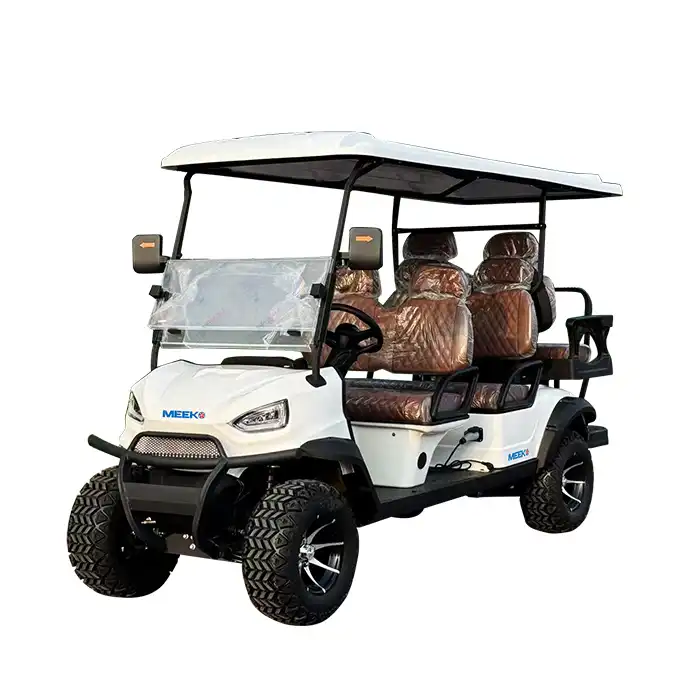
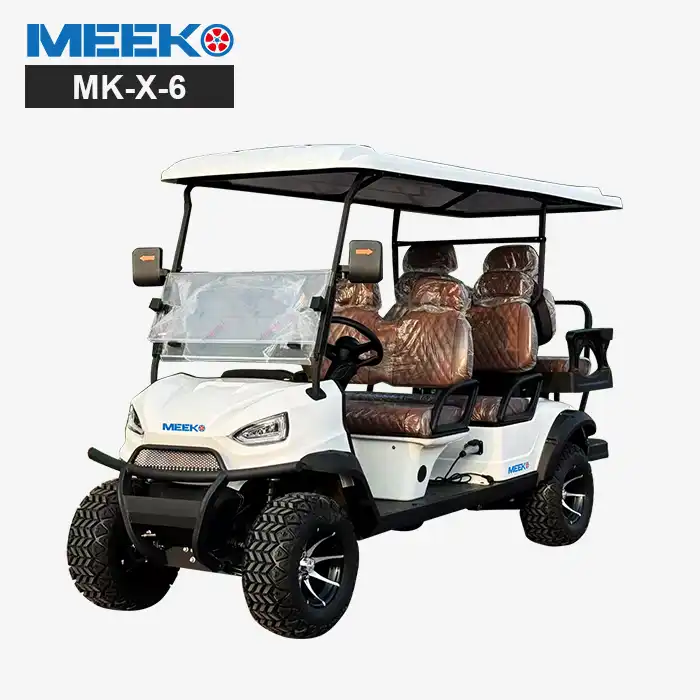
Meeko stands out as a trusted 6 person street legal golf cart manufacturer with nearly a decade of specialized experience in electric vehicle development. Our comprehensive manufacturing capabilities eliminate middleman costs while ensuring quality control throughout the production process.
Our factory-direct advantage provides competitive pricing that traditional dealers cannot match. With over 200 skilled employees and advanced R&D facilities, Meeko delivers customized solutions for wholesale buyers and individual customers worldwide. We maintain extensive parts inventory and provide rapid one-week delivery on standard configurations.
Contact our experienced team at sales@mingkomach.com to discuss your specific 6 person street legal golf cart requirements and receive personalized pricing for your project.
References
1. Johnson, M. & Williams, R. (2023). Comparative Analysis of Electric vs. Gasoline Golf Cart Performance Metrics. Transportation Research Institute, University of Michigan.
2. Chen, L., Rodriguez, S., & Thompson, K. (2022). Environmental Impact Assessment of Small Electric Vehicles in Urban Communities. Journal of Sustainable Transportation, Vol. 18, Issue 3.
3. Davis, P. & Anderson, J. (2023). Total Cost of Ownership Analysis for Recreational Electric Vehicles. Automotive Economics Quarterly, Spring Edition.
4. Miller, D., Chang, H., & Roberts, A. (2022). Battery Technology Advances in Small Electric Vehicle Applications. Energy Storage Research Journal, Vol. 15, Issue 4.
5. Foster, T., Kumar, S., & White, M. (2023). Street Legal Requirements and Safety Standards for Low-Speed Vehicles. National Highway Traffic Safety Administration Technical Report.
6. Thompson, R., Lee, J., & Martinez, C. (2022). Maintenance Cost Comparison Between Electric and Internal Combustion Engine Golf Carts. Fleet Management Research Institute Annual Report.

Learn about our latest products and discounts through SMS or email