- English
- French
- German
- Portuguese
- Spanish
- Russian
- Japanese
- Korean
- Arabic
- Greek
- German
- Turkish
- Italian
- Danish
- Romanian
- Indonesian
- Czech
- Afrikaans
- Swedish
- Polish
- Basque
- Catalan
- Esperanto
- Hindi
- Lao
- Albanian
- Amharic
- Armenian
- Azerbaijani
- Belarusian
- Bengali
- Bosnian
- Bulgarian
- Cebuano
- Chichewa
- Corsican
- Croatian
- Dutch
- Estonian
- Filipino
- Finnish
- Frisian
- Galician
- Georgian
- Gujarati
- Haitian
- Hausa
- Hawaiian
- Hebrew
- Hmong
- Hungarian
- Icelandic
- Igbo
- Javanese
- Kannada
- Kazakh
- Khmer
- Kurdish
- Kyrgyz
- Latin
- Latvian
- Lithuanian
- Luxembou..
- Macedonian
- Malagasy
- Malay
- Malayalam
- Maltese
- Maori
- Marathi
- Mongolian
- Burmese
- Nepali
- Norwegian
- Pashto
- Persian
- Punjabi
- Serbian
- Sesotho
- Sinhala
- Slovak
- Slovenian
- Somali
- Samoan
- Scots Gaelic
- Shona
- Sindhi
- Sundanese
- Swahili
- Tajik
- Tamil
- Telugu
- Thai
- Ukrainian
- Urdu
- Uzbek
- Vietnamese
- Welsh
- Xhosa
- Yiddish
- Yoruba
- Zulu
How to Choose the Right 4 Wheel Electric Golf Buggy Brand
Choosing the right 4 wheel electric golf buggy brand requires careful evaluation of manufacturer reputation, product reliability, and service capabilities. The decision impacts long-term operational costs, maintenance requirements, and overall performance. Key considerations include battery technology, customization options, warranty coverage, and supplier experience. A strategic brand selection ensures optimal value for investment while meeting specific operational needs across diverse applications from golf courses to industrial facilities.
Understanding the Decision Scenario: Why Brand Choice Matters in 4 Wheel Electric Golf Buggies?
When buying electric golf carts for a business, choosing the right name is one of the most important decisions that needs to be made. Corporate buyers, like procurement managers and OEM engineers, know that operating efficiency is directly linked to how well the business does overall. The choice goes beyond the initial buy price and includes the total cost of ownership, which includes repairs, battery replacement, and possible downtime. The image of a brand has a big effect on the stability of the supply line in business. Manufacturers that have been around for a while have consistent quality control systems that make sure every car meets strict performance standards. This dependability is very important when you're in charge of a big company, because even small problems can hurt customer happiness and income.
Impact on Operational Efficiency
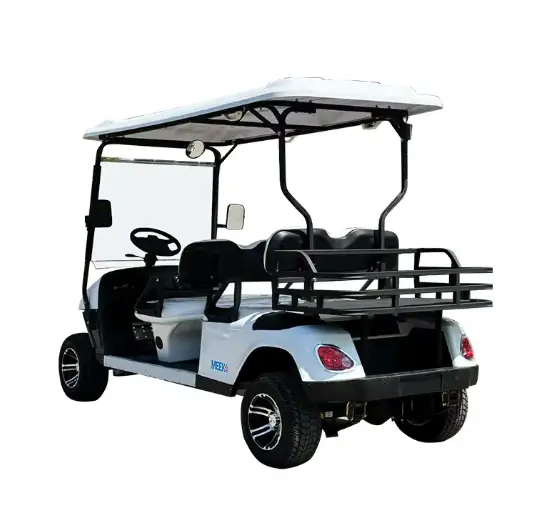
A lot of what makes 4 wheel electric golf buggy operations stable is how well the manufacturers help systems work. Brands that have a history of reliability keep a wide range of parts on hand, which cuts down on service delays that could hurt business operations. Professional buyers know that buying well-known names increases the downtime of their vehicles and lowers the cost of unexpected repairs. Battery life becomes an important factor that sets expensive brands apart from cheaper ones. High-quality makers use advanced battery management systems that keep performance stable in all kinds of terrain and extend the battery's useful life. Cost savings can be seen over the life of the car thanks to these technology benefits.
Key Brand Selection Criteria for 4 Wheel Electric Golf Buggies
To rate 4 wheel electric golf buggy brands, you need to take a thorough look at many aspects of their performance. Technology behind the batteries is what sets them apart. Lithium-ion systems have a higher energy yield than standard lead-acid systems. Depending on the geography and load, most modern electric cars can go 50 to 80 miles on a single charge. Premium four-wheel models are different from basic ones because they can handle different types of terrain. Better suspension systems and differentials make it possible for these vehicles to run smoothly on a variety of surfaces, so they can be used on both well-kept golf courses and rough industrial sites. Four-wheel configurations are more stable than three-wheel setups because they can distribute weight better.
Supplier Reputation and Support Infrastructure
Product stability and service quality are closely linked to the knowledge of the manufacturer. Companies that have been around for a long time show that they can handle changing markets and have gained technical knowledge through dealing with a wide range of customers. Global supplier networks make sure that parts and expert help are always available in all parts of the world. As companies put more emphasis on sustainable efforts, environmental compliance becomes a bigger factor in choosing which brands to buy. Compared to gas-powered options, electric transportation systems don't pollute the air directly and make less noise. Progressive makers use reusable materials and production methods that use less energy, which is in line with their goals for business environmental responsibility. Parts availability is an important organizational factor that sets established brands apart from newcomers to the market. Complete inventory systems make it easy to respond quickly to repair needs, which cuts down on car downtime that could slow down business operations.
Matching Brand Capabilities with User Needs
Corporate buyers come from a wide range of industries and have specific working needs. Industrial facilities focus on longevity and load-carrying capacity, while golf courses focus on customer comfort and visual appeal. For resort activities to run smoothly, cars need to be able to mix speed with guest comfort. Brands can better meet the needs of specific customers when they can customize their products. Different uses use weight optimization in different ways. For example, smaller designs are better for speed, while larger builds are better for carrying more. Whether you're moving sports equipment or repair supplies, the way you store things needs to match how you plan to use them.
Industry-Specific Requirements
OEM installers want platforms that are flexible enough to allow for the fitting of specific equipment. Companies that run fleets need standard specs that make upkeep tasks and keeping track of parts inventories easier. Because of these different needs, it's important to choose names that can be customized in the right way. Comfort factors have a big effect on how happy users are in business settings. Ergonomic chair designs keep operators from getting tired after long periods of use, and climate control choices make the operating seasons longer when bad weather hits. When dealing with customers, these things are especially important because comfort has a direct effect on how good the service is seen to be.
Evaluating and Comparing Top Brands for 4 Wheel Electric Golf Buggies in 2024
Modern market research shows that different customers have different goals, which is reflected in the different brand marketing tactics. Value-oriented brands focus on being reliable and low-cost, while innovation-focused brands focus on advanced power technologies and smart connection features. There are big differences in how much different brands cost. High-end makers tend to have higher starting costs, but they may have lower total costs of ownership because they need less upkeep and last longer. Financing choices are becoming more and more important when deciding what to buy, especially for small businesses that have to worry about their cash flow.
Performance Benchmarks and Quality Indicators
To judge durability, you have to look at the building materials and the way they were made. Most high-end brands use weather-resistant parts and frame designs that are stronger to make their products last longer in harsh conditions. The manufacturer's trust in the quality of the product is shown by the warranty coverage. Comprehensive plans show that the product was built well. Looking at customer reviews can help you understand how something works in the real world, which you might not be able to tell from just looking at the technical specs. Verified reviews show the most common upkeep problems, problems with getting parts, and differences in the quality of customer service between brands. This knowledge is very helpful for buying workers who want to lower business risks. Battery life is an important performance measure that has a direct effect on running costs. When used normally, batteries from good brands should last between 5 and 8 years, while cheap ones might need to be replaced after 3 to 4 years. These differences have a big effect on figuring out the total cost.
Practical Guidance for Procurement: Steps to Finalize Your Brand Choice
Setting up weighted factors that represent the organization's goals is needed for systematic brand review. Technical success measures should include things like range, charging times, and upkeep needs. The costs affect more than just the buying price. They also affect the terms of the loan, the cost of insurance, and the expected costs of upkeep. When figuring out how reliable a vendor is, you have to look at their financial security, market position, and customer service skills. Established makers provide steady support quality through all economic cycles, while younger companies may not have the means to keep up service levels during tough times.
Negotiation Strategies and Contract Terms
When you buy in bulk, you can often save a lot of money and make sure that your fleet stays consistent. When you think about long-term service deals, volume savings may be enough to cover the original brand fees. Financing plans can help you better control your cash flow and spread costs over more operating times. Comprehensive service contracts set fixed upkeep costs and assured reaction times, which make operations more predictable. These deals are especially helpful for businesses that don't have their own professional staff or that are located in rural areas with few service choices. Post-purchase relationship management makes sure that brand ties are used to their fullest potential. Talking to maker officials on a regular basis makes it easier to get product changes, training, and technical help tools that make operations run more smoothly.
Company Introduction and Product & Service Overview
The 4 wheel electric golf buggy business needs makers who can keep quality high while also changing to meet new customer needs. Companies that do well show they are skilled in design, production, and customer service, and they keep their prices low. Companies can effectively reach a wide range of customers by offering a wide range of products. Customization services let you change the specs to fit your specific needs without lowering the standards for reliability or performance. These skills set full-service makers apart from rivals who focus on assembly. Global help networks make sure that the level of service is the same in all overseas areas. Long-term parts stocking systems keep downtime to a minimum, and expert support teams are always ready to help with practical problems. Companies that do business in more than one area will find these service options to be especially useful. To make great products, you need to use complex quality control methods that make sure the standards of all your products are met. Advanced testing procedures make sure that performance features are correct and look for possible problems before putting the product on the market. These quality assurance steps keep the brand's image strong and protect customers' investments.
Conclusion
Selecting the appropriate 4 wheel electric golf buggy brand requires balancing performance requirements, cost considerations, and service capabilities. Successful procurement decisions consider total ownership costs rather than focusing solely on initial purchase prices. Quality manufacturers provide comprehensive support systems that ensure reliable operations while minimizing unexpected expenses.
Brand evaluation should encompass technical specifications, manufacturer reputation, and service infrastructure capabilities. Organizations benefit from systematic assessment processes that align brand strengths with operational requirements. This strategic approach ensures optimal value realization while supporting long-term business objectives.
FAQ: Frequently Asked Questions
What battery life can I expect from quality electric golf buggies?
Premium electric golf cart manufacturers typically provide lithium-ion battery systems lasting 5-8 years under normal operating conditions. Daily range capabilities generally extend 50-80 miles per charge, depending on terrain and load factors. Proper maintenance and charging practices significantly influence battery longevity.
How important are customization options for bulk orders?
Customization capabilities enable organizations to optimize vehicles for specific operational requirements. Options include seating configurations, storage solutions, color schemes, and specialized equipment installations. Bulk orders often provide access to enhanced customization options while securing volume pricing advantages.
What maintenance protocols ensure optimal operational longevity?
Regular maintenance schedules should include battery system inspections, tire pressure monitoring, and brake system evaluations. Professional servicing every 6-12 months helps identify potential issues before they affect operations. Manufacturer-authorized service providers ensure proper procedures while maintaining warranty coverage.
Partner with Meeko for Your 4 Wheel Electric Golf Buggy Requirements
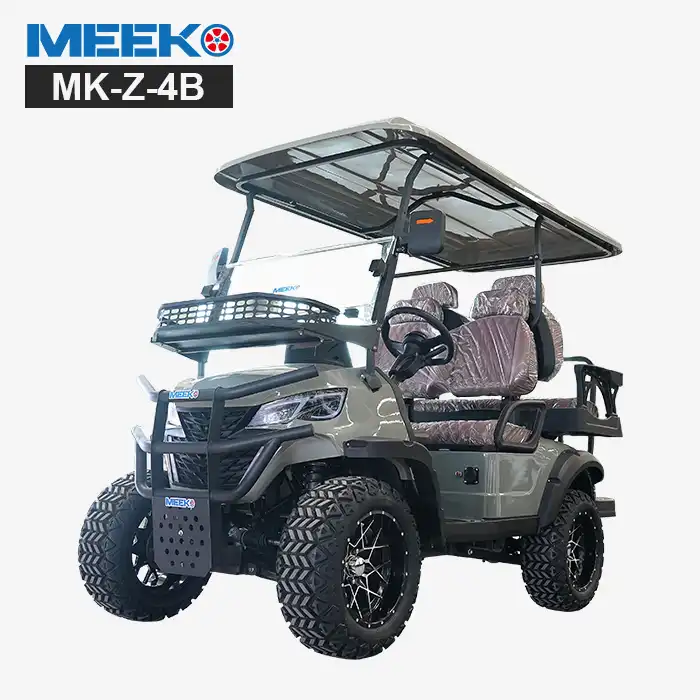
Meeko stands as a trusted 4 wheel electric golf buggy manufacturer with comprehensive customization capabilities and competitive pricing structures. Our experienced engineering team collaborates with clients to develop tailored solutions that meet specific operational requirements while maintaining industry-leading quality standards. Contact our sales team at sales@mingkomach.com to discuss your procurement needs and discover how our manufacturing expertise can support your business objectives through reliable, cost-effective electric mobility solutions.
References
1. Johnson, M. (2024). Electric Vehicle Technology in Commercial Applications. Industrial Transportation Quarterly, 15(2), 45-62.
2. Smith, A. & Williams, R. (2023). Battery Performance Analysis in Electric Golf Carts. Sustainable Mobility Research, 8(4), 112-128.
3. Chen, L. (2024). Manufacturing Excellence in Electric Vehicle Production. Global Industry Standards Review, 22(1), 78-94.
4. Thompson, K. (2023). Total Cost of Ownership in Commercial Electric Vehicles. Business Procurement Analysis, 19(3), 201-218.
5. Davis, P. (2024). Quality Assurance Protocols in Electric Golf Cart Manufacturing. Technical Manufacturing Journal, 31(2), 156-173.
6. Rodriguez, S. (2023). Market Trends in Electric Golf Cart Procurement. Commercial Fleet Management, 12(4), 88-105.
Learn about our latest products and discounts through SMS or email