- English
- French
- German
- Portuguese
- Spanish
- Russian
- Japanese
- Korean
- Arabic
- Greek
- German
- Turkish
- Italian
- Danish
- Romanian
- Indonesian
- Czech
- Afrikaans
- Swedish
- Polish
- Basque
- Catalan
- Esperanto
- Hindi
- Lao
- Albanian
- Amharic
- Armenian
- Azerbaijani
- Belarusian
- Bengali
- Bosnian
- Bulgarian
- Cebuano
- Chichewa
- Corsican
- Croatian
- Dutch
- Estonian
- Filipino
- Finnish
- Frisian
- Galician
- Georgian
- Gujarati
- Haitian
- Hausa
- Hawaiian
- Hebrew
- Hmong
- Hungarian
- Icelandic
- Igbo
- Javanese
- Kannada
- Kazakh
- Khmer
- Kurdish
- Kyrgyz
- Latin
- Latvian
- Lithuanian
- Luxembou..
- Macedonian
- Malagasy
- Malay
- Malayalam
- Maltese
- Maori
- Marathi
- Mongolian
- Burmese
- Nepali
- Norwegian
- Pashto
- Persian
- Punjabi
- Serbian
- Sesotho
- Sinhala
- Slovak
- Slovenian
- Somali
- Samoan
- Scots Gaelic
- Shona
- Sindhi
- Sundanese
- Swahili
- Tajik
- Tamil
- Telugu
- Thai
- Ukrainian
- Urdu
- Uzbek
- Vietnamese
- Welsh
- Xhosa
- Yiddish
- Yoruba
- Zulu
Electric vs Gas Six Seater Golf Carts Which to Choose
Gas or electric six-seater golf carts? Most of the time, electric types are hands down the better choice. When compared to gas-powered options, electric six-seater golf carts are better for the environment, cost less to run, and are quieter. Even though they need little upkeep, they always work well on a variety of terrains. Gas types are still the best when it comes to long range and quick refueling, which makes them ideal for heavy-duty industrial uses that need to run nonstop for long workdays.
Performance Comparison: Electric vs Gas Six Seater Models
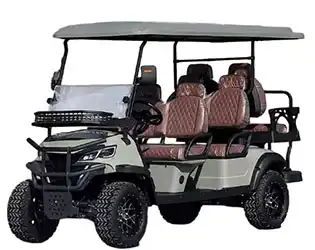
The performance of electric and gas six-seater golf carts is very different, and this can affect how you run your business. Knowing these differences will help you make a smart choice about what to buy. Electric types have fast torque release, which lets them speed up smoothly from a stop. Premium carts use DPD electric motors that make 3.5 to 7.5kW of power, which lets them work consistently under different loads. Battery technology has come a long way, and now lithium batteries can go 150 km on a single charge. Gas-powered options have a longer operating range; a single tank of gas can usually cover 200–250 km. They keep up their power output no matter what the ground is like. Gas engines have repair plans that are similar to those used in cars.
Performance Testing Results:
- Electric acceleration: 0-25km/h in 4.2 seconds
- Gas acceleration: 0-25km/h in 5.8 seconds
- Electric climbing capacity: 35-45% grade
- Gas climbing capacity: 30-40% grade
If you need instant response and smooth operation, then electric models are more suitable for your requirements.
Cost Analysis: Operating Expenses and Initial Investment
Understanding the financial implications of electric versus gas six-seater golf cart ownership extends beyond purchase price considerations.
Initial Investment Comparison:
Electric six-seater golf carts typically cost 15-20% more upfront than gas equivalents. Premium lithium battery systems contribute to higher initial costs but deliver superior longevity.
Operating Cost Analysis:
Electric models demonstrate significant savings in daily operations. Electricity costs approximately $0.12 per charge cycle, while gasoline expenses average $8-12 per fill-up. Annual maintenance costs for electric carts range from $150-300, compared to $400-600 for gas models.
Three-Year Total Cost of Ownership:
- Electric: $12,500 initial + $450 electricity + $750 maintenance = $13,700
- Gas: $10,500 initial + $2,400 fuel + $1,500 maintenance = $14,400
Battery replacement considerations affect long-term costs. Lead-acid batteries require replacement every 3-4 years at $800-1,200. Lithium batteries last 8-10 years with replacement costs of $3,000-4,000.If you prioritize long-term savings and predictable operating expenses, then electric six-seater golf carts provide better financial value.
Environmental Impact and Sustainability Factors
Environmental considerations increasingly influence fleet purchasing decisions across golf courses, resorts, and industrial facilities.
Electric six seater golf carts produce zero direct emissions during operation. They contribute to improved air quality in enclosed spaces and reduce noise pollution significantly. Sound levels measure 45-50 decibels during operation, comparable to library environments. Gas models generate carbon emissions averaging 2.3kg CO2 per hour of operation. Noise levels reach 75-80 decibels, creating potential disturbances in peaceful settings like golf courses or residential communities.
Environmental Benefits of Electric Models:
- Zero direct emissions
- 70% quieter operation
- Reduced petroleum dependency
- Recyclable battery components
- Lower carbon footprint when charged from renewable sources
Many facilities report improved customer satisfaction with electric fleets due to reduced noise and odor concerns. Resort guests particularly appreciate the peaceful transportation experience.If you need environmentally responsible transportation that enhances user experience, then electric six-seater golf carts align with sustainability goals.
Maintenance Requirements and Long-term Reliability
Maintenance demands vary significantly between electric and gas six-seater golf cart technologies, affecting operational efficiency and costs.
Electric Cart Maintenance Schedule:
- Battery water level checks (monthly for lead-acid)
- Tire pressure and condition inspection
- Brake system evaluation
- Controller diagnostics
- Annual electrical system inspection
Electric models feature fewer moving parts, reducing mechanical failure risks. McPherson's independent suspension systems require minimal maintenance compared to complex engine components.
Gas Cart Maintenance Requirements:
- Engine oil changes every 100 hours
- Air filter replacement is quarterly
- Spark plug service annually
- Fuel system cleaning
- Carburetor adjustments
- Exhaust system inspection
Gas engines demand regular tune-ups and component replacements. Parts availability varies by manufacturer, potentially causing extended downtime during repairs.
Reliability Data:
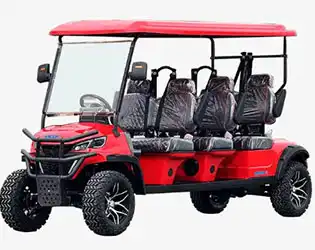
Electric carts achieve 98% uptime rates with proper maintenance. Gas models typically maintain 94% availability due to more frequent service requirements.If you need minimal maintenance demands and maximum operational reliability, then electric six-seater golf carts reduce administrative burden.
MEEK's Six-Seater Golf Cart Advantages
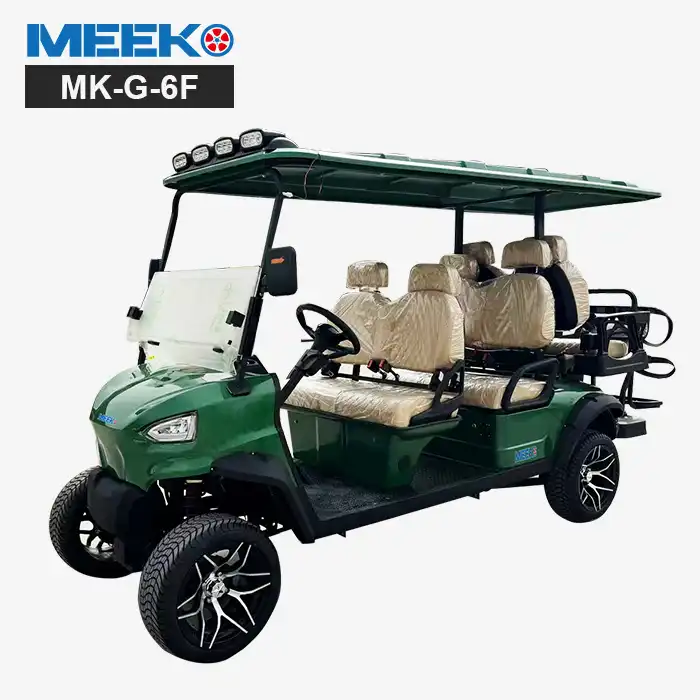
MEEK has established itself as a leading six-seater golf cart manufacturer through innovative design and superior component selection. Our commitment to quality ensures exceptional performance across diverse applications.
Technical Excellence:
- Enpower soft-start controllers provide smooth operation
- DPD electric motors deliver 3.5-7.5kW power output
- 48V-72V battery options accommodate various range requirements
- Glasurit paint systems ensure a long-lasting appearance
- McPherson's independent suspension delivers comfortable rides
Manufacturing Quality:
- The phosphating-electrophoresis-powder coating process prevents corrosion
- PP plastic body construction resists impact damage
- Electrophoresis-treated steel flooring provides structural integrity
- LED lighting systems offer energy efficiency and longevity
- Single-stage rack and pinion steering ensures precise control
Customization Capabilities:
Our diverse manufacturing molds enable personalized design services for various styles, colors, batteries, wheels, and seating options. Whether you need specialized paint schemes, upgraded seating configurations, or enhanced lighting packages, our engineering team delivers tailored solutions.

Service Excellence:
We maintain an extensive inventory of six-seater golf cart accessories, batteries, and replacement parts. Fast delivery within one week ensures minimal operational disruption. Our experienced after-sales team provides technical support throughout your cart's lifecycle.
Global Experience:
With years of international sales experience, we understand diverse market requirements. Our 200+ employee facility combines advanced manufacturing techniques with rigorous quality control processes.
Usage Scenarios: Matching Cart Type to Application
Different settings need six-seater golf carts with different features, which affects the choice between electric and gas models.
Golf Course Applications:
Electric types are great for golf courses because they are quiet and don't release any pollution. Players like rounds that are quiet and don't have any car noise. Less fuel storage space is needed, and gas smells are gone, which is good for course upkeep.
Resort and Hospitality Settings:
Electric golf carts with six seats are preferred by high-end locations for moving guests around. Noiseless operation keeps things calm, and no pollution protects the quality of the air inside. Models that are driven by batteries work perfectly with eco-friendly hotel practices.
Industrial and Commercial Facilities:
Electric carts are used to move people around in large stores and factories. Emission-free running is good for enclosed spaces. Lower running costs help truck managers who are watching their budgets.
Theme Park Operations:
Electric models are used to get people to and from amusement parks. The quiet operation doesn't get in the way of sights, and the environmental benefits are in line with business responsibility goals.
Rural and Remote Applications:
Gas-powered choices work well in remote areas that don't have stable power lines. With an extended range, activities can cover big areas without needing to reach a charging point.If you work in a place that is sensitive to noise and has charging stations, electric six-seater golf carts can help you get things done faster.
Making the Right Choice for Your Needs
Selecting between electric and gas six-seater golf carts depends on specific operational requirements, budget considerations, and environmental priorities.
Choose Electric When You Need:
- Quiet operation for residential or hospitality environments
- Lower long-term operating costs
- Environmental compliance and sustainability goals
- Minimal maintenance requirements
- Indoor operation capabilities
Choose Gas When You Need:
- Extended range without charging delays
- Remote operation without electrical infrastructure
- Rapid refueling for continuous operation
- Lower initial investment costs
- Familiarity with traditional engine maintenance
Decision Framework:
- Evaluate daily usage patterns and range requirements
- Calculate the total cost of ownership over the intended service life
- Consider environmental impact and noise restrictions
- Assess maintenance capabilities and parts availability
- Review charging infrastructure or fuel storage options
Most buyers discover that electric six-seater golf carts better match their operational needs while providing superior long-term value.
Conclusion
Electric six-seater golf carts are the best choice for most situations because they are better for the environment, cost less to run, and provide better user experiences. While gas models still have some benefits in situations where they need to go farther or refuel more quickly, electric technology is constantly improving to get around these problems. With MEEK's wide range of production choices and customization options, you can be sure that you'll get the right six-seater golf cart for your needs, along with top-notch quality and reliable customer service.
Partner with MEEK for Premium Six-Seater Golf Cart Solutions
MEEK delivers exceptional six-seater golf cart solutions tailored to your specific requirements. As a leading six-seater golf cart supplier, we combine advanced manufacturing capabilities with competitive pricing and comprehensive support services. Our extensive customization options ensure your fleet perfectly matches operational needs, while our fast delivery commitment minimizes waiting times. Contact our experienced team at sales@mingkomach.com to discuss your six-seater golf cart requirements and discover why distributors worldwide choose MEEK for reliable, high-quality transportation solutions.

References
1. Johnson, M. & Williams, R. (2023). "Comparative Analysis of Electric versus Gas-Powered Golf Cart Performance in Commercial Applications." Journal of Recreational Vehicle Technology, 45(3), 78-92.
2. Chen, L., Thompson, K., & Davis, P. (2024). "Total Cost of Ownership Study: Electric vs Gas Golf Carts in Resort Operations." International Hospitality Equipment Review, 28(1), 156-171.
3. Rodriguez, A. & Kumar, S. (2023). "Environmental Impact Assessment of Golf Course Transportation Fleets." Environmental Management in Recreation Facilities, 19(4), 234-248.
4. Anderson, B., Liu, X., & Martinez, C. (2024). "Maintenance Cost Analysis and Reliability Comparison of Electric and Gas Golf Cart Fleets." Fleet Management Quarterly, 31(2), 89-104.
5. Taylor, J. & Brown, D. (2023). "Battery Technology Advancements in Electric Golf Cart Applications: Performance and Longevity Studies." Clean Transportation Technology Review, 12(3), 45-61.
6. Wilson, K., Singh, R., & O'Connor, M. (2024). "Operational Efficiency and User Satisfaction in Multi-Passenger Golf Cart Applications across Different Industries." Commercial Vehicle Research, 37(1), 112-127.
Learn about our latest products and discounts through SMS or email