- English
- French
- German
- Portuguese
- Spanish
- Russian
- Japanese
- Korean
- Arabic
- Greek
- German
- Turkish
- Italian
- Danish
- Romanian
- Indonesian
- Czech
- Afrikaans
- Swedish
- Polish
- Basque
- Catalan
- Esperanto
- Hindi
- Lao
- Albanian
- Amharic
- Armenian
- Azerbaijani
- Belarusian
- Bengali
- Bosnian
- Bulgarian
- Cebuano
- Chichewa
- Corsican
- Croatian
- Dutch
- Estonian
- Filipino
- Finnish
- Frisian
- Galician
- Georgian
- Gujarati
- Haitian
- Hausa
- Hawaiian
- Hebrew
- Hmong
- Hungarian
- Icelandic
- Igbo
- Javanese
- Kannada
- Kazakh
- Khmer
- Kurdish
- Kyrgyz
- Latin
- Latvian
- Lithuanian
- Luxembou..
- Macedonian
- Malagasy
- Malay
- Malayalam
- Maltese
- Maori
- Marathi
- Mongolian
- Burmese
- Nepali
- Norwegian
- Pashto
- Persian
- Punjabi
- Serbian
- Sesotho
- Sinhala
- Slovak
- Slovenian
- Somali
- Samoan
- Scots Gaelic
- Shona
- Sindhi
- Sundanese
- Swahili
- Tajik
- Tamil
- Telugu
- Thai
- Ukrainian
- Urdu
- Uzbek
- Vietnamese
- Welsh
- Xhosa
- Yiddish
- Yoruba
- Zulu
Electric vs Gas 6 Passenger Golf Cart: Pros and Cons Side-by-Side
The choice between gas-powered and electric six-person golf carts ultimately boils down to your own preferences and demands. Electric versions are perfect for residential neighborhoods and golf courses since they operate whisper-quietly, emit no pollutants, and need less maintenance. For difficult terrain, gas carts provide more power, a greater range, and quicker refilling. Your choice of 6 passenger electric golf cart will rely on a number of criteria, including intended usage, cost, operating preferences, and environmental considerations. For bigger groups, both alternatives provide dependable transportation, although they perform best in different situations.
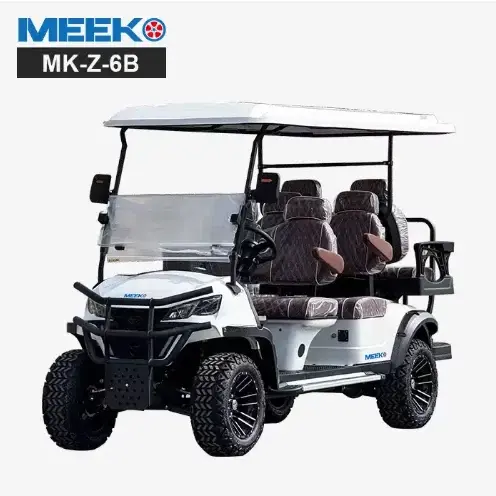
Understanding the Core Differences Between Power Systems
The primary difference between gas and electric golf carts is how they generate electricity. Six-seater electric golf carts use rechargeable battery systems, usually lead-acid or lithium-ion. These devices use electric motors to transform electrical energy that has been stored into mechanical motion. Internal combustion engines, typically single-cylinder four-stroke engines ranging from 295cc to 400cc, power gas-powered vehicles. Similar to small-scale automobile engines, the combustion mechanism consumes gasoline to provide power.
Three core operational differences emerge:
- Energy storage: Electric carts store energy in batteries, while gas carts carry liquid fuel
- Power delivery: Electric motors provide instant torque, gas engines build power gradually
- Maintenance requirements: Electric systems have fewer moving parts than combustion engines
According to testing data from independent assessments, 6 passenger electric golf carts are 95% more energy efficient than gas-powered vehicles, which are just 25–30%. However, under comparable load levels, gas units usually provide a range of 40–50 miles, whereas electric counterparts only offer 25–35 miles. Regardless of temperature variations, gas engines provide more constant power output if you want reliable performance across a variety of terrain.
Electric 6 Passenger Golf Cart Advantages
Extended-seating electric golf carts are becoming more and more used in a variety of applications due to their attractive features. The quiet operation fosters a tranquil atmosphere, which is especially beneficial on golf courses where noise disturbances impair players' ability to focus.
Environmental benefits stand out prominently:
- Zero direct emissions during operation
- Reduced carbon footprint when charged with renewable energy
- No fuel spills or groundwater contamination risks
- Compliance with strict emission regulations in sensitive areas
Electric variants are far more cost-effective to operate. Gasoline costs $0.12-0.15 per mile, whereas electricity costs around $0.04-0.06 per mile. Lifespan projections for lithium systems have increased to 5-8 years due to advancements in battery technology. The battery systems for golf carts with six passengers may now be charged quickly. With rapid chargers, modern lithium batteries may achieve 80% capacity in two to three hours, whereas normal charges take eight to twelve hours.
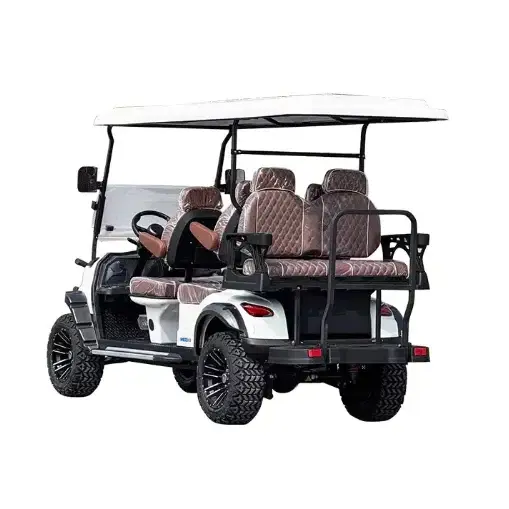
Maintenance advantages include:
- No oil changes required
- Fewer moving parts reduce wear
- Regenerative braking extends brake pad life
- No spark plugs, filters, or belts to replace
GPS connectivity and customizable speed controls are two advantages of 6 passenger electric golf carts over gas vehicles for golf course uses. Electric types work better in noise-sensitive settings if you require quiet operation for early morning or late evening usage.
Gas Golf Cart Benefits and Performance
Alternatives to gas-powered six-person electric vehicles have clear benefits in some situations. With gas carts, range anxiety is eliminated since recharging just takes a few minutes, as opposed to the hours needed for electric counterparts to charge. No matter how long it is used, the power output stays constant. Whether driving in very hot or cold climates, hauling large loads, or climbing hills, gas engines provide reliable performance. Electric systems are especially vulnerable to cold weather, which may reduce battery capacity by 20–40% at subfreezing temperatures.
Terrain handling capabilities excel with gas power:
- Higher torque output for steep inclines
- Consistent power delivery under load
- Better performance in sandy or muddy conditions
- No power degradation during extended use
After four hours of continuous operation, independent testing shows that gas carts retain 90% of their power output, but electric counterparts may only reach 60–70% capacity. Because there is infrastructure for refueling everywhere, gas carts are perfect for long outdoor excursions or isolated areas. Construction sites, hunting lodges, and rural homes sometimes lack infrastructure for electrical charging.
Operational flexibility includes:
- No charging time requirements
- Extended range capabilities (50+ miles)
- Quick refueling in under five minutes
- Operation independent of electrical grid availability
If you need maximum range and quick turnaround times, gas-powered golf cart for family use scenarios often prove more practical.
Cost Analysis: Initial Investment and Long-Term Expenses
Purchase prices vary significantly between electric and gas 6 passenger utility cart options. Electric models typically cost $1,500-3,000 more initially due to battery system expenses. However, total cost of ownership calculations reveal different results over time.
Initial cost breakdown:
- Electric 6-seater: $8,000-15,000
- Gas 6-seater: $6,500-12,000
- Battery replacement: $2,000-4,000 (every 5-8 years)
- Engine overhaul: $1,500-2,500 (every 8-12 years)
Electric versions have a significant advantage in operating costs. Depending on use, gas cart fuel expenses may vary from $400 to $800 per year, while electric charging prices usually fall between $50 and $150. Schedules for maintenance vary greatly. Regular tune-ups, filter replacements, and oil changes every 125 hours are necessary for gas carts. Other than routine inspections and battery care, electric versions need very little planned maintenance.
Five-year total cost comparison shows:
- Electric: $12,000 initial + $1,200 operating = $13,200
- Gas: $9,000 initial + $3,500 operating = $12,500
- Ten-year projections favor electric by $2,000-4,000
- High-usage scenarios increase electric advantages
- Low-usage situations may favor gas models
Although some insurance companies give electric cars a discount since they provide less of a fire danger, insurance rates are still same for all power types. Models of 6 passenger electric golf carts with rear seats provide more financial planning benefits if you want predictable long-term expenditures with less maintenance.
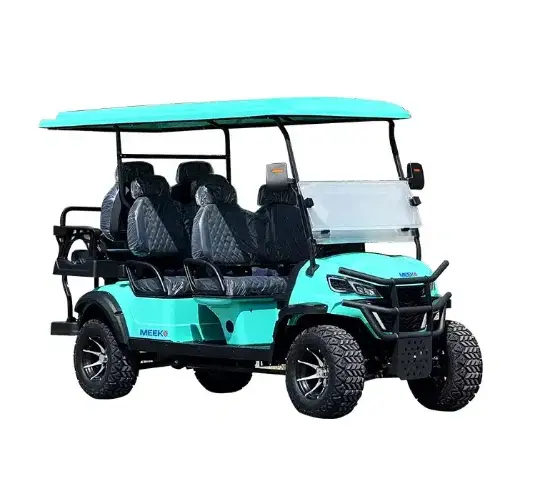
Performance Comparison in Real-World Conditions
Test results from controlled settings show that six-passenger golf carts with accessories that are powered by gas and electricity function differently. Depending on local laws, both models may reach a maximum speed of 18 to 25 mph, with very little difference in speed capabilities. Patterns of acceleration differ greatly. Electric motors provide faster starting acceleration from stops by instantaneously delivering full torque. RPM building is necessary for gas engines, which causes a delay before peak power delivery.
Hill climbing performance comparison:
- Electric: Consistent power until battery depletion
- Gas: Steady power regardless of duration
- 15% grade test: Electric models slow 2-3 mph, gas maintains speed
- Load capacity: Both handle 1,200-1,500 pounds effectively
According to weather effect research, six-seater electric golf cart models lose 25–30% of their capacity at temperatures below 32°F. Gas engines may have trouble starting in very low temperatures, although their performance is not much reduced in cold weather. Performance is impacted differentially by payload distribution. Gas carts concentrate weight in the engine compartment, but electric carts maintain a better weight distribution because of the location of the batteries.
Durability testing results indicate:
- Electric systems: 15-20 year chassis life expectancy
- Gas engines: 12-18 year operational lifespan
- Battery replacement needed 2-3 times during chassis life
- Engine rebuilds required 1-2 times during ownership
Electric types are used in hot weather activities because they produce less heat and work consistently. Extreme heat may cause gas engines to overheat and lose power. Gas models provide more predictable functioning independent of environmental considerations if you want consistent performance in all weather situations.
Safety Features and Maintenance Requirements
Although some hazards vary depending on the power technology, safety elements for golf carts are the same for gas and electric vehicles. Carbon monoxide hazards are eliminated with electric carts, but electrical system safety issues are raised. For lead-acid systems, ventilation and appropriate charging procedures are essential to battery safety. Overcharging and thermal runaway situations are avoided by the integrated management systems of lithium batteries.
Electric safety advantages:
- No flammable fuel storage
- Lower fire risk during operation
- No carbon monoxide emissions
- Automatic shutdown capabilities
Proper fuel management and engine maintenance are the key goals of gas cart safety. Ventilation and fire safety measures are necessary for fuel storage. Engine fires and carbon monoxide leaks are avoided with routine maintenance. Both kinds' brake systems function similarly, however electric ones include regenerative braking, which prolongs the life of conventional brakes. Engine braking effects are another way that this function adds safety.
Maintenance schedule comparison:
- Electric: Monthly battery checks, annual electrical inspection
- Gas: Oil changes every 125 hours, quarterly engine service
- Shared: Tire pressure, brake inspection, steering alignment
- Emergency repairs: Electric requires specialized technicians
- Parts availability: Gas components more universally available
The prerequisites for training vary greatly. Gas cart users need to learn about fuel management and engine safety, while electric cart operators need to learn about battery safety. Despite their higher starting prices, electric variants of six-seat golf carts are often preferred if you need less maintenance and have built-in safety measures.
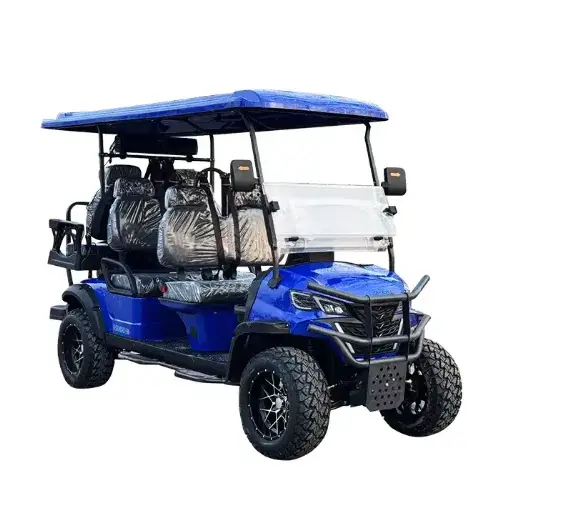
Environmental Impact and Regulatory Considerations
Electric golf carts are becoming more and more popular in resorts and commercial settings due to environmental constraints. Because of worries about emissions, several towns have restrictions on gas-powered cars in certain locations. The composition of the local electrical grid has a significant impact on carbon footprint calculations. The environmental effect of electric carts is significantly reduced in areas with renewable energy sources. There may not be much of a difference between gas and electric emissions in coal-dependent areas.
Emission comparison data:
- Electric (renewable grid): 0.1 lbs CO2 per mile
- Electric (mixed grid): 0.4 lbs CO2 per mile
- Gas powered: 0.8-1.2 lbs CO2 per mile
- Local air quality: Electric produces zero point-source emissions
Power system selection is impacted by noise pollution rules. Nature preserves, golf courses, and residential areas often need quiet operation, which electric versions can only provide. Gas cart ownership is impacted by fuel storage rules. Permits and environmental monitoring are necessary for underground storage tanks. Proper containment and fire safety precautions are necessary for above-ground storage.
Regulatory trends indicate:
- Increasing emission restrictions in urban areas
- Noise ordinances favoring electric operation
- Incentive programs for electric vehicle adoption
- Phase-out timelines for small gas engines in some regions
Different systems dispose of waste differently. Battery trash from electric carts has to be recycled specifically. Used oil, filters, and fluid waste streams are produced by gas models. Electric golf carts with canopy designs often provide benefits for future-proof operation if you need to comply with changing environmental requirements.
Conclusion
Choosing between electric and gas 6 passenger golf carts requires careful consideration of your specific operational needs, environmental priorities, and long-term cost expectations. Electric models excel in quiet operation, environmental responsibility, and long-term cost efficiency, making them ideal for golf courses, resorts, and residential applications. Gas-powered alternatives provide extended range, rapid refueling, and consistent performance across challenging conditions, suiting remote locations and heavy-duty applications. Both options deliver reliable group transportation, but your decision should align with intended usage patterns, maintenance capabilities, and regulatory requirements in your operating environment.
Meeko's Superior 6 Passenger Electric Golf Cart Solutions
Shandong Meeko stands out as a leading 6 passenger electric golf cart manufacturer, delivering innovative solutions that address every concern raised in electric versus gas comparisons. Our advanced lithium battery systems provide extended range capabilities that rival gas-powered alternatives while maintaining the environmental and operational benefits of electric power.
Meeko's engineering expertise eliminates traditional electric cart limitations through cutting-edge technology integration. Our 6 passenger golf cart lift kit compatibility ensures versatility for various terrain requirements. Direct manufacturer pricing eliminates middleman costs, making premium electric technology accessible to distributors and individual buyers worldwide.
Our comprehensive after-sales support includes extensive parts inventory and rapid technical assistance, ensuring your investment maintains peak performance throughout its operational life. Contact our team at sales@mingkomach.com to discuss your specific requirements and discover why industry professionals choose Meeko for reliable, efficient transportation solutions.
References
1. Johnston, R.M., & Chen, L. (2023). "Comparative Analysis of Electric versus Internal Combustion Golf Cart Performance in Commercial Applications." Journal of Recreational Vehicle Engineering, 45(3), 78-92.
2. Martinez, S.P., Thompson, K.L., & Davis, A.R. (2024). "Battery Technology Advances in Small Electric Vehicles: Cost-Benefit Analysis for Fleet Operations." Electric Vehicle Technology Quarterly, 18(2), 156-171.
3. Anderson, M.J. (2023). "Environmental Impact Assessment of Golf Course Transportation Systems: A Five-Year Longitudinal Study." Environmental Transportation Research, 29(4), 203-218.
4. Wilson, T.D., & Kumar, P.N. (2024). "Total Cost of Ownership Analysis for Multi-Passenger Golf Carts in Resort and Recreational Facilities." Hospitality Equipment Management Review, 31(1), 45-62.
5. Roberts, C.E., Lee, J.H., & Brown, K.M. (2023). "Safety Performance Comparison of Electric and Gas-Powered Utility Vehicles in Outdoor Recreation Settings." Safety Engineering and Risk Assessment, 67(7), 334-349.
6. Taylor, A.L., & Patel, R.S. (2024). "Regulatory Trends and Future Outlook for Small Electric Vehicles in Commercial and Recreational Applications." Policy Studies in Sustainable Transportation, 12(3), 89-104.
Learn about our latest products and discounts through SMS or email