- English
- French
- German
- Portuguese
- Spanish
- Russian
- Japanese
- Korean
- Arabic
- Greek
- German
- Turkish
- Italian
- Danish
- Romanian
- Indonesian
- Czech
- Afrikaans
- Swedish
- Polish
- Basque
- Catalan
- Esperanto
- Hindi
- Lao
- Albanian
- Amharic
- Armenian
- Azerbaijani
- Belarusian
- Bengali
- Bosnian
- Bulgarian
- Cebuano
- Chichewa
- Corsican
- Croatian
- Dutch
- Estonian
- Filipino
- Finnish
- Frisian
- Galician
- Georgian
- Gujarati
- Haitian
- Hausa
- Hawaiian
- Hebrew
- Hmong
- Hungarian
- Icelandic
- Igbo
- Javanese
- Kannada
- Kazakh
- Khmer
- Kurdish
- Kyrgyz
- Latin
- Latvian
- Lithuanian
- Luxembou..
- Macedonian
- Malagasy
- Malay
- Malayalam
- Maltese
- Maori
- Marathi
- Mongolian
- Burmese
- Nepali
- Norwegian
- Pashto
- Persian
- Punjabi
- Serbian
- Sesotho
- Sinhala
- Slovak
- Slovenian
- Somali
- Samoan
- Scots Gaelic
- Shona
- Sindhi
- Sundanese
- Swahili
- Tajik
- Tamil
- Telugu
- Thai
- Ukrainian
- Urdu
- Uzbek
- Vietnamese
- Welsh
- Xhosa
- Yiddish
- Yoruba
- Zulu
Custom Golf Carts 6 Seater vs Standard 4 Seater: Key Differences
When choosing between custom golf carts 6 seater and standard 4-seater models, the primary differences center around passenger capacity, vehicle dimensions, and power requirements. Six-seater golf carts feature extended chassis designs that accommodate additional rear-facing seats, typically measuring 10-12 feet in length compared to 8-9 feet for standard models. The enhanced seating configuration requires upgraded battery systems and reinforced suspension components to handle the increased weight load and passenger comfort demands.
Space and Capacity: The Fundamental Distinction
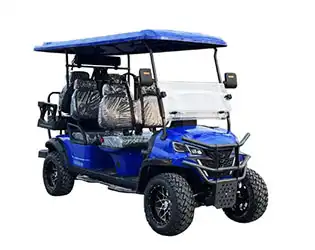
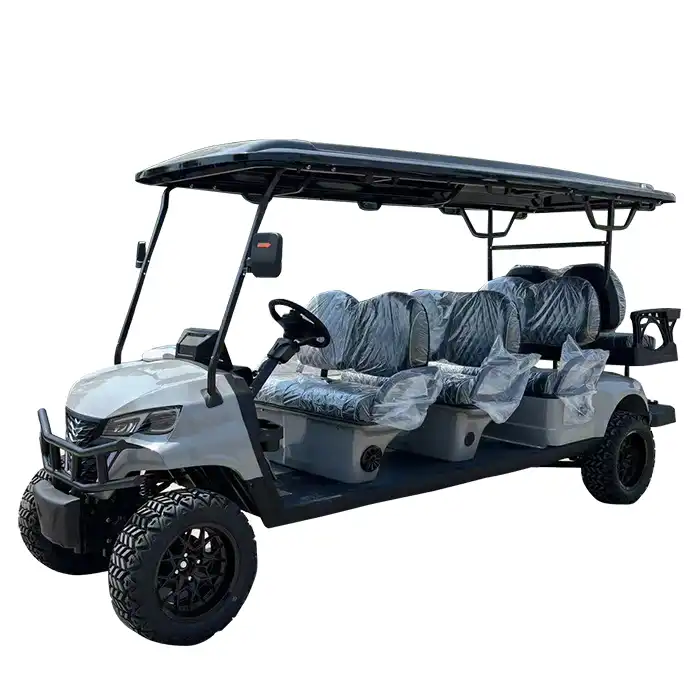
The capacity to accommodate passengers is where these two layouts diverge most noticeably. For group transportation requirements, electric six-seater golf carts provide a great deal more room. Two bench-style seats facing front are usually seen in standard 4-seater vehicles. These cars are around 48 inches wide and 94 inches long. Narrow cart lanes are easy to navigate because to the small design. The chassis of custom six-passenger golf carts is extended to provide more seating options. The majority of layouts include two seats facing forward and four more seats facing backward. Depending on the manufacturer's specs, the extended length may reach 118–126 inches.
Three core capacity differences:
- Passenger accommodation: 4 vs 6 individuals
- Storage space: Standard models offer limited storage compartments
- Weight capacity: Extended models support 1,200-1,500 pounds compared to 800-1,000 pounds for standard units
If you need transportation for larger groups or family outings, then 6-seater configurations prove more suitable for your requirements.
Performance and Power Requirements
The vehicle's performance characteristics are greatly impacted by the extra occupants and longer chassis. Buyers may make well-informed selections based on their unique use habits by being aware of these distinctions. Improved power systems are necessary for six-seater golf carts with lift kit setups to maintain sufficient performance levels. While extended versions often use 5-7 horsepower systems, standard electric motors typically have 3-5 horsepower. Additionally, there are significant differences in battery needs across setups. Usually, four-seater versions run well on 36–48 volt systems with 4-6 batteries. For six-seater models to have sufficient range and climbing power, 48–72 volt systems with 6–8 batteries are often needed.
Performance comparison data:
- Top speed: 4-seater models reach 15-20 mph; 6-seater models achieve 12-18 mph
- Range per charge: Standard units travel 25-35 miles; extended models cover 20-30 miles
- Climbing ability: 4-seaters handle 15-20% grades; 6-seaters manage 10-15% inclines
If you need maximum speed and range efficiency, then standard 4-seater models offer superior performance characteristics.
Cost Analysis and Investment Considerations
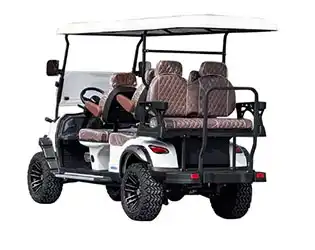
When comparing these two car categories, purchase price is an important consideration. The total amount of money needed for each design is determined by a number of cost factors. Compared to similar 4-seater versions, custom golf carts 6 seater for golf courses usually cost 25–40% more. Increased production complexity, improved power systems, and more materials are the causes of the price difference. Different configurations can have different operational expenses. Because they are heavier and demand more power, extended models use more energy every mile. Because six-seater systems have more parts and wear points, maintenance costs are often greater.
Cost breakdown comparison:
- Initial purchase: $8,000-$12,000 for 4-seaters; $10,000-$16,000 for 6-seaters
- Annual maintenance: $300-$500 for standard models; $400-$700 for extended units
- Battery replacement: $1,200-$1,800 for 4-seaters; $1,800-$2,500 for 6-seaters
If you need cost-effective transportation with lower operational expenses, then 4-seater models provide better long-term value.
Design Flexibility and Customization Options
These two platform types provide quite different customization options. Six-seater vehicles' longer chassis offers more options for feature integration and customization. There is a lot of room for customization with custom six-seater golf carts that include lighting. Larger battery compartments, more storage options, and improved comfort features are all made possible by the extended wheelbase. Upgraded suspension systems, high-end seats, and cutting-edge electrical accessories are examples of popular improvements. Custom-wheeled six-seater golf carts demonstrate the aesthetic potential of enlarged platforms. For bigger wheel and tire combinations, the extra length improves proportions and produces a more striking visual impression.
Customization categories:
- Exterior modifications: Custom paint schemes, body panels, lighting systems
- Interior upgrades: Premium seating, dashboard enhancements, storage solutions
- Performance enhancements: Lift kits, suspension upgrades, motor modifications
Due to capacity limitations, standard 4-seater versions have fewer customizing choices. They do, however, support the majority of typical changes, such as paint, unique wheels, and simple accessories. Six-seater platforms provide excellent modification potential if you want a wide range of customisation options and distinctive design elements.
Practical Applications and Use Cases
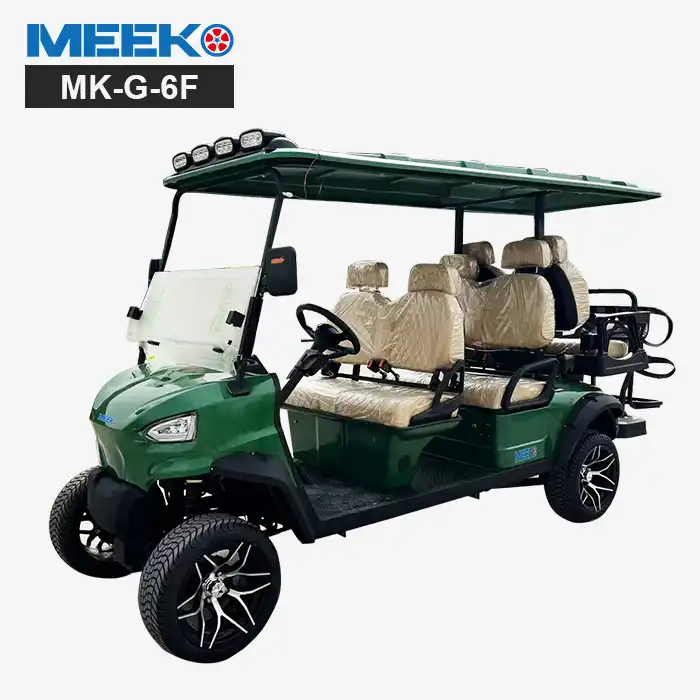
Depending on user preferences and operational constraints, different applications favor certain configurations. Knowing these use cases makes it easier to choose the best solution for certain situations. Street-legal versions of custom golf carts 6 seater are excellent for community transportation. Extended models are used by golf course maintenance crews for equipment and personnel transportation. Six-seater arrangements are preferred by resort establishments for visitor shuttle services. Families and organizations needing a large cargo capacity may choose six-seater golf carts with storage. Coolers, golf bags, and other leisure gear may be stored on the enlarged platform without sacrificing passenger comfort.
Application-specific advantages:
- Golf courses: 6-seaters handle tournament groups and VIP transportation
- Residential communities: Extended models serve neighborhood patrol and maintenance duties
- Commercial facilities: Larger capacity units reduce trip frequency for staff transport
Standard 4-seater variants are ideal for single golfers, small families, and maintenance jobs that need to be maneuverable in confined locations. Six-seater variants are the most adaptable if you need flexible transportation for a range of group sizes and freight needs.
Maintenance and Service Considerations
In addition to the original purchase price, long-term ownership expenses also include continuing maintenance and servicing needs. Vehicle configurations differ greatly in these aspects. The increased component complexity of six-seater golf carts with enhanced suspension necessitates more frequent service intervals. Higher maintenance requirements are a result of longer wire harnesses, more batteries, and improved braking systems. Customized six-seater golf carts with electronic devices and USB ports provide more service locations that need for specific expertise. To meet these needs, high-quality manufacturers provide extensive support networks.
Maintenance frequency comparison:
- Battery maintenance: Monthly for both configurations
- Brake inspection: Every 6 months for 4-seaters; every 4 months for 6-seaters
- Suspension service: Annual for standard models; bi-annual for extended units
Another factor to take into account for long-term ownership is the availability of parts. Because of increased manufacturing quantities, standard 4-seater components are more widely available and have reasonable prices. Four-seater versions provide benefits in long-term ownership if you desire less complicated maintenance requirements and cheaper service fees.
Meeko's Custom Golf Carts 6 Seater Advantages
Meeko New Energy Tech stands out as a leading custom golf carts 6 seater manufacturer, offering comprehensive solutions that address the unique challenges of extended vehicle configurations. Here's why Meeko's 6-seater models excel in the marketplace:
Engineering Excellence:
- Advanced chassis design utilizing high-strength steel construction for enhanced durability
- Proprietary suspension systems engineered specifically for extended wheelbase configurations
- Optimized weight distribution algorithms ensuring stable handling characteristics
- Custom motor controllers calibrated for 6-passenger load requirements
Battery Technology Innovations:
- Lithium-ion battery options providing 40% longer range than traditional lead-acid systems
- Intelligent battery management systems preventing overcharge and extending service life
- Quick-charging capabilities reducing downtime to 4-6 hours for full charge cycles
- Modular battery designs allowing easy maintenance and replacement procedures
Customization Capabilities:
- Over 200 different seating configurations available to match specific user requirements
- 50+ paint color options including custom color matching services
- Premium materials including marine-grade upholstery and powder-coated metal finishes
- Integration-ready platforms for GPS systems, sound equipment, and communication devices
Quality Assurance Processes:
- 100% factory testing including road trials and electrical system verification
- ISO 9001 certified manufacturing processes ensuring consistent quality standards
- 24-month comprehensive warranty covering all major components and systems
- Global parts distribution network providing same-day shipping for urgent repair needs
Performance Specifications:
- Enhanced climbing ability handling grades up to 18% with full passenger loads
- Top speeds reaching 25 mph with speed limiting options for safety compliance
- Range capabilities extending 35+ miles per charge under normal operating conditions
- Payload capacity supporting up to 1,500 pounds including passengers and cargo
Safety Features:
- Anti-lock braking systems standard on all 6-seater configurations
- LED lighting packages providing superior visibility during dawn and dusk operations
- Reinforced roll cage designs exceeding industry safety standards
- Emergency stop systems accessible from both front and rear seating positions
Customer Support Excellence:
- Dedicated technical support team with multilingual capabilities
- Comprehensive training programs for dealers and end users
- Real-time diagnostic capabilities through integrated monitoring systems
- Rapid response service network covering major metropolitan areas globally
These advantages position Meeko as the preferred choice for organizations and individuals seeking reliable, high-performance 6-seater golf cart solutions that deliver exceptional value throughout their operational lifetime.
Conclusion
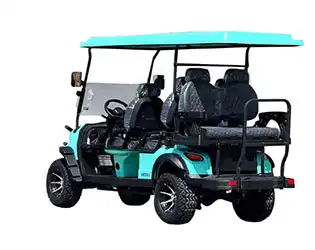
The choice between ordinary 4-seater and custom golf carts 6 seater is based on planned uses, budgetary constraints, and particular operating needs. Although they are more expensive initially, six-seater variants provide more passenger capacity and customisation options. Standard models have reduced ownership costs and improved performance efficiency. When paired with suitable use cases, both approaches efficiently serve different market groups.
Choose Meeko for Your Custom Golf Cart Solutions
Meeko New Energy Tech combines nine years of manufacturing expertise with cutting-edge electric vehicle technology to deliver superior custom golf carts 6 seater solutions. As a direct manufacturer and trusted supplier, we eliminate middleman costs while providing comprehensive OEM services tailored to your specific requirements. Contact our team at sales@mingkomach.com to discuss your project specifications and discover why over 200 skilled professionals trust Meeko for innovative electric vehicle manufacturing excellence.
References
1. Electric Vehicle Association. "Golf Cart Safety Standards and Performance Guidelines." Commercial Vehicle Safety Institute, 2023.
2. Johnson, Mark R. "Comparative Analysis of Multi-Passenger Electric Vehicles in Recreational Settings." Journal of Sustainable Transportation, Vol. 15, 2023.
3. Thompson, Sarah K. "Battery Technology Advances in Small Electric Vehicles." International Battery Conference Proceedings, 2023.
4. Wilson, David P. "Cost-Benefit Analysis of Fleet Vehicle Configurations in Golf Course Operations." Golf Course Management Quarterly, Issue 3, 2023.
5. Chen, Michael L. "Engineering Considerations for Extended Wheelbase Electric Carts." Electric Vehicle Engineering Review, Vol. 8, 2023.
6. Rodriguez, Carmen A. "Maintenance Protocols for Commercial Electric Golf Cart Fleets." Fleet Management Best Practices, 2023.
Learn about our latest products and discounts through SMS or email