- English
- French
- German
- Portuguese
- Spanish
- Russian
- Japanese
- Korean
- Arabic
- Greek
- German
- Turkish
- Italian
- Danish
- Romanian
- Indonesian
- Czech
- Afrikaans
- Swedish
- Polish
- Basque
- Catalan
- Esperanto
- Hindi
- Lao
- Albanian
- Amharic
- Armenian
- Azerbaijani
- Belarusian
- Bengali
- Bosnian
- Bulgarian
- Cebuano
- Chichewa
- Corsican
- Croatian
- Dutch
- Estonian
- Filipino
- Finnish
- Frisian
- Galician
- Georgian
- Gujarati
- Haitian
- Hausa
- Hawaiian
- Hebrew
- Hmong
- Hungarian
- Icelandic
- Igbo
- Javanese
- Kannada
- Kazakh
- Khmer
- Kurdish
- Kyrgyz
- Latin
- Latvian
- Lithuanian
- Luxembou..
- Macedonian
- Malagasy
- Malay
- Malayalam
- Maltese
- Maori
- Marathi
- Mongolian
- Burmese
- Nepali
- Norwegian
- Pashto
- Persian
- Punjabi
- Serbian
- Sesotho
- Sinhala
- Slovak
- Slovenian
- Somali
- Samoan
- Scots Gaelic
- Shona
- Sindhi
- Sundanese
- Swahili
- Tajik
- Tamil
- Telugu
- Thai
- Ukrainian
- Urdu
- Uzbek
- Vietnamese
- Welsh
- Xhosa
- Yiddish
- Yoruba
- Zulu
6 Passenger Golf Cart Street Legal: Accessories & Must-Have Add-Ons
When exploring options for expanding transportation capacity, a 6 passenger golf cart street legal vehicle represents an ideal solution for businesses, recreational facilities, and community organizations. These versatile electric vehicles combine spacious seating with road-legal compliance, offering enhanced mobility beyond traditional golf course applications. With proper accessories and safety equipment, these multi-passenger carts can navigate public roads while maintaining efficiency and environmental benefits. Understanding the essential add-ons and modifications required for street legality ensures your investment delivers maximum value and operational flexibility for various commercial applications.
Understanding 6 Passenger Street Legal Golf Carts
The evolution of electric golf carts has transformed these vehicles from simple course transportation into sophisticated street-legal alternatives. A 6 passenger golf cart street legal model differs significantly from standard 4-passenger variants through enhanced chassis design, upgraded suspension systems, and expanded battery capacity to accommodate additional weight and passengers.
Core Features and Legal Standards
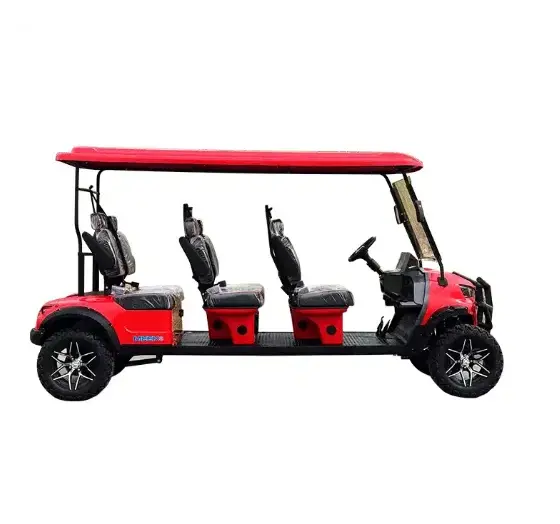
To be allowed on the street, these cars need to be modified in certain ways that make them different from leisure types. Headlights, taillights, stop lights, turn signs, rearview mirrors, and windshield wipers that are allowed by the DOT are all important features. Most speed controls keep the top speed at 25 mph, which is the speed limit for Low-Speed Vehicles (LSVs) in most states. Because 6-passenger cars have more seats, the body has to be stronger and the safety features have to be better. For more steadiness, these cars have longer wheelbases and better brakes. They also usually have three-point seat belts for every passenger. When the payload demands go up, battery systems need more power to keep working well.
Business Applications and Advantages
Electric carts with multiple seats work great in a wide range of business settings, such as vacation transportation, campus security checks, maintenance work, and dining services. Because they don't make any noise and don't pollute the environment, they can be used in places where noise isn't wanted and are cheaper than bigger cars for short trips. Lowering fuel costs, requiring less upkeep, and making the equipment last longer are all signs of lower operating costs. The cost of insurance is usually lower than for regular cars, and they take up a lot less room when it comes to parking and storage than regular rental cars.
Must-Have Accessories for 6 Passenger Street Legal Golf Carts
By adding the right extras, basic electric carts can be turned into complete transportation systems that meet specific operating needs. There are three main types of improvements: safety gear, comfort features, and speed improvements.
Essential Safety Equipment
- Safety accessories ensure regulatory compliance while protecting passengers and other road users. Here are the critical safety components required for street-legal operation:
- Complete lighting packages including LED headlights, taillights, brake lights, and turn signals with proper wiring harnesses and switches for reliable visibility during all operating conditions
- DOT-approved mirrors providing adequate rear and side visibility with adjustable positioning for different driver heights and seating configurations
- Safety restraint systems featuring three-point seat belts for each passenger position with proper mounting hardware and emergency release mechanisms
- Warning devices such as horns, backup alarms, and hazard flashers to communicate with pedestrians and other vehicles in mixed-traffic environments
These safety enhancements work together to create a comprehensive protection system that meets federal and state requirements while ensuring passenger security during operation.
Comfort and Convenience Features
In business settings, passenger comfort has a direct effect on how well operations run and how happy users are. Accessories for weather safety include hard or soft cab shelters with changeable panels that let the machine run all year, no matter what the weather is like. Better sitting choices have sensible designs with extra padding and changeable positions for long periods of use. Storage options like rear cargo boxes, under-seat cubbies, and side-mounted tool holders become necessary for smooth operations. These additions make the vehicle more useful while keeping the number of seats and the vehicle's balance.
Performance Enhancement Add-Ons
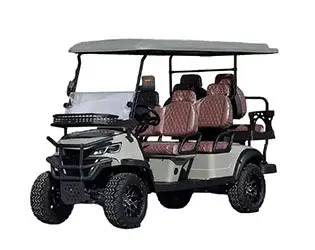
The biggest change in efficiency comes from upgrading the batteries. Lithium-ion systems have a longer range, charge faster, and are lighter than standard lead-acid systems. Depending on the environment and how the vehicle is used, high-capacity battery packs can increase the range from 30 miles to over 50 miles per charge. Choosing the right tires can affect both speed and safety. For example, street-rated tires have better grip, less noise, and last longer on hard areas. Different uses have different tires, such as all-terrain tires for working on a variety of surfaces and low-rolling-resistance tires for the best fuel economy.
How to Select the Right Accessories: A Decision Support Approach?
Accessory selection requires systematic evaluation of operational requirements, regulatory compliance, and budget considerations. This structured approach helps procurement professionals make informed decisions that align with business objectives while ensuring legal compliance.
Identifying Specific Application Requirements
In different working situations, you need different sets of accessories. For passenger transportation, comfort features and weather protection are most important, while for repair uses, store space and useful tools are most important. For security patrols, vehicles need to be able to light items and communicate, while for delivery services, vehicles need to be able to carry goods and be protected from the weather. Understanding these application-specific needs helps with setting priorities and allocating budgets for accessories. Creating detailed use-case situations helps identify important versus extra features, ensuring critical needs receive adequate funding while avoiding pointless costs.
Brand Compatibility and Technical Considerations
Accessory support changes a lot between brands. For example, Club Car, E-Z-GO, and Yamaha all need their own mounting methods and power links for their accessories to work. Most aftermarket items can be used with any vehicle, but OEM parts usually work better and come with better warranties. When you add lights, charging, or communication equipment, it's important that the new equipment works with the existing electrical system. For effective operation and to keep the electrical system from getting damaged, the voltage needs, current limits, and compatibility of the wiring cable must all match the vehicle's requirements.
Cost-Benefit Analysis Framework
The right choice of accessories strikes a mix between the initial cost and the long-term benefits for operations. More often than not, high-quality parts cost more, but they last longer, last better, and need less upkeep. Total cost of ownership is affected by warranty coverage and provider support in a big way, especially for business uses with tight plans. When allocating budgets, safety-critical items that follow the law should come first, followed by speed improvements that have a clear effect on how efficiently operations run. Even though comfort and ease features are important for user happiness, they are usually only thought about after basic needs are met.
Trends and Innovations in 6 Passenger Street Legal Golf Cart Accessories
The market for accessories for electric vehicles is always changing because technology is getting better and people's needs are changing. With these changes, there are chances for better usefulness and operating efficiency.
Smart Technology Integration
Accessories that are connected to the Internet of Things (IoT) let fleet management apps keep an eye on 6 passenger golf cart street legal vehicles in real time, enabling location tracking, performance monitoring, maintenance alerts, and compliance oversight to improve safety, efficiency, and operational control. Tracking GPS systems let you see where something is, find the best route, and protect against theft. Battery management systems show you how charged the battery is, how far it can go, and when it needs to be serviced. These smart features let working choices be based on data and preventative repair plans be made. Communication systems have changed from simple two-way radios to ones that include cell phones, Wi-Fi sites, and ways to call for help in an emergency. These features come in handy for security purposes, helping guests, and keeping things running smoothly in big buildings.
Sustainable and Eco-Friendly Options
People who care about the environment want accessories made from recyclable materials, biodegradable parts, and systems that use less energy. Solar charge devices make it less reliant on the power grid and give you extra power for long operations in rural areas. More and more people are caring about the environment, and programs like battery recycling and component lifecycle management show this. More and more, manufacturers offer repair services and take-back programs that make parts last longer and reduce trash.
Customization and Branding Opportunities
OEM partnerships allow service providers to stand out by using custom logos and setups that make the equipment look more professional. Unique cars that reflect an organization's character and operating needs are made possible by custom paint schemes, logo applications, and the fitting of specialized equipment. Modular extension systems can be quickly changed to fit different needs, which makes the best use of the fleet and increases management freedom. With quick-change technology, a single car can do more than one thing during an operating run.
Company Introduction and Product Solutions
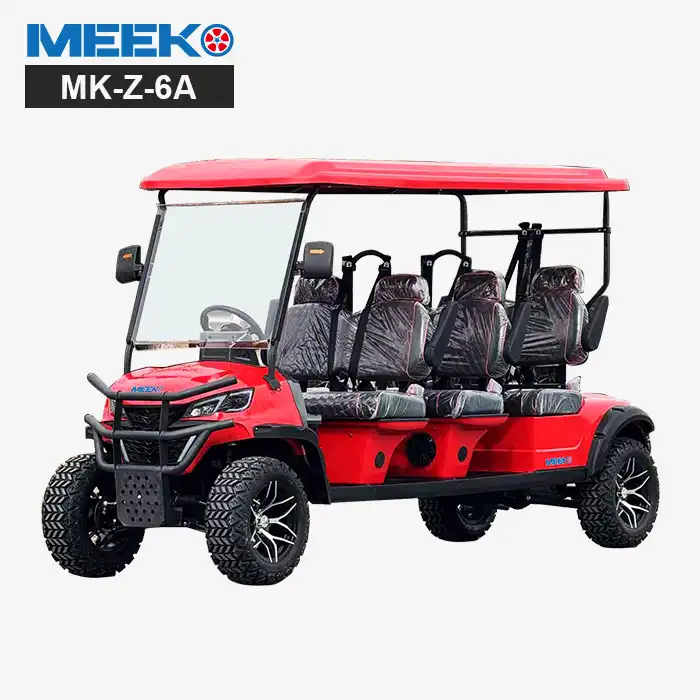
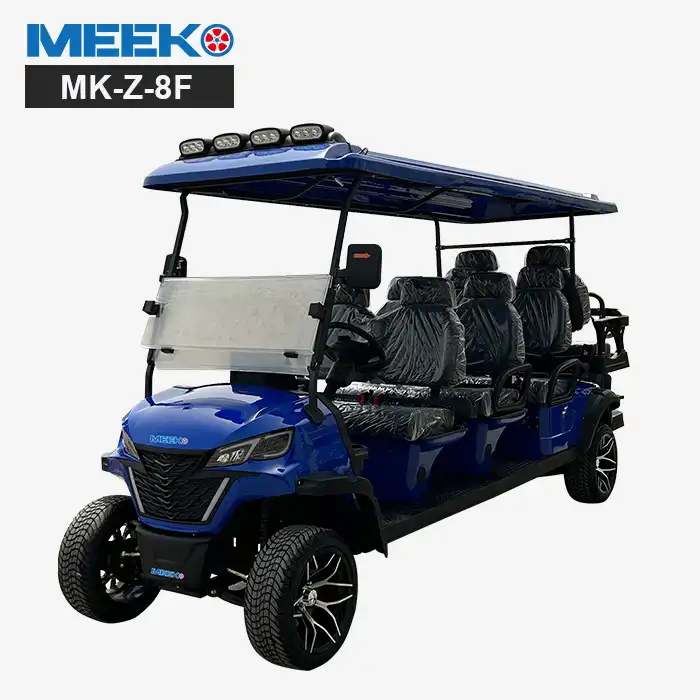
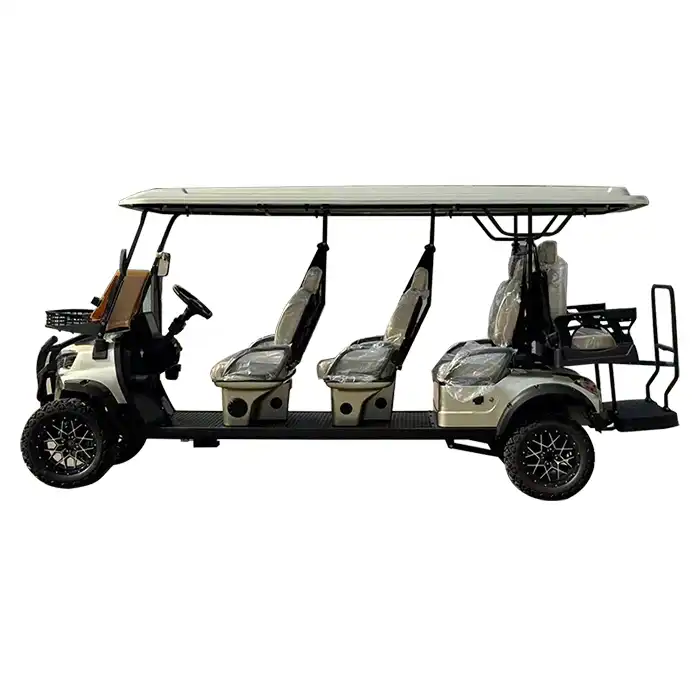
Since 2015, Shandong Meeko New Energy Tech Inc. has become one of the best companies for making electric golf carts and other specialty vehicles. We offer a wide range of products, such as standard and special 6 passenger golf cart street legal vehicles that can be used for both business and pleasure.
Manufacturing Expertise and Capabilities
Our 200+ employee facility in Jining, Shandong, combines advanced manufacturing techniques with rigorous quality control processes. From material preparation through final testing, every aspect of production maintains strict standards to ensure reliable performance and durability. Our R&D capabilities enable custom solutions that address specific customer requirements while maintaining cost-effectiveness. Diverse manufacturing molds support personalized design services across various styles, colors, battery configurations, wheel options, and seating arrangements. This flexibility allows us to serve as your dedicated golf cart supplier, delivering solutions that match exact specifications while maintaining competitive pricing structures.
Comprehensive Accessory Solutions
Our large stock of accessories includes safety gear, comfort features, and speed upgrades made just for electric cars with more than one passenger. Quality assurance methods make sure that products work well together and are reliable, and full guarantee coverage gives businesses peace of mind. Fast delivery means that orders are usually shipped within a week of being received, which keeps operations running smoothly and meets urgent substitute needs. Our large collection of parts keeps popular makes and models in stock, so we can quickly honor warranties and provide ongoing service support.
Conclusion
Selecting appropriate accessories for 6 passenger golf cart street legal vehicles requires careful consideration of safety requirements, operational needs, and regulatory compliance. Essential safety equipment ensures legal operation while protecting passengers and other road users. Comfort and performance accessories enhance operational efficiency and user satisfaction, contributing to overall fleet effectiveness. The decision-making process benefits from systematic evaluation of application requirements, brand compatibility, and cost-benefit considerations. As technology continues advancing, smart features and sustainable options provide opportunities for enhanced functionality and environmental responsibility. Working with experienced manufacturers and suppliers ensures access to quality components, technical support, and comprehensive warranty coverage for long-term operational success.
FAQ
What are the essential legal requirements for making a 6 passenger golf cart street legal?
Street-legal compliance requires DOT-approved lighting systems including headlights, taillights, brake lights, and turn signals. Additional requirements include rearview mirrors, windshield, seat belts, horn, and speed governor limiting maximum speed to 25 mph. Vehicle registration and insurance are typically required, with specific requirements varying by state and local jurisdiction.
How do I choose accessories that comply with varying regional regulations?
Regulatory compliance varies significantly between states and municipalities. Research local Low-Speed Vehicle (LSV) regulations and consult with local DMV offices to understand specific requirements. Choose accessories certified for automotive use and verify compatibility with regional standards. Working with experienced suppliers familiar with multi-state regulations helps ensure proper compliance across different operating areas.
What financing options are commonly available for these carts and accessories?
Commercial financing options include equipment loans, lease programs, and fleet financing packages designed for business applications. Many suppliers offer direct financing or partnerships with commercial lenders specializing in specialty vehicles. Government incentives and rebates may be available for electric vehicle purchases in certain jurisdictions, reducing overall acquisition costs.
Partner with Meeko for Your 6 Passenger Golf Cart Street Legal Solutions
Meeko Cart combines manufacturing excellence with comprehensive support services to deliver reliable 6 passenger golf cart street legal solutions tailored to your operational requirements. Our OEM capabilities, competitive pricing, and rapid delivery ensure your fleet needs are met efficiently and cost-effectively. Contact our experienced team at sales@mingkomach.com to discuss your specific requirements and explore customization options that enhance operational efficiency. As a trusted 6 passenger golf cart street legal manufacturer, we provide complete solutions from initial consultation through ongoing parts and service support, ensuring long-term operational success for distributors and end users alike.
References
1. National Highway Traffic Safety Administration. "Federal Motor Vehicle Safety Standards for Low Speed Vehicles." Department of Transportation Safety Guidelines, 2023.
2. Electric Drive Transportation Association. "Commercial Electric Vehicle Fleet Operations Manual." Industry Standards and Best Practices, 2023.
3. Golf Car Industry Association. "Street Legal Golf Cart Compliance Guidelines." Safety and Regulatory Standards Publication, 2023.
4. International Association of Transportation Regulators. "Multi-Passenger Electric Vehicle Safety Standards." Global Compliance Framework, 2023.
5. American National Standards Institute. "Electric Golf Cart Accessory Certification Requirements." Technical Standards Publication, 2023.
6. Commercial Vehicle Safety Alliance. "Low Speed Vehicle Inspection and Compliance Manual." Enforcement Guidelines, 2023.
Learn about our latest products and discounts through SMS or email