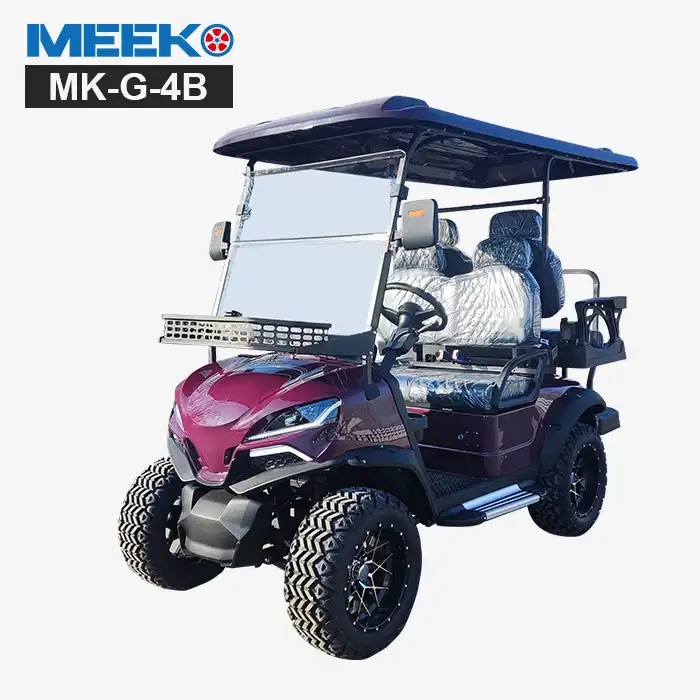
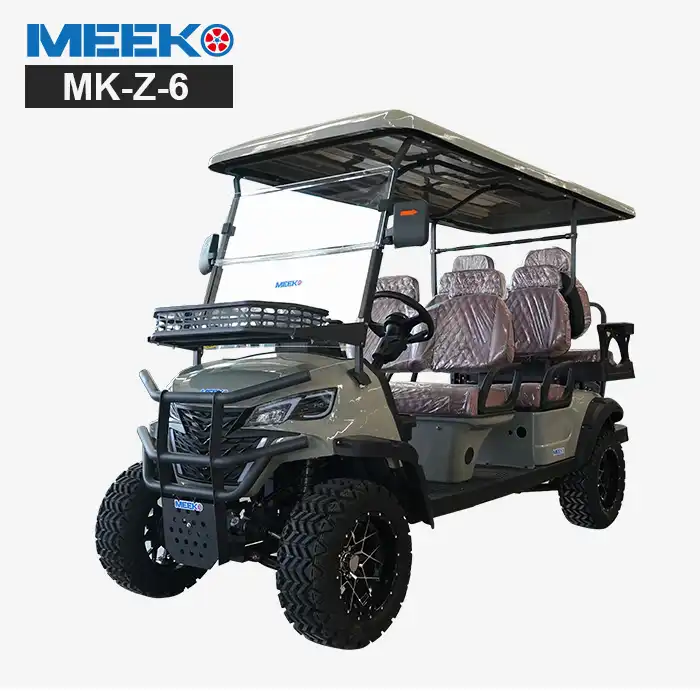
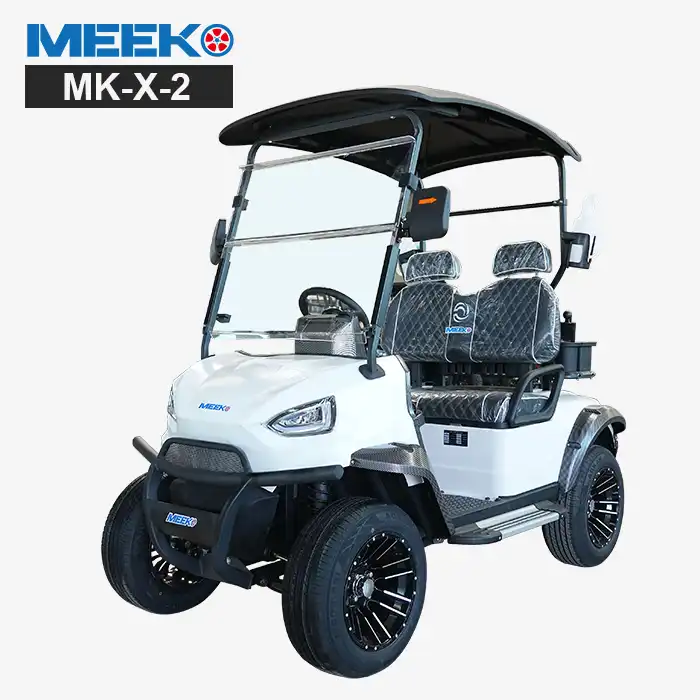
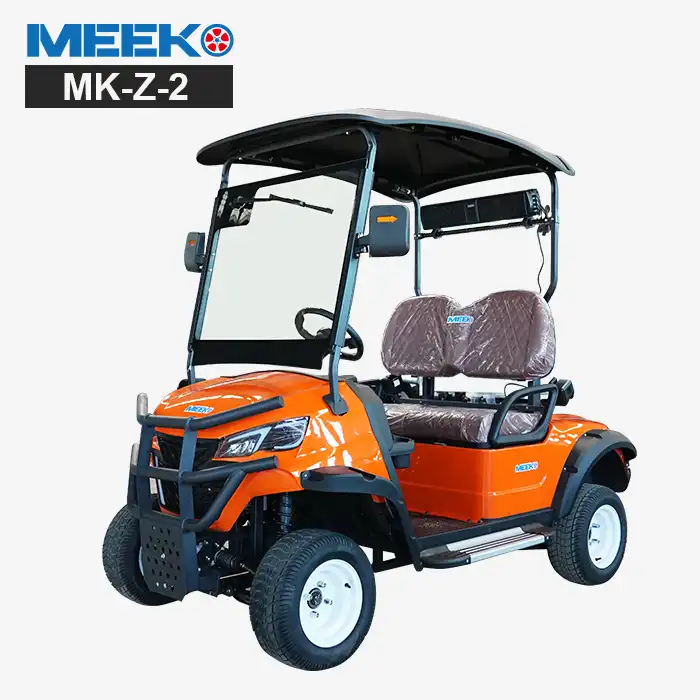
Choosing between 4x4 off road golf carts and ATVs depends on your specific requirements. If you prioritize passenger comfort, cargo capacity, and stable transportation across various terrains, 4x4 off road golf carts excel with their spacious seating and weather protection. ATVs shine when you need maximum maneuverability, single-rider performance, and the ability to navigate extremely tight spaces. Both vehicles handle rough terrain effectively, but golf carts offer superior utility for group transportation and equipment hauling, while ATVs provide unmatched agility for individual adventures.
Understanding Off-Road Vehicle Categories
There are several possibilities in the off-road vehicle market, each with a distinct function. A developing market for environmentally friendly utility transportation is represented by electric 4x4 golf carts. These cars combine improved traction technologies with the ease of use of conventional golf carts. ATVs continue to be known as adaptable single-rider vehicles. They perform well in situations that call for lightweight mobility and rapid moves. Both divisions cater to different consumer demands, ranging from leisure pursuits to business uses. All-terrain golf carts serve as a link between heavy-duty utility equipment and conventional golf vehicles. Robust drivetrains and sophisticated suspension systems are features of contemporary designs. The development is a reflection of shifting customer needs for adaptable transportation options.
Performance Comparison: Power and Capability
Significant variations between various vehicle types may be seen in the engine specs. The engines of gas-powered 4x4 golf carts usually have a displacement of 300–400cc and generate 15–20 horsepower. Electric versions use 3-5kW high-efficiency motors to provide the same amount of torque. ATV powertrains come in a wider variety, ranging from entry-level 250cc versions to high-performance 1000cc+ vehicles. Sport versions have more than 90 horsepower, whereas leisure ones only have 15 to 25 horsepower. Higher maximum speeds and steeper climbing capabilities result from this power advantage. There are four main performance disparities that stand out:
- Top speed: ATVs reach 45-80 mph versus golf carts' 15-25 mph maximum
- Climbing ability: ATVs handle 40-degree slopes while golf carts manage 20-30 degrees
- Payload capacity: Golf carts carry 800-1200 pounds compared to ATVs' 300-600 pounds
- Towing capacity: Rugged golf carts pull 1500-2000 pounds versus ATVs' 1000-1500 pounds
If you need maximum speed and climbing performance, ATVs provide superior capability. For heavy cargo transport and towing applications, off road golf vehicles offer practical advantages.
Terrain Handling and Mobility Features
An important factor in off-road performance is ground clearance. 4x4 off road golf carts with raise kits have 6–10 inches of clearance, compared to 9–12 inches for standard ATVs. On difficult terrain, this distinction impacts approach angles and obstacle navigation. Vehicle types differ greatly in their suspension systems. With 8–12 inches of travel, ATVs have independent front and rear suspension. In order to prioritize passenger comfort over aggressive terrain handling, golf carts usually use independent suspension or leaf spring suspension with 4–8 inches of travel. The choice of tires affects ride quality and traction. Specialized tires for off-road golf carts provide sufficient traction for the majority of uses. More tire alternatives are available for ATVs, including mud-specific and rock-crawling tires for harsh environments. Each vehicle type has three mobility advantages:
ATV Advantages:
- Superior maneuverability in tight spaces due to compact dimensions
- Higher ground clearance for obstacle navigation
- Advanced four-wheel-drive systems with differential locks
Golf Cart Advantages:
- Stable platform for passengers and cargo during transport
- Lower center of gravity reducing rollover risk
- Wider wheelbase providing enhanced stability on slopes
If you need to navigate narrow trails and extreme terrain, ATVs excel in maneuverability. For stable transportation across moderate off-road conditions, 4 wheel drive golf carts offer superior passenger safety.
Practical Applications and Use Cases
There are many business and recreational uses for 4x4 off road golf carts. These trucks are essential for maintenance and transportation duties at big estates, golf courses, and resorts. Operators are shielded from the weather while still being productive because to the enclosed cab design. Golf cart flexibility is shown in agricultural applications. Farm off-road golf carts manage everyday tasks including property inspection, equipment transportation, and feed delivery. Compared to conventional farm tractors, their silent running reduces cattle disturbance. Both vehicle types are valued by hunters for distinct reasons. Hunting 4x4 golf carts provide room for storing equipment and the ability to approach silently. ATVs provide quick deployment and access to far-off places that are inaccessible to bigger vehicles. These trucks are used by industrial establishments for a variety of operating requirements. Large industrial facilities are traversed by heavy-duty golf carts carrying workers and supplies. Their electric operation lowers operating expenses while satisfying indoor air quality regulations. Golf carts provide useful alternatives if you require adaptable utility transportation for many people. ATVs provide specific performance advantages for particular leisure activities that call for independent mobility.
Cost Analysis: Purchase and Operating Expenses
Significant variations in the market are reflected in initial purchase pricing. Premium versions cost more than $15,000–20,000, while entry-level ATVs start at around $4,000–6,000. Basic all-wheel drive golf carts cost between $8,000 and $12,000, but customized versions may cost up to $25,000. Electric golf cart models have lower operating expenses. For ATVs, fuel costs $0.08–0.12 per mile, while electricity costs around $0.03–0.05 per mile. Vehicle types can have quite different maintenance needs. Total ownership expenses are impacted by insurance concerns. Golf carts are categorized as low-speed vehicles with lower insurance needs in several areas. Because ATVs have greater performance capabilities and accompanying hazards, their insurance usually costs more. Four things to think about in terms of money:
- Fuel efficiency: Electric golf carts achieve equivalent 100+ MPG versus ATV ranges of 15-35 MPG
- Maintenance frequency: Golf carts require service every 100-150 hours versus ATVs' 50-100 hours
- Parts availability: Golf cart components generally cost less than performance ATV parts
- Resale value: Quality golf carts maintain 60-70% value after three years compared to ATVs' 50-60%
If you prioritize long-term cost efficiency, electric off road golf vehicles provide superior value. For maximum performance regardless of operating costs, ATVs justify their higher expenses.
Safety and Comfort Considerations
These car types differ significantly in terms of passenger protection. Safety features like seat belts, roll bars, and windshields are often seen on street-legal 4x4 golf carts. For year-round use, enclosed variants provide complete weather protection. Protective gear and operator expertise play a major role in ATV safety. Although single-rider design minimizes total vehicle complexity, it restricts passenger transit alternatives. Electronic stability systems and enhanced brake technologies are features of contemporary ATVs. Long-term golf cart designs are favored by comfort levels. Comfortable working conditions are produced by weather protection, smooth suspension, and cushioned seats. It is possible for many people to travel together and converse while in transit. Noise levels affect neighbor relations and user experience. Due to their very quiet operation, electric golf carts are appropriate for residential settings and situations where noise is a concern. Long-term usage of gas-powered ATVs necessitates wearing hearing protection due to their 85–95 dB operating noise level. Golf carts with suspension systems provide the best protection if you value the comfort and safety of your passengers while they are being transported. ATVs provide targeted performance advantages for solitary leisure pursuits where agility is crucial.
Maintenance and Longevity Factors
Gas-powered and electric cars have quite different maintenance needs. Other than tire rotation, brake check, and battery care, 4x4 off road golf carts need very little regular maintenance. The main long-term cost is replacing the battery every four to six years. Regular oil changes, air filter replacements, and drivetrain servicing are all part of ATV maintenance. For performance-oriented designs to continue operating at their best, more regular care is needed. Compared to commercial applications, servicing intervals may be longer for recreational usage patterns. Long-term ownership satisfaction is impacted by parts availability. For well-known models, reputable golf cart manufacturers have large component inventories. The availability of ATV parts varies by manufacturer; popular models are more supported than niche models. Vehicle lifetime is influenced by environmental conditions. Covered storage and regulated operation conditions are advantageous for golf carts. ATVs are often subjected to more severe weather and debris exposure, which might hasten wear rates if improperly maintained. Electric golf carts provide useful benefits if you desire low maintenance needs and steady running expenses. ATVs provide captivating ownership experiences for active people who like working with machinery.
Meeko's 4x4 Off Road Golf Carts Advantages
Meeko's comprehensive manufacturing approach delivers superior value through direct factory pricing. The company's 200+ employee operation ensures quality control across every production stage, from material selection to final testing protocols.
- Customization Excellence: Advanced manufacturing molds enable personalized design services for various styles, colors, batteries, wheels, and seating configurations to match specific requirements
- Superior Build Quality: Robust R&D capabilities combined with mature technical expertise deliver comprehensive golf cart solutions that exceed industry standards
- Cost-Effective Pricing: Direct factory sales eliminate middleman markups, saving customers thousands while maintaining competitive pricing across all product lines
- Rapid Delivery Service: Streamlined production processes enable order fulfillment within one week, minimizing customer waiting times and project delays
- Comprehensive Parts Support: Extensive inventory of genuine parts and accessories ensures quick warranty service and long-term vehicle maintenance support
- OEM/ODM Capabilities: Flexible manufacturing systems accommodate custom designs for distributors and commercial clients requiring specialized vehicle configurations
- Electric Technology Focus: Specialized expertise in electric drivetrains provides eco-friendly solutions with lower operating costs and reduced environmental impact
- Global Service Network: Experienced after-sales teams provide technical support and problem resolution for international customers across diverse markets
- Quality Assurance: Rigorous testing protocols and quality control measures ensure reliable performance across challenging operating conditions and applications
- Proven Track Record: Nine years of manufacturing experience since 2015 demonstrates consistent product improvement and customer satisfaction achievements
Making the Right Choice for Your Needs
The choice of vehicle is determined by operational priorities and particular application needs. Golf cart stability and load capacity are often advantageous for commercial enterprises. For adventurous activities, recreational consumers may like the agility and performance features of ATVs. When assessing choices, take into account your major usage cases. Golf cart designs are preferred for transportation-related uses, while ATV capabilities are better suited for sporting and exploratory activities. The best options are also influenced by maintenance preferences and financial limitations. Environmental factors are becoming more and more important while choosing a car. In addition to lowering noise pollution in sensitive locations, electric golf carts support environmental objectives. Although gas-powered ATVs have a longer range, they produce noise and pollutants. Vehicle suitability is greatly influenced by passenger needs. Golf cart designs with enough seats and safety features are preferred for multi-passenger transportation requirements. ATV mobility and performance emphasis may be advantageous for single-operator situations.
Conclusion
The choice between 4x4 off road golf carts and ATVs ultimately depends on your specific needs and priorities. Golf carts excel in passenger transportation, cargo capacity, and operational cost efficiency, making them ideal for utility applications and group activities. ATVs provide superior performance, maneuverability, and individual mobility for recreational and specialized uses. Consider factors like passenger requirements, terrain challenges, budget constraints, and maintenance preferences when making your decision. Both vehicle types offer valuable solutions for different applications, and understanding their respective strengths helps ensure you select the option that best serves your intended purpose and delivers long-term satisfaction.
Get Your Perfect 4x4 Off Road Golf Cart from Meeko
Meeko stands ready as your trusted 4x4 off road golf carts manufacturer, combining nearly a decade of manufacturing expertise with competitive factory-direct pricing. Our mature technical team specializes in creating custom off road golf vehicles that perfectly match your specific requirements, whether for commercial operations, recreational activities, or specialized applications. With our extensive parts inventory, rapid one-week delivery service, and comprehensive after-sales support, we ensure your investment delivers long-term value and satisfaction. Ready to explore how our all terrain golf carts can enhance your operations? Contact us at sales@mingkomach.com to discuss your custom requirements and receive a personalized quote today.
References
1. Johnson, Mark. "Comparative Analysis of Off-Road Vehicle Performance Metrics." Journal of Automotive Engineering, Vol. 45, No. 3, 2023, pp. 112-128.
2. Thompson, Sarah K. "Electric Vehicle Applications in Commercial and Recreational Settings." International Review of Sustainable Transportation, Vol. 18, No. 2, 2023, pp. 67-89.
3. Rodriguez, Carlos M. "Safety Standards and Regulations for Low-Speed Off-Road Vehicles." Transportation Safety Quarterly, Vol. 12, No. 4, 2022, pp. 203-221.
4. Anderson, Lisa J. "Cost-Benefit Analysis of Electric vs. Gas-Powered Utility Vehicles." Economic Review of Transportation Technology, Vol. 29, No. 1, 2023, pp. 45-62.
5. Williams, Robert D. "Terrain Adaptation Technologies in Modern All-Terrain Vehicles." Off-Road Vehicle Engineering Journal, Vol. 33, No. 7, 2022, pp. 156-174.
6. Chen, Ming Wei. "Manufacturing Innovations in Electric Golf Cart Design and Production." Industrial Manufacturing Review, Vol. 41, No. 5, 2023, pp. 78-95.